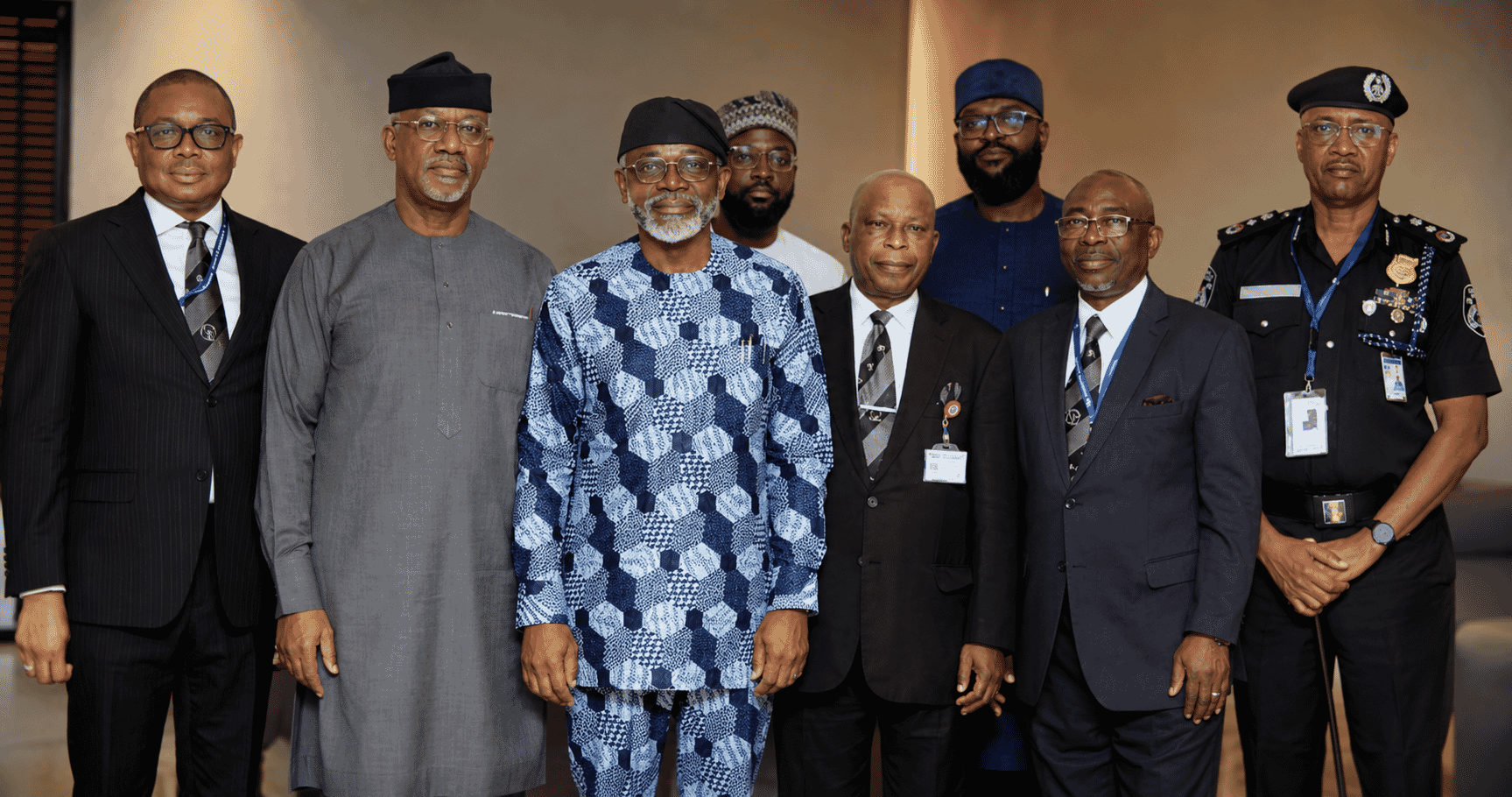
The Working Group is not the state police bill itself. It is the drafting body tasked with writing the enabling legislation that will make the constitutional amendment usable on the ground. Tinubu, in remarks delivered through Gbajabiamila, drew a sharp line between the two documents.
He noted that the Constitution Alteration (State Police) Bill, 2026, already passed by the National Assembly, creates the legal skeleton for a dual policing structure. That skeleton, however, cannot walk on its own.
"The Constitution Amendment Bill establishes the framework for dual policing, but it does not operationalise it," Tinubu said, adding that the task falls to the forthcoming National Policing Bill. In other words, one law grants permission; the other law builds the machine.
That machine, according to the President, will address minimum policing standards, a certification process confirming states are ready to run their own forces, coordination protocols between federal and state commands, accountability mechanisms, human rights safeguards, and funding conditions. Each of those six pillars represents a genuine governance puzzle Nigeria has never solved at scale.
 Dollar to Naira Exchange Rate Holds Near ₦1,373 as CBN Reforms Face New Test
Who Sits on the Committee, and Why Composition Matters
Gbajabiamila chairs the group. Membership includes Attorney-General of the Federation Lateef Fagbemi, Nigerian Bar Association President Afam Osigwe, Nigeria Governors' Forum Chairman, the National Security Adviser, the Inspector-General of Police, and Ogun State Governor Dapo Abiodun as head of the NGF's state police committee. A secretariat will handle administrative coordination.
This lineup deliberately blends federal executive authority, legal expertise, and subnational political weight. Placing sitting governors inside the drafting room, rather than treating them as recipients of a finished bill, signals an attempt to preempt the very friction that has stalled decentralisation efforts before.
Attorneys-General and justice commissioners from Plateau, Lagos, and Ondo states also attended, alongside representatives of the police and security adviser, underscoring that this is being framed as a truly national, not purely federal, undertaking.
Comparing This Panel to Nigeria's Earlier Policing Reform Attempts
Nigeria has debated state police since the return to democracy in 1999, with successive National Conferences and constitutional review committees producing recommendations that quietly died in the National Assembly. What distinguishes this attempt is sequencing.
Tinubu explicitly ordered the drafting work to begin before the constitutional amendment finishes ratification in state assemblies. "We must not wait until the constitutional process is concluded before beginning this important assignment," he said. Past reform efforts typically waited for full legal authority before writing implementation rules, a delay that often let political momentum evaporate.
The closest functioning precedent is Amotekun, the South-West regional security outfit governors credit as living proof that community-rooted policing can work. Abiodun told the gathering the state police plan validates Amotekun's track record and extends that logic nationwide, though Amotekun itself lacks full arrest and prosecutorial powers, a gap the new bill must close.
The Numbers Behind the Manpower Promise
Abiodun offered the clearest quantitative case for the reform. If each of Nigeria's 36 states fields roughly 6,000 officers, the country would gain close to 200,000 additional security personnel layered on top of the existing federal police force.
Nigeria's police-to-population ratio has long trailed the United Nations' recommended benchmark, so that figure, if realised, would meaningfully narrow the gap.
That projection remains an estimate, not a funded plan. No state has yet published a recruitment budget, and the fiscal conditions Tinubu referenced as part of the bill's scope have not been detailed publicly.
Legal Safeguards, Criticism, and Open Questions
Osigwe welcomed the initiative on behalf of the Bar Association but paired his endorsement with a warning. "We must ensure we do not create a monster," he said, insisting the legislation must guarantee accountability and prevent oppression.
That caution echoes the dominant fear among skeptics: that state police could become tools governors deploy against political rivals rather than crime.
Opposition voices have been more blunt. The Peoples Redemption Party accused the ruling party of pursuing state police for suspect motives given its record managing existing security institutions.
Peter Obi urged postponing implementation until after the 2027 elections, arguing an independent State Police Service Commission insulated from governors should exist first. Analysts close to Atiku Abubakar's camp have separately questioned the legislative urgency.
Several structural questions remain genuinely unresolved. Revenue allocation reform, needed to fund 36 separate forces without straining already-stretched state budgets, has not been addressed. Analysts have also flagged the risk of overlapping jurisdiction between federal and state officers producing operational conflict if the bill's coordination clauses are vague.
Read More
-
![Dollar to Naira exchange rate]() Dollar to Naira Exchange Rate Today: Naira Holds Near ₦1,367 as Black Market Gap Widens
Dollar to Naira Exchange Rate Today: Naira Holds Near ₦1,367 as Black Market Gap Widens -
![Opay Digital Services]() OPay Security Features Activate Emergency Lock and Safety PIN to Protect Customer Accounts
OPay Security Features Activate Emergency Lock and Safety PIN to Protect Customer Accounts ![Aliko Dangote]() Dangote Rejects NNPC Bid to Raise Stake in $20 Billion Refinery, Eyes Public Listing for Nigerians
Dangote Rejects NNPC Bid to Raise Stake in $20 Billion Refinery, Eyes Public Listing for Nigerians-
![Dangote Refinery]() SEC Bans Dangote Refinery IPO Marketing, Orders Refunds Within 24 Hours
SEC Bans Dangote Refinery IPO Marketing, Orders Refunds Within 24 Hours
 Dollar to Naira Exchange Rate Today: Naira Holds Near ₦1,367 as Black Market Gap Widens
 OPay Security Features Activate Emergency Lock and Safety PIN to Protect Customer Accounts
 Dangote Rejects NNPC Bid to Raise Stake in $20 Billion Refinery, Eyes Public Listing for Nigerians
 SEC Bans Dangote Refinery IPO Marketing, Orders Refunds Within 24 Hours