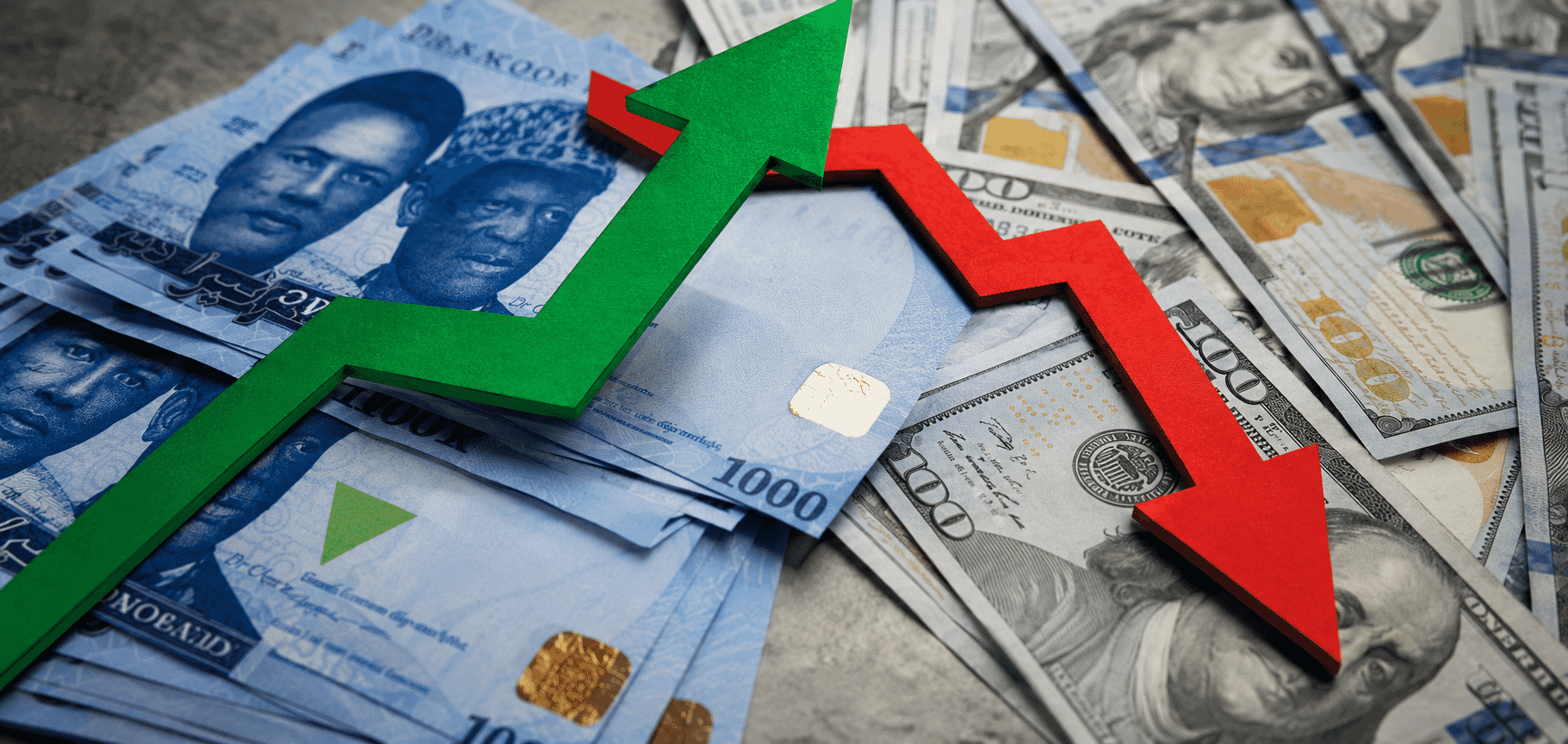
Today's Official and Parallel Market Rates at a Glance
At the Nigerian Foreign Exchange Market, the naira closed at ₦1,372.96 per dollar on Wednesday, the benchmark rate calculated as a volume-weighted average of actual trades.
That figure represents the official benchmark for transactions conducted through Nigeria's formal foreign exchange system. Independent data trackers put the intraday figure slightly lower, near ₦1,372.22, matching a pattern of minor divergence between official reporting sources that is normal in thinly quoted emerging-market currencies.
Away from the banking halls, Bureau de Change operators in the country's three largest cities quoted the dollar for sale at roughly ₦1,400 to ₦1,410, with a buying rate closer to ₦1,400.
The spread between the official window and the street market has narrowed compared with earlier months, even as it continues to signal unmet demand for hard currency outside the banking system. A gap of roughly ₦30 to ₦40 is now considered routine, a sharp contrast from the ₦150-plus chasms recorded in 2024.
Weekly data adds useful context. Over the seven days before July 8, the dollar-naira pair moved between a low of ₦1,369.12 and a high of ₦1,390.02, with the sharpest single-day swing, a 1.2 percent drop, landing on July 2.
That is a tight range by Nigerian standards, and it is exactly the kind of low-volatility trading pattern the Central Bank of Nigeria has spent eighteen months trying to engineer.
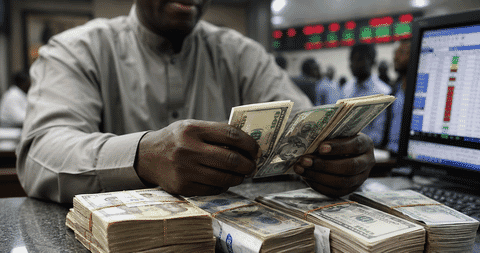 Dollar to Naira Exchange Rate Today: Naira Holds Near ₦1,367 as Black Market Gap Widens
How Nigeria's Dual Exchange-Rate System Actually Works
Nigeria technically runs one unified, market-determined exchange rate since June 2023, but in practice two markets still coexist. The official rate forms at the Nigerian Foreign Exchange Market, where licensed banks and authorized dealers trade dollars electronically through the Electronic Foreign Exchange Matching System, a platform the CBN rolled out in December 2024 to centralize order matching and improve transparency. The parallel, or "black," market runs alongside it, made up of street-level Bureau de Change operators serving individuals and small businesses who cannot easily access dollars through banks.
The two markets are meant to converge as liquidity improves, and for much of 2026 they largely have. When the gap widens sharply, as it briefly did in early March, it typically signals one of three things: speculative dollar-hoarding, a genuine supply shortfall at the official window, or political-cycle demand from actors who prefer to hold dollars rather than naira. Economist Dr. Muda Yusuf, a former director-general of the Lagos Chamber of Commerce and Industry, has pointed to skepticism among some market participants about whether the naira's gains will hold, which pushes speculative buying into the cheaper official window even as it drains supply elsewhere.
A newer wrinkle complicates the mechanics further. Since May 1, 2026, every international money transfer operator, including Western Union, MoneyGram and their competitors, has been required to pay Nigerian recipients in naira rather than dollars, converting incoming remittances at the official rate before disbursement. The directive, issued by the CBN's Trade and Exchange Department, forces IMTOs to route dollars through designated naira settlement accounts instead of holding foreign currency for payout. That rule alone reshapes how a meaningful share of Nigeria's dollar inflows reach the real economy.
Why the Naira Has Stabilized: The Reform Story So Far
Nigeria's currency spent 2023 through early 2025 in near-continuous freefall, a period traders still refer to with dread. The naira closed 2025 at roughly ₦1,435 to the dollar, a 6.5 percent annual gain and its first full-year appreciation in more than a decade, aided by a $7.5 billion Central Bank intervention. By comparison, today's ₦1,372.96 rate marks a further strengthening of more than four percent since January.
Three forces get most of the credit. First, tighter monetary policy: the Monetary Policy Rate has been trimmed gradually from a peak above 27 percent as inflation cooled, most recently landing at 26.5 percent. Second, growing external reserves, which stood at $51.43 billion as of June 29, 2026, a 38 percent jump from the same period a year earlier, giving the central bank a much larger buffer to smooth out volatility. Third, and arguably most structurally important, domestic refining.
The Dangote Petroleum Refinery, processing up to 650,000 barrels a day, has meaningfully reduced Nigeria's need to import refined fuel, which used to be one of the single biggest drains on dollar demand. Analysts have taken to calling this the "Dangote Effect." Daily exchange-rate volatility has fallen from more than 4 percent in 2024 to around 0.5 percent by mid-2026, a genuinely rare achievement for a currency that just two years ago was among the world's most volatile.
The International Monetary Fund has taken notice. In a recent staff review, the Fund welcomed Nigeria's decision to lift a rule that had forced international oil companies to hold half of their repatriated export proceeds domestically for 90 days before transferring them offshore, calling it evidence of a genuinely strengthening external position. That is not a routine compliment; the IMF rarely praises capital-control unwinds unless the underlying fundamentals justify the risk.
Comparing Today's Rate With Historic Volatility
ontext matters more with the naira than with almost any other major emerging-market currency, because the swings have been so extreme. One dollar bought roughly ₦150 in 2010. By April 2026, the same dollar bought more than ₦1,500 at the peak, an 89 percent depreciation over sixteen years that has fundamentally reshaped how Nigerians eat, travel, educate their children and plan their finances.
Today's ₦1,372.96 sits meaningfully below that historic peak, which is precisely why officials are framing 2026 as a recovery year rather than merely a pause in decline.
Financial Derivatives Company managing director Bismarck Rewane offers a sharper benchmark still. Based on purchasing power parity, he estimates the naira's fair value at around ₦1,256.79 to the dollar, implying today's market rate still undervalues the currency by roughly 11 percent. If Rewane is right, the naira has room to strengthen further without straying from economic fundamentals, though currencies can and do stay misaligned for years.
Forecasting houses broadly agree on a band rather than a single number for the rest of 2026. Analysts cited by Nairametrics project the naira trading between ₦1,350 and ₦1,520 for the remainder of the year, assuming no major shock to oil prices or global monetary policy.
Meristem projects a similar band of ₦1,350 to ₦1,528.57, while Coronation Research expects the pair to trade between ₦1,400 and ₦1,500, citing higher oil output and reduced fuel-import dependence. Today's rate sits comfortably within every one of those forecasts, which is itself a modest vote of confidence.
Where the Stability Narrative Has Real Limits
It would be a mistake to read today's relatively calm ₦1,372.96 print as evidence the naira's troubles are over. Nigeria's headline inflation, while falling, remained elevated at roughly 15 percent in early 2026, meaning naira stability against the dollar has not yet translated into affordability for households buying food and fuel in naira terms.
A stable exchange rate and a stable cost of living are related but distinct problems, and Nigeria has only solved the first one.
The naira also briefly slipped to a three-month low earlier in the summer despite improving liquidity. The currency depreciated to ₦1,383.63 on the official market in late June even as external reserves kept climbing, a reminder that rising reserves alone do not guarantee daily rate strength.
A currency trader speaking anonymously attributed that dip to elevated investor dollar demand rather than any fundamental deterioration, but it underlines how quickly sentiment can move the rate even when the underlying story is improving.
Fiscal risk is the more structural limitation. Nigeria's 2026 federal budget still shows a deficit of roughly ₦23 to ₦24 trillion, financed by around ₦29 trillion in fresh borrowing, meaning currency stability has bought the government breathing room rather than solved its underlying revenue-expenditure mismatch.
Debt service tied to that borrowing still consumes a large share of the federal budget, and any renewed naira weakness would immediately raise the naira cost of servicing dollar-linked obligations.
Election-cycle spending poses a separate, more immediate threat. Abuja-based economist Baba Ahmed has warned that unchecked campaign spending by political actors preparing for upcoming elections could become a serious risk factor for the naira if left unmanaged, since politicians historically prefer holding dollars over naira for both portability and reduced traceability.
That dynamic has already shown up in periodic parallel-market pressure through 2026 and is likely to intensify as campaign season advances.
What This Means for You Today
If you are converting dollars to naira today, expect roughly ₦1,373 through the official banking channel and closer to ₦1,400 through Bureau de Change operators, with the gap narrow enough that shopping around for a few extra naira per dollar is unlikely to be worth significant risk or effort.
If you are receiving a diaspora remittance through a licensed transfer operator, expect payout in naira at the prevailing official rate, potentially with a short processing delay tied to bank settlement timing rather than fraud.
Looking further out, most credible forecasting houses expect the naira to trade somewhere between ₦1,350 and ₦1,520 through the rest of 2026, contingent on oil prices holding, election spending staying disciplined, and the CBN maintaining its current tight-money stance.
None of that is guaranteed. Nigeria's currency history over the past three years is, if nothing else, a lesson in how quickly consensus forecasts can be overtaken by fiscal or political shocks.
Read More
-
![Opay Digital Services]() OPay Security Features Activate Emergency Lock and Safety PIN to Protect Customer Accounts
OPay Security Features Activate Emergency Lock and Safety PIN to Protect Customer Accounts ![Aliko Dangote]() Dangote Rejects NNPC Bid to Raise Stake in $20 Billion Refinery, Eyes Public Listing for Nigerians
Dangote Rejects NNPC Bid to Raise Stake in $20 Billion Refinery, Eyes Public Listing for Nigerians-
![Dangote Refinery]() SEC Bans Dangote Refinery IPO Marketing, Orders Refunds Within 24 Hours
SEC Bans Dangote Refinery IPO Marketing, Orders Refunds Within 24 Hours ![Taiwo Oyedele]() Tax Acts 2025: Federal Government Releases Final Transition Guidelines for Nigeria's New Tax Regime
Tax Acts 2025: Federal Government Releases Final Transition Guidelines for Nigeria's New Tax Regime
 OPay Security Features Activate Emergency Lock and Safety PIN to Protect Customer Accounts
 Dangote Rejects NNPC Bid to Raise Stake in $20 Billion Refinery, Eyes Public Listing for Nigerians
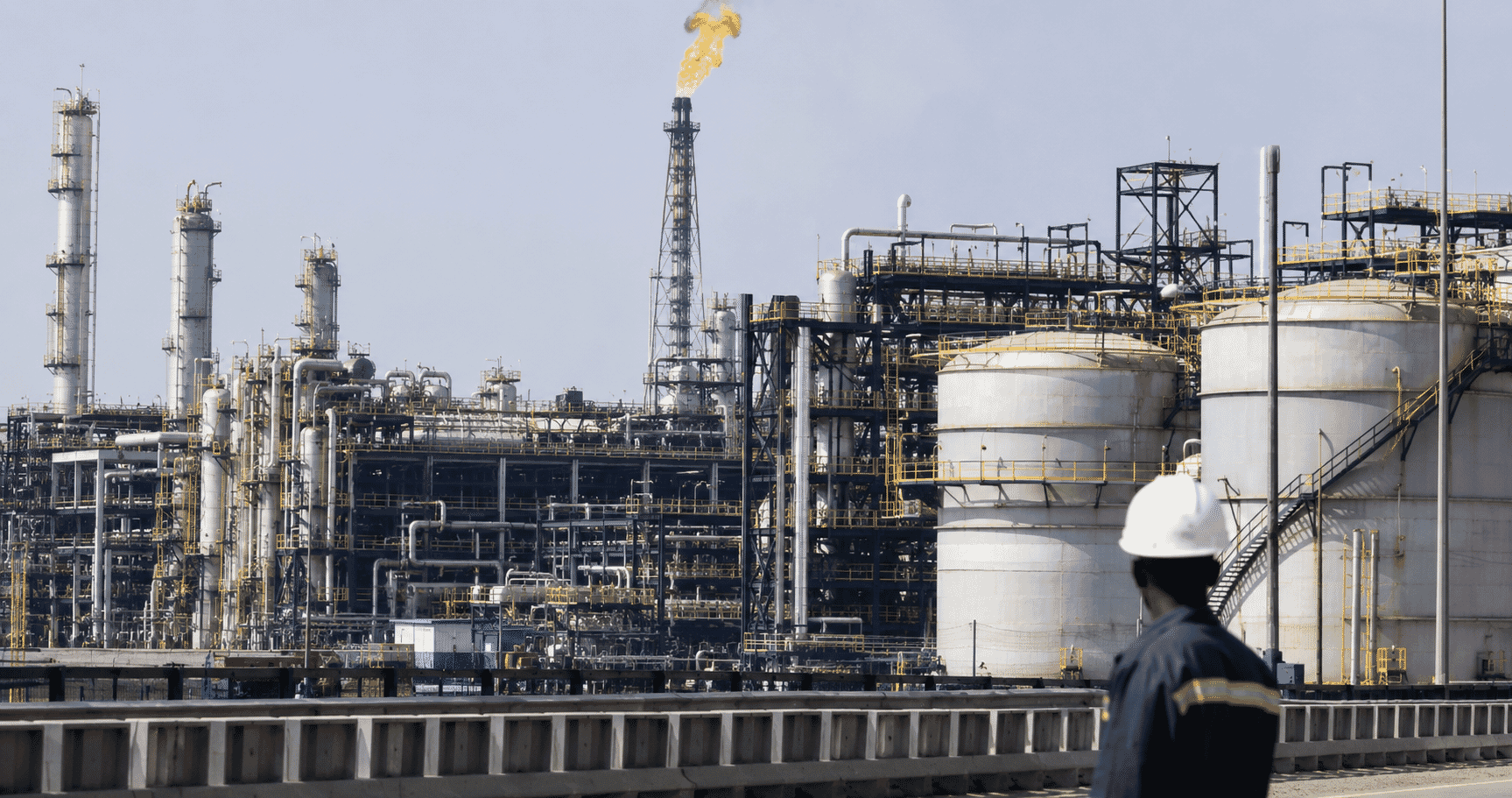 SEC Bans Dangote Refinery IPO Marketing, Orders Refunds Within 24 Hours
 Tax Acts 2025: Federal Government Releases Final Transition Guidelines for Nigeria's New Tax Regime