
What The NIMC Act 2026 Actually Changes
The Act establishes NIMC as the Federal Government's trusted digital identity authority responsible for secure authentication, encryption, digital signatures and trusted electronic services. That single clause shifts NIMC from a card-issuing agency into a legal trust anchor for Nigeria's entire digital economy.
Deputy Speaker Benjamin Kalu told the State House gathering that the previous NIMC Act of 2007 had become obsolete in light of rapid technological advancements, making a comprehensive review necessary. He called it a framework built to "outlive us and serve generations of Nigerians."
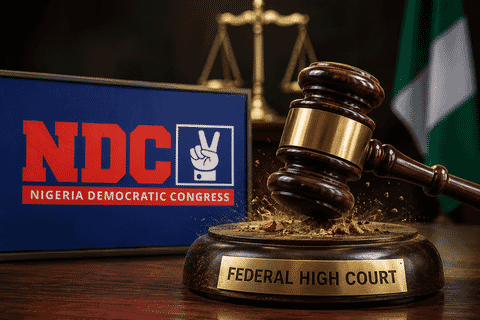 Federal High Court Blocks NDC Bid to Secure Political Party Status by Overturning Registration Order
Nigerians Get A Single Root Of Trust For Digital Certificates
The law designates NIMC as Nigeria's Root Certification Authority for the National Public Key Infrastructure and Digital Public Infrastructure. In plain terms, every government agency can now issue cryptographically verifiable digital certificates that trace back to one authority instead of dozens of disconnected systems.NIMC's Director-General explained the practical upside directly. She said the Act provides the legal basis for NIMC to become the single root of trust for all government transactions, and that the law would eliminate duplicate identity investments and provide a common framework for Nigerian National Public Key Infrastructures in line with global best practices.
That phrase, eliminating duplicate identity investments, is the part most coverage buried. Nigeria's federal agencies have historically built separate, costly verification systems. A shared root authority removes that redundancy at the infrastructure level, not just the policy level.
Stronger Data Protection Tied To Existing Privacy Law
The Act does not invent privacy rules from scratch. Instead, it introduces stronger safeguards for personal data, aligning Nigeria's identity management system with the Nigeria Data Protection Act and international privacy standards.This integration matters because it closes a legal gap that long existed between NIMC's database operations and the country's separate data protection statute. Before now, identity data and privacy enforcement sat in different legal silos.
-
Easier, Faster Access For Nigerians At Home And Abroad
According to the Ministry of Interior, Nigerians, including those living abroad, will benefit from easier access to identity services, stronger protection of personal data and privacy, improved cybersecurity and confidence in digital transactions, and faster and more secure identity verification and authentication.Channels Television reported the same diaspora-specific commitment from NIMC directly. Nigerians can expect wider, easier, and more convenient access to identity services, including for Nigerians in the Diaspora, alongside stronger protection of personal data and privacy.
This is a notable departure from past identity policy, which largely treated diaspora Nigerians as an afterthought in domestic verification systems.
-
A Unified Card Under "One Card, Multiple Possibilities"
The legislation positions the NIMC General Multipurpose Card as a nationwide identity credential under the initiative, "One Card, Multiple Possibilities." The card now carries formal legal recognition alongside the National Identification Number, rather than functioning as a secondary or optional credential.The Eagle Online's reporting adds detail competitors skipped over. Among the key provisions of the Act are formal recognition of both physical and digital identity credentials linked to the National Identification Number, the establishment of a General Multipurpose Card for identity verification, and special identity measures for vulnerable populations.
That vulnerable-populations clause is significant. SilverbirdTV reported that the Act introduced a new identifier system to cater specifically to vulnerable and underserved populations, including individuals without permanent residences, to ensure greater inclusion in the national identity database. Nigerians without a fixed address, a long-standing barrier to NIN registration, now have a defined legal pathway into the system.
-
Real Security Payoff, Already Demonstrated
This is the benefit most international coverage missed entirely, and it is the most consequential one. Interior Minister Tunji-Ojo disclosed that Nigeria's integrated identity database has already contributed to the arrest of seven suspected Boko Haram and ISWAP commanders returning from the 2026 Hajj pilgrimage.He explained the mechanism plainly. "This is only possible because NIMC's ID is already connected with the immigration database, and it's already speaking to even the Interpol 24/7, and we have been able to automate this," the Minister said.
Tunji-Ojo also noted a practical enforcement reality already in place. "Today, you cannot obtain a Nigerian passport without data being verified through the NIMC," the minister said, adding that the new law would accelerate the harmonisation of identity databases across government agencies, strengthen the integrity of the National Identification Number, improve inter-agency collaboration and enhance Nigeria's ability to combat identity theft, terrorism, financial crimes and other security threats.
This is not a theoretical future benefit. It is a security outcome the government says has already happened, using infrastructure the new Act now formalizes and expands.
Why Lawmakers Pushed This Through Now
Akpabio framed the timing around legislative process rather than urgency alone. He said the National Assembly subjected the bill to extensive legislative scrutiny, including public hearings and international benchmarking, before its passage.
Kalu's framing was more philosophical. "The world is aware that the NIMC Act of 2007 was obsolete, and they have been monitoring that an effort was being made towards retooling, redefining, and re-equipping that piece of legislation to become what is fit for purpose, considering our current realities, and they were waiting to hear from us when it is going to become an instrument that we will use in building our nation."
The Bigger Economic Picture Nobody Connected
The Ministry of Interior tied it directly to growth targets, noting that the new law reflects Tinubu's commitment to advancing digital governance and supporting his administration's ambition of building a $1 trillion economy.
NIMC's own statement made the same connection even more explicitly, stating the reform directly advances President Bola Ahmed Tinubu's Renewed Hope Agenda by accelerating digital transformation, strengthening national security, expanding financial and social inclusion, improving public service delivery and supporting the development of a secure Digital Public Infrastructure capable of driving innovation, economic growth and Nigeria's aspiration of becoming a one-trillion-dollar economy.
The logic underneath this is rarely stated outright. A trusted, interoperable digital identity layer is a prerequisite for things like instant credit scoring, cross-border trade verification, and digital tax compliance, all of which feed directly into GDP growth targets. The Act is not just an identity reform. It is infrastructure for everything Nigeria's digital economy strategy depends on.
What Happens Next
NIMC's Coker-Odusote said implementation would proceed in partnership with other arms of government. The Commission assured Nigerians that implementation of the law would be guided by transparency, inclusivity and professionalism, while reaffirming its commitment to protecting citizens' personal data and advancing the country's digital transformation agenda.
No implementation timeline, rollout phases, or enforcement start dates have been published yet. Nigerians should expect follow-up regulatory guidance from NIMC and the Ministry of Interior in the coming weeks, particularly around how the General Multipurpose Card rollout and the vulnerable-population identifier system will be operationalized.
Read More
-
![Peter Obi]() Peter Obi Slams Federal High Court Ruling on NDC, Calls It a Dangerous Blow to Nigeria's Democracy
Peter Obi Slams Federal High Court Ruling on NDC, Calls It a Dangerous Blow to Nigeria's Democracy -
![Dangote Refinery]() SEC Bans Dangote Refinery IPO Marketing, Orders Refunds Within 24 Hours
SEC Bans Dangote Refinery IPO Marketing, Orders Refunds Within 24 Hours ![Taiwo Oyedele]() Tax Acts 2025: Federal Government Releases Final Transition Guidelines for Nigeria's New Tax Regime
Tax Acts 2025: Federal Government Releases Final Transition Guidelines for Nigeria's New Tax Regime![CBN Building]() CBN Orders Banks, Fintechs to Disclose Ultimate Beneficial Owners in Sweeping Payments Overhaul
CBN Orders Banks, Fintechs to Disclose Ultimate Beneficial Owners in Sweeping Payments Overhaul
 Peter Obi Slams Federal High Court Ruling on NDC, Calls It a Dangerous Blow to Nigeria's Democracy
 SEC Bans Dangote Refinery IPO Marketing, Orders Refunds Within 24 Hours
 Tax Acts 2025: Federal Government Releases Final Transition Guidelines for Nigeria's New Tax Regime
 CBN Orders Banks, Fintechs to Disclose Ultimate Beneficial Owners in Sweeping Payments Overhaul