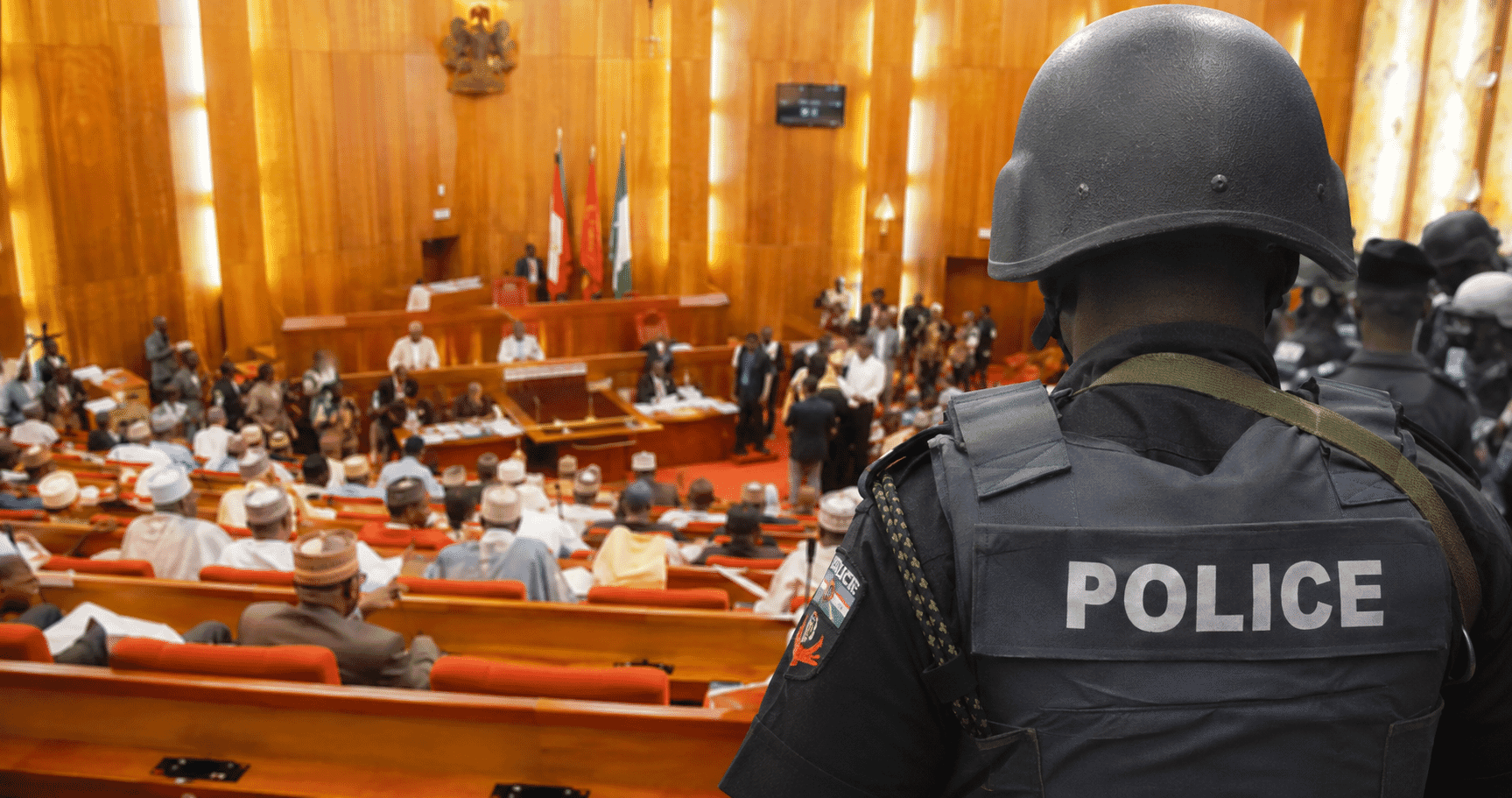
Nigeria's Senate passed the State Police Bill on June 24, 2026. The constitutional amendment lets the country's 36 states establish their own police services. President Bola Tinubu transmitted the measure to address a centralized system strained by banditry, kidnappings, and militant violence that has killed tens of thousands.
The upper chamber moved the bill through every stage in a single day. Lawmakers approved more than two dozen clauses after clause-by-clause scrutiny. The reform shifts policing from the exclusive federal list to the concurrent list for the first time in decades.
The Push for Decentralized Policing Amid Escalating Insecurity
Nigeria has relied on a single federal police force since independence more than six decades ago. That monopoly now faces mounting pressure. Criminal groups and jihadis have expanded operations into southern regions while northern banditry and mass abductions continue unchecked.
Analysts point to structural weaknesses in the centralized model. Response times suffer when local intelligence gaps combine with overstretched federal resources. Ikemesit Effiong of SBM Intelligence noted that recent mass kidnappings intensified calls for decentralization precisely because the centralized framework produced sluggish government reactions.
President Tinubu described state police as unavoidable. He urged swift action to give communities and local governments greater roles in everyday security. The bill responds directly to these realities without dismantling national coordination.
What the State Police Bill Actually Changes in Nigeria's Constitution
The legislation creates a dual structure. A restructured Federal Police Service replaces the current Nigeria Police Force framework. Each state gains constitutional authority to establish and operate its own police service once it passes enabling state laws and meets national minimum standards set by the National Assembly.
 Dangote Rejects NNPC Bid to Raise Stake in $20 Billion Refinery, Eyes Public Listing for Nigerians
State police will handle crimes under state laws. Federal police retain primary responsibility for counterterrorism, border patrol, organized crime, and other national security matters. A reconstituted National Police Council will coordinate policy and intergovernmental cooperation across both levels.
The bill passed the Senate with more than two-thirds support after President Tinubu sent it the previous day. The House of Representatives had already approved its version earlier in June. Harmonization between chambers now precedes the next critical phase.
Who Wields Power: Governors, Commissioners, and Federal Oversight
Governors receive significant operational influence. Each state governor appoints the Commissioner of Police for that state on the recommendation of the National Police Council, subject to confirmation by the state House of Assembly. The governor may issue lawful written directives of a general policy nature on public safety and order within the state.
Yet the bill embeds clear limits. Section 17(7) states that a state Commissioner of Police shall not arrest, detain, investigate, or deploy force against any person, political party, or group merely for criticizing the government except in accordance with the law. State Police Service Commissions will manage recruitment, promotion, and discipline.
Federal authority remains robust. Under Section 214, the Federal Police Service can intervene in a state's internal security when public order breaks down, the state police cannot or will not act effectively, national security faces threats, or evidence emerges of serious human rights abuses or partisan conduct by state authorities.
The President must authorize intervention in writing, provide notice within 48 hours to the governor, state assembly speaker, National Police Council, and National Assembly, and face Senate oversight on duration.
Senate Leader Senator Michael Opeyemi Bamidele summarized the balance: “The principal objective of this bill is to establish a constitutional framework for the creation and operation of State Police Services while retaining a strong Federal Police Service and maintaining national standards, accountability and oversight.”
Funding Realities: States Lead, Federal Support Possible
States bear primary responsibility for funding their police formations from their own resources. This arrangement follows the logic of devolution: those who control operations also finance them. Critics immediately flag capacity gaps, especially in states with weaker internally generated revenue.
Recent Senate discussions also opened the door to federal grants and aid. The federal government may provide additional support on recommendation, subject to National Assembly approval, to help maintain equipment and standards. A permanent Police Trust Fund received approval alongside the bill, creating another potential revenue stream for the overall security architecture.
The funding model creates both incentive and risk. Well-resourced states can build professional forces quickly. Others may struggle, raising questions about uniform national minimum standards in practice. Implementation will test whether states can translate constitutional authority into operational capability.
Controversies and Built-in Safeguards Against Abuse
The loudest controversy centers on potential gubernatorial abuse. Opponents fear governors could turn state police into instruments for silencing critics, targeting opponents, or advancing ethnic or partisan interests. Past experiences with centralized control and regional security outfits fuel these concerns.
Lawyer Chief Festus Ogwuche grounded his warning in the country's First Republic, when a native police system became entangled in political suppression. He warned that allowing state forces to run parallel to the federal police risks tempting state officials to pursue political ends and inflict vendettas on opponents.
Speaking from Port Harcourt, he offered a concrete illustration. He suggested that the political rivalry between Governor Siminalayi Fubara and his predecessor Nyesom Wike could have turned considerably more dangerous had a Rivers State police force already existed on the ground.
Political analyst Anthony Sani went further still, predicting near-certain misuse. He stated without equivocation that state governors will almost certainly abuse state police to the detriment of citizens.
Even senators who voted yes carried this anxiety into the chamber. Senator Enyinnaya Abaribe, who once opposed the idea, switched his position because of worsening insecurity but still pressed for constitutional financing guarantees. He argued that allocations meant for state police commissions should be guaranteed by the constitution and paid directly to the commissions to prevent political interference, drawing a comparison to disputes over local government funds.
Lagos State Governor Babajide Sanwo-Olu, present for the vote, framed the moment differently, as a federalist victory two decades in the making. He said state police has been top of mind for President Tinubu since 1999 when he governed Lagos, calling the bill's passage a day to celebrate the triumph of genuine democratic and developmental ideas.
The bill responds with layered protections. Governors cannot lawfully direct state police to target individuals or groups unlawfully. Federal intervention triggers explicitly include partisan intimidation or unlawful conduct by state policing authorities. The National Police Council can review disputed directives, and its decisions stand as final in some provisions.
Senate President Godswill Akpabio framed the stakes during debate: “This debate represents one of the most important legislative responsibilities before the 10th Senate. History will judge us not only by the laws we enact but by our willingness to confront difficult national questions with courage, patriotism and foresight.”
The design reflects a deliberate hybrid philosophy. Nigeria seeks the responsiveness of local policing without the fragmentation risks seen in some federations. The federal backstop aims to prevent the worst abuses while still granting states meaningful autonomy.
The Implementation Gap
Passage is not deployment. Even bill supporters concede there is a dangerous lag between signing the law and putting officers on the street.
Monday Ubani, chairman of the Nigerian Bar Association's Electoral Reform Committee, called the moment historic but flagged the road ahead. He said implementation is expected to be the biggest test of the new law, with funding remaining a major concern, especially for states with weaker fiscal capacity.
He pointed to an existing resource pool that could ease the transition. Many states already support federal police operations with vehicles and logistics, and existing state-backed internal security outfits could serve as the starting workforce for state police forces.
Crucially, Ubani noted the reform carries an opt-out built in. He said the reform is optional, meaning states unable to fund it may continue relying on federal police, and stressed that a strong and independent judiciary will be crucial to prevent abuse of power and protect human rights.
Civil society analysis adds a timeline warning that has not gotten enough attention. The gap between passage and operational readiness could run into years, raising the question of how Nigeria copes with insecurity in the period before state police structures are fully functional.
Historical Context, Expert Insights, and the Road Ahead
The state police idea has surfaced repeatedly since the return to democracy in 1999 and even earlier. Each attempt stalled over fears of weakened national unity and politicized local forces. The current version advances further than predecessors by pairing devolution with explicit federal intervention powers and national standards.
Security experts emphasize that success hinges on professional recruitment, training, and insulation from political interference. The rapid Senate passage, including closed-door sessions and manual voting for transparency, signals elite consensus on urgency. Yet the real test lies beyond Abuja.
Next steps require House-Senate harmonization if versions differ, approval by at least two-thirds of state Houses of Assembly, and presidential assent. Only then can states begin establishing forces. The timeline matters because insecurity shows no pause.
Nigeria now experiments with a concurrent policing model tailored to its scale and diversity. States gain tools for local threats such as kidnapping and communal clashes. The federal level keeps strategic oversight. Whether this hybrid delivers faster justice and greater accountability depends on disciplined implementation and sustained oversight at every tier. The Senate has acted. The federation must now deliver.
Read More
-
![Dangote Refinery]() SEC Bans Dangote Refinery IPO Marketing, Orders Refunds Within 24 Hours
SEC Bans Dangote Refinery IPO Marketing, Orders Refunds Within 24 Hours ![Taiwo Oyedele]() Tax Acts 2025: Federal Government Releases Final Transition Guidelines for Nigeria's New Tax Regime
Tax Acts 2025: Federal Government Releases Final Transition Guidelines for Nigeria's New Tax Regime![CBN Building]() CBN Orders Banks, Fintechs to Disclose Ultimate Beneficial Owners in Sweeping Payments Overhaul
CBN Orders Banks, Fintechs to Disclose Ultimate Beneficial Owners in Sweeping Payments Overhaul![CBN Building]() CBN Orders Banks and Fintechs to Store Payment Data Locally, Sets January 2027 Deadline
CBN Orders Banks and Fintechs to Store Payment Data Locally, Sets January 2027 Deadline
 SEC Bans Dangote Refinery IPO Marketing, Orders Refunds Within 24 Hours
 Tax Acts 2025: Federal Government Releases Final Transition Guidelines for Nigeria's New Tax Regime
 CBN Orders Banks, Fintechs to Disclose Ultimate Beneficial Owners in Sweeping Payments Overhaul