The Numbers: How Nigeria Edged Out South Korea's Kospi
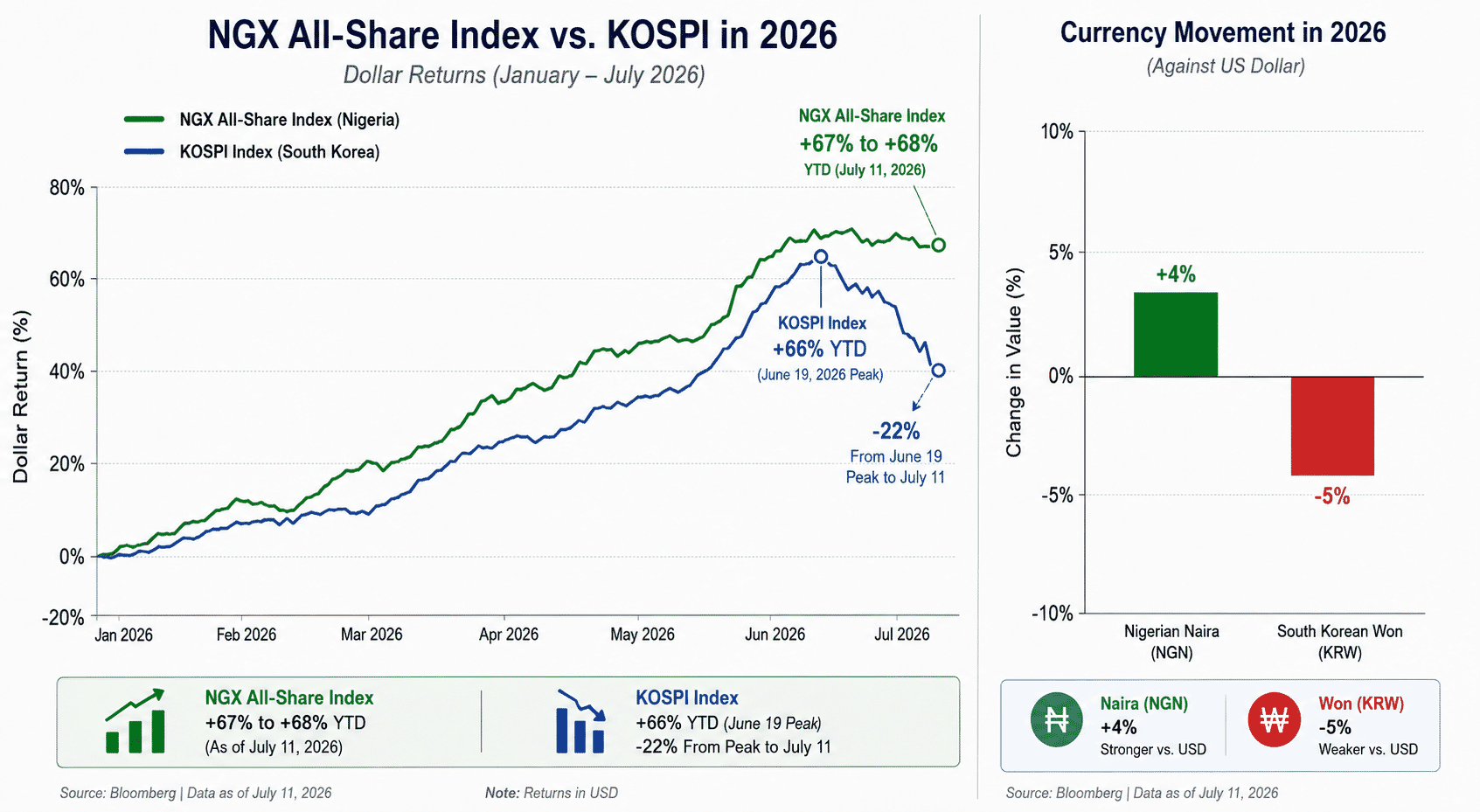
Let's start with the scoreboard. Nigeria's benchmark index has returned 67% in dollar terms this year, outpacing the 66% gain for the Kospi index, according to data from the 92 global stock exchanges tracked by Bloomberg. Some outlets, including Coinpaper citing Global Markets Investor, put Nigeria's return closer to 68%, slightly outperforming the KOSPI's 66% return.
The gap is thin. But in global finance, thin gaps still crown winners.
On the ground, the momentum shows in daily trading. On July 8, 2026, the NGX All-Share Index advanced 2.27% to 242,459.98 points from 237,083.28 points, while total market capitalization increased by N3.45 trillion to N155.59 trillion. That single-day jump came largely from one stock. Airtel Africa's shares rose by the maximum daily limit of 10% to N5,801.40.
Why Kospi Cracked: The AI Bubble Fear Factor
South Korea didn't lose its crown by standing still. It lost it by falling.
South Korea lost its lead after the Kospi slipped into a technical bear market this week, falling 22 percent from its June 19 peak as investors reassessed the outlook for artificial intelligence-related stocks. The won hasn't helped either. The South Korean won has also weakened 5 percent against the dollar this year, making it the fourth-worst-performing Asian currency.
Here's the mechanism behind the panic. While South Korea's market has been heavily dependent on semiconductor and AI-related stocks, Nigerian equities have almost no direct exposure to the artificial intelligence theme. When global sentiment on AI valuations soured, Kospi had nowhere to hide. Nigeria, by contrast, was never in the room.
 Apple OpenAI Lawsuit Rocks Silicon Valley Over Stolen Trade Secrets
South Korea's exchange even tripped its own safety valve. The South Korean exchange recently activated its buy-side safety mechanism after the KOSPI jumped 5.5%, temporarily suspending automated orders from trading algorithms for several minutes. That mechanism usually fires during crashes, not rallies. Its use during an upward move was particularly unusual, underscoring just how jumpy the market has become.
Volatility, not direction, is now the Kospi's defining trait.
Why Nigeria Is Rallying: Reforms, Oil, and a Stronger Naira
The strong performance of Nigerian equities has been supported by ongoing economic reforms, firmer crude oil prices, improved foreign exchange supply, and the appreciation of the naira. The naira has strengthened against the dollar this year, and improved foreign exchange liquidity has renewed investor confidence. Specifically, the naira has gained 4% since January, reinforcing confidence among foreign investors looking for stable emerging-market exposure outside of AI-dependent economies.
Currency strength matters more than most retail investors realize. A stock can rise in naira terms and still lose money for a foreign holder if the naira collapses. This year, the opposite happened. Gains got amplified, not eaten.
Who's Actually Driving the Rally? The Fortis Global Insurance Story
Financial companies have led the Nigerian charge. Fortis Global Insurance has surged approximately 1,483% in dollar terms this year, though a separate report pegs the figure closer to 1,400 per cent in dollar terms since the beginning of the year, making it one of the best-performing listed stocks globally.
Either number is staggering. Both point to the same reality: this rally isn't broad-based across every sector. It's concentrated, and insurance and banking names are pulling the weight.
Nigeria vs. South Korea market trends 2026
What This Means for Everyday Nigerians and Investors
A stronger naira and rising equities mean pension funds, many of which hold NGX-listed stocks, are posting better returns for ordinary contributors. Foreign capital chasing the rally also tends to deepen liquidity, making it easier for local investors to enter and exit positions without moving prices violently.
But there's a flip side. Rapid, concentrated rallies invite profit-taking, and Nigeria has already felt that whiplash this year. The NGX lost N13 trillion in June alone, a reminder that this market swings hard in both directions. Retail investors who chase headlines after the fact, rather than before, often buy the top.
Not Nigeria's First Rodeo: The Historical Trajectory
As of February 24, 2026, the Nigerian Exchange was up 33.5%, making it the fastest-growing frontier market in the world, with total market capitalisation rising to $92.4 billion from $69.2 billion at the start of the year.
Go back further, and the pattern holds. By July 2025, the NGX All-Share Index had climbed to about 27.84% year-to-date growth, driven by foreign exchange reforms, fuel subsidy removal, and the Central Bank's banking sector recapitalisation directive. By that November, the market had extended gains to a 39.44% year-to-date return, ranking among Africa's top four performing exchanges.
This isn't a market that appeared out of nowhere in July 2026. It's a market that's been quietly compounding for two years while global attention sat elsewhere.
The Dangote Wildcard and the Frontier Market Upgrade
First, the Dangote factor. Global index provider S&P Dow Jones Indices is reportedly considering upgrading Nigeria to frontier market status, which could attract additional institutional investment.
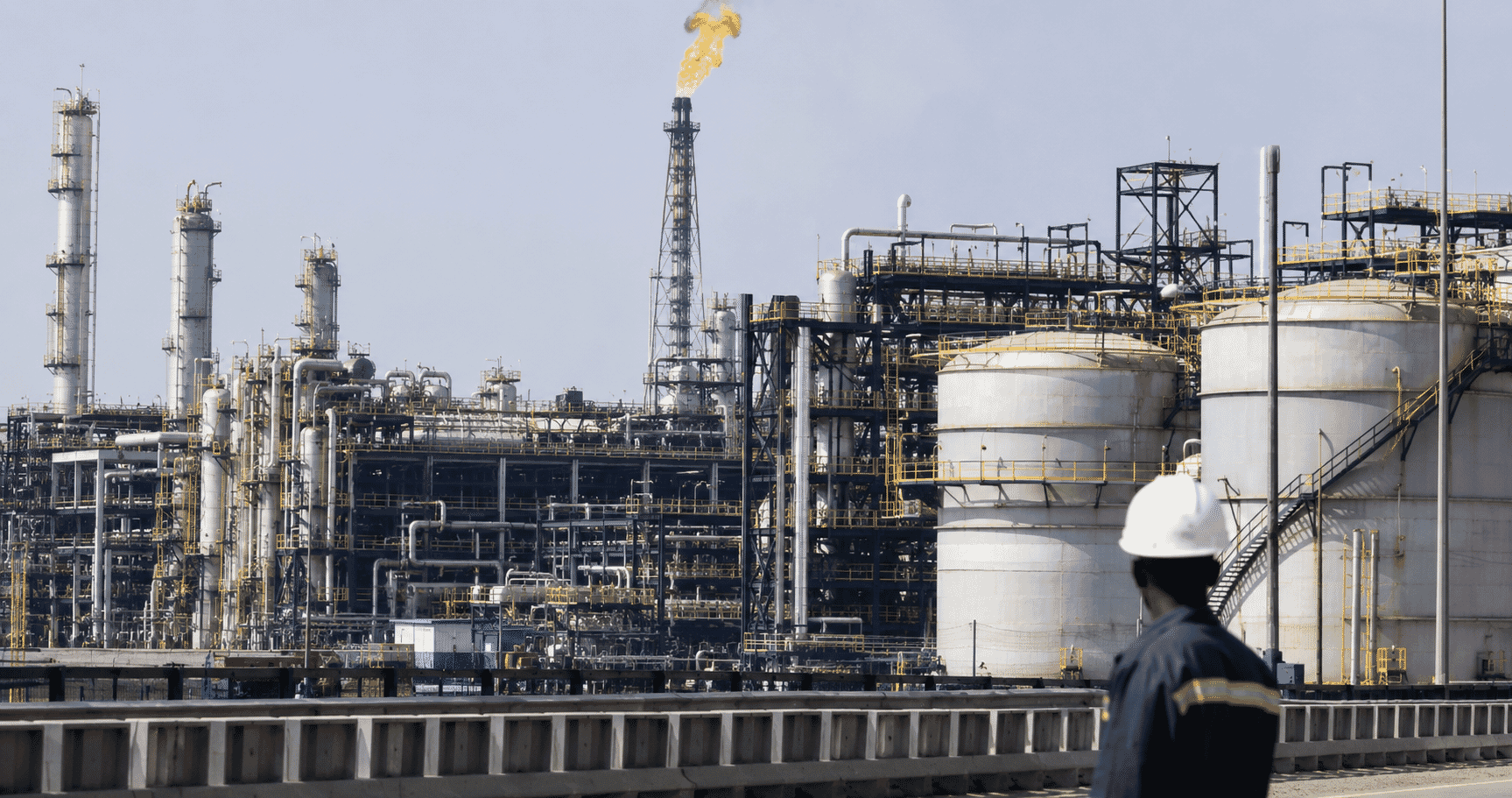
Market participants are also eyeing a potential listing of Dangote's refinery, with the businessman planning to sell about 10% of the facility through a multi-exchange listing across Africa.
Second, the index upgrade itself. S&P Dow Jones has placed Nigeria on its 2027 watchlist for a possible upgrade from standalone market status to frontier-market status, which analysts believe could increase Nigeria's visibility among global investment funds that track benchmark indices and encourage fresh capital inflows.
If both land, Nigeria's rally graduates from a one-year story to a multi-year repositioning of how global fund managers view West Africa's largest economy.
Risks, Criticisms, and the Sustainability Question
Markets that rise this fast attract scrutiny. Valuations in some names now look rich after the run. Breadth matters too. Not every sector participated equally.
Oil price volatility remains a swing factor. A sharp drop in crude would hit energy names and government revenue. Political noise around elections or policy reversals could spook flows.
Critics argue the gains concentrate among elites and institutional players while poverty and inequality stay stubborn. High lending rates near 40% in some segments continue to constrain real-economy activity.
S&P’s placement of Nigeria on watch for potential frontier market status could bring more institutional money, but only if reforms keep delivering and governance metrics improve. Any reversal on FX rules or subsidy policy would test sentiment quickly.
What to Watch Next
The next few months will separate a genuine structural shift from a lucky quarter.
Watch the S&P Dow Jones frontier-market decision timeline heading into 2027. Watch whether Dangote's refinery listing materializes, and on which exchanges. Watch foreign portfolio inflow data monthly, since May's slump is the clearest warning sign in the data right now. And watch the Kospi's recovery attempt, because if AI sentiment stabilizes in Seoul, Nigeria's lead could shrink just as fast as it appeared.
Nigeria earned this headline. Whether it keeps the crown depends on decisions still being made in boardrooms in Lagos, Abuja, and New York.
Read More
-
![Opay Digital Services]() OPay Security Features Activate Emergency Lock and Safety PIN to Protect Customer Accounts
OPay Security Features Activate Emergency Lock and Safety PIN to Protect Customer Accounts ![Aliko Dangote]() Dangote Rejects NNPC Bid to Raise Stake in $20 Billion Refinery, Eyes Public Listing for Nigerians
Dangote Rejects NNPC Bid to Raise Stake in $20 Billion Refinery, Eyes Public Listing for Nigerians-
![Dangote Refinery]() SEC Bans Dangote Refinery IPO Marketing, Orders Refunds Within 24 Hours
SEC Bans Dangote Refinery IPO Marketing, Orders Refunds Within 24 Hours ![Taiwo Oyedele]() Tax Acts 2025: Federal Government Releases Final Transition Guidelines for Nigeria's New Tax Regime
Tax Acts 2025: Federal Government Releases Final Transition Guidelines for Nigeria's New Tax Regime
 OPay Security Features Activate Emergency Lock and Safety PIN to Protect Customer Accounts
 Dangote Rejects NNPC Bid to Raise Stake in $20 Billion Refinery, Eyes Public Listing for Nigerians
 SEC Bans Dangote Refinery IPO Marketing, Orders Refunds Within 24 Hours
 Tax Acts 2025: Federal Government Releases Final Transition Guidelines for Nigeria's New Tax Regime