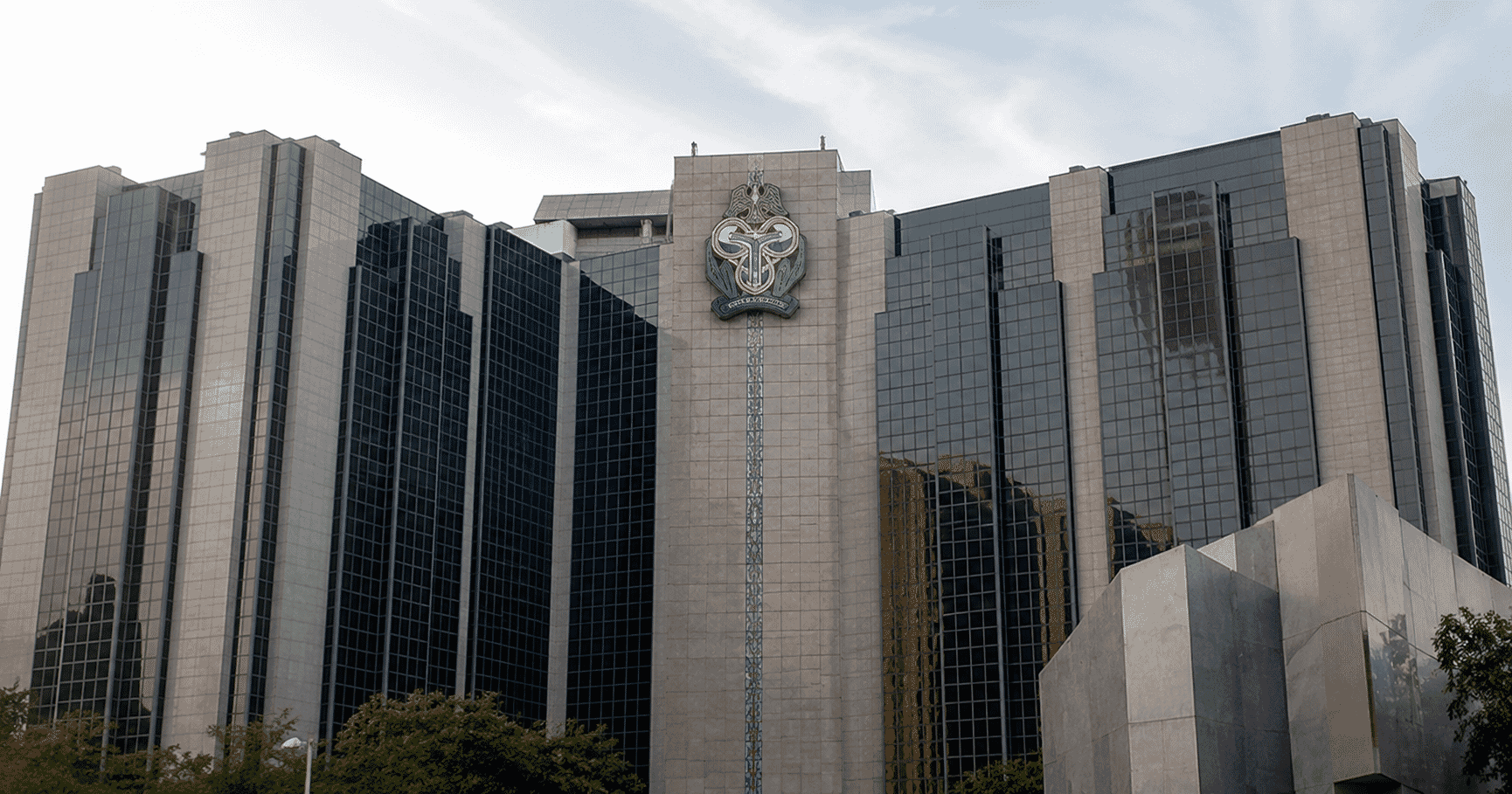
The Central Bank of Nigeria ordered all banks, fintechs, and payment service providers on June 15, 2026, to disclose their ultimate beneficial owners. The directive arrived through a circular signed by Dr. Rakiya Yusuf, Director of the Payments System Supervision Department. It targets hidden ownership structures, data storage practices, and market dominance across Nigeria's digital payments industry.
What the CBN Circular Demands
The circular carries a formal title that spells out its full scope. It is called the introduction of Market Structure Requirements, Data Localisation, Ultimate Beneficial Ownership Disclosure, and Systemic Oversight Measures in the Nigeria Payments System.
Every Deposit Money Bank, Microfinance Bank, Mobile Money Operator, switching company, Payment Terminal Service Provider, Payment Solution Service Provider, Super Agent, and other licensed payment operator falls under the new rules. The CBN addressed the document directly to these institutions.
The regulator built the framework around three pillars. These are beneficial ownership transparency, data localisation, and market concentration limits. Each pillar tackles a different risk the apex bank says has grown alongside Nigeria's digital payments boom.
Why CBN Wants Beneficial Owners Disclosed
The CBN said it has watched significant structural shifts take hold across the payments ecosystem. Rapid growth in electronic payments and digital financial services has reshaped the market within just a few years.
That growth brought real benefits. The CBN acknowledged that digital financial services have boosted innovation, efficiency, and financial inclusion nationwide.
But the same growth raised red flags. The regulator pointed to mounting concerns over market concentration, systemic importance, operational dependence, ownership transparency, and the physical location of critical payments data.
A CBN statement explained the goal directly: the circular aims to improve transparency through beneficial ownership disclosure, address concentration risk, and promote a fair, competitive, and resilient payments ecosystem. The same statement added that the rules also exist to safeguard the integrity of the Nigerian payments system.
 NCC Begins Interconnection Rate Review That Could Push Up Call and SMS Tariffs
Beneficial Ownership Rules Explained
The disclosure requirement applies to significant shareholders across every covered institution. All Deposit Money Banks, Payment Service Providers, and Other Financial Institutions with digital payment footprints shall disclose the Ultimate Beneficial Ownership of significant shareholders in accordance with applicable extant laws and regulations, including Anti-Money Laundering, Combating the Financing of Terrorism, and Counter-Proliferation Financing regulations.
Institutions cannot treat this as a one-time filing. The CBN stated that institutions shall maintain accurate and up-to-date UBO records and make such information available to the CBN upon request.
This builds directly on groundwork the CBN had already laid. The directive builds on previous CBN efforts to strengthen beneficial ownership transparency as part of wider measures to combat money laundering and illicit financial flows in the financial system. Nigeria's AML/CFT/CPF framework now extends with sharper teeth into the payments space specifically.
The timing matters here. Nigeria has spent recent years working to exit increased global financial scrutiny tied to money laundering and terrorism financing controls, and ownership opacity in fast-growing fintechs has remained a persistent vulnerability regulators worldwide flag in similar markets.
Data Localisation Deadline Set for 2027
Beyond ownership disclosure, the circular forces a fundamental change in where payment data physically lives. All financial institutions and participants facilitating payments within Nigeria shall ensure that payments transaction data generated within Nigeria are stored and managed in Nigeria in accordance with data protection laws and regulations applicable in Nigeria.
The compliance clock is now running. The Bank added that all affected financial institutions shall fully comply with this requirement effective January 1, 2027. That gives operators roughly six and a half months from the circular's date to overhaul their data infrastructure.
The CBN tied this requirement to existing legal frameworks rather than creating rules from scratch. The circular stated that all financial institutions shall ensure that payments transaction data generated within Nigeria are stored and managed in Nigeria in accordance with data protection laws. This means the directive works alongside, not against, the Nigeria Data Protection Commission's existing mandate.
The measures follow warnings from the Nigeria Data Protection Commission about coordinated cyber threats targeting financial systems and critical infrastructure. Keeping transaction data on Nigerian soil gives local regulators direct access during incident response, rather than relying on foreign-hosted servers during a breach or systemic event.
New Market Share Caps for Card Issuing and Acquiring
The circular's third major plank attacks dominance directly through hard numerical limits. Card issuing refers to the provision of payment cards to customers, while merchant acquiring involves processing card payments on behalf of businesses. The CBN linked the two activities through a cross-cap designed to stop any single player from controlling both.
The exact threshold language leaves little room for interpretation. Any licensed financial institution engaged in card issuing activities, whether individually or part of a group of related entities, that holds more than twenty-five percent market share in card issuing within any rolling twelve-month period shall not hold more than fifteen percent market share in merchant acquiring activities during the same period.
The rule cuts both ways. Any licensed Financial Institution engaged in merchant acquiring activities, whether individually or as part of group of related entities, that holds more than twenty-five percent market share in merchants acquiring activities within any rolling twelve-month period shall not hold more than fifteen percent market share in card issuing activities during the same period.
Compliance reporting comes with its own separate clock. Firms must submit monthly market share reports and comply by December 31, 2026. That deadline lands a full month ahead of the data localisation cutoff, suggesting the CBN wants market structure compliance settled before the broader infrastructure shift takes effect.
This is not the CBN's only ownership-related move this month. The regulator released an exposure draft of revised guidelines for the licensing and regulation of financial holding companies in Nigeria on June 10, proposing that HoldCos of banks hold shares in subsidiaries instead of the lender's, while capping the stake at 51 percent. Read together, both moves point toward a regulator tightening its grip on who actually controls Nigerian financial infrastructure, not just who appears on a license application.
Compliance Timeline at a Glance
Three deadlines now sit on operators' calendars, each tied to a different obligation under the same circular.
UBO disclosure carries no fixed grace period in the source documents reviewed; institutions must maintain records on an ongoing basis and produce them whenever the CBN asks. Market share compliance reporting begins by December 31, 2026. Data localisation must be fully operational by January 1, 2027.
The sequencing is deliberate. Ownership transparency takes effect immediately upon the circular's issuance, market structure limits get a year-end 2026 checkpoint, and the most infrastructure-heavy requirement, data localisation, gets the longest runway into 2027.
What This Means for Nigeria's Payments Industry
The circular touches nearly every licensed category operating in Nigerian payments today. Deposit Money Banks, Microfinance Banks, Mobile Money Operators, switching companies, Payment Terminal Service Providers, Payment Solution Service Providers, and Super Agents all sit inside its scope.
For fintechs specifically, the ownership disclosure rule closes a gap that has existed as digital platforms scaled faster than traditional licensing frameworks could track. Complex shareholding structures, including foreign holding entities and layered investment vehicles common in venture-backed fintechs, now face direct regulatory demand for clarity on who ultimately benefits from ownership stakes.
For dominant players in card issuing or merchant acquiring, the 25 percent and 15 percent thresholds create a binary choice within the next reporting cycle. Operators must either divest enough market share to stay under the cap in one segment, or restructure how they report group-level holdings across related entities.
The CBN frames all three measures as connected rather than separate policy tracks. The Central Bank said the measures were designed to address concerns over market concentration, operational dependence, and systemic importance as electronic payments continue to expand rapidly across the economy.
Industry compliance teams now have a narrow window to map their ownership structures, audit where transaction data currently sits, and calculate market share exposure across the rolling 12-month windows the circular specifies. The CBN has stated it will monitor compliance and apply supervisory sanctions where institutions fall short, though the circular reviewed does not specify exact penalty amounts for non-compliance.
Read More
![CBN Building]() CBN Orders Banks and Fintechs to Store Payment Data Locally, Sets January 2027 Deadline
CBN Orders Banks and Fintechs to Store Payment Data Locally, Sets January 2027 Deadline![space x]() How to Buy SpaceX (SPCX) Stock From Nigeria: Best Apps and Step-by-Step Guide
How to Buy SpaceX (SPCX) Stock From Nigeria: Best Apps and Step-by-Step Guide![Elon Musk]() Elon Musk Becomes World's First Trillionaire as SpaceX Shares Surge 23% on Nasdaq
Elon Musk Becomes World's First Trillionaire as SpaceX Shares Surge 23% on Nasdaq![Digital Switch Over]() Nigeria Digital Switchover 2026: FG Launches Nationwide DSO on June 17, Ending Analogue TV Broadcasting
Nigeria Digital Switchover 2026: FG Launches Nationwide DSO on June 17, Ending Analogue TV Broadcasting
 How to Buy SpaceX (SPCX) Stock From Nigeria: Best Apps and Step-by-Step Guide
 Elon Musk Becomes World's First Trillionaire as SpaceX Shares Surge 23% on Nasdaq
 Nigeria Digital Switchover 2026: FG Launches Nationwide DSO on June 17, Ending Analogue TV Broadcasting