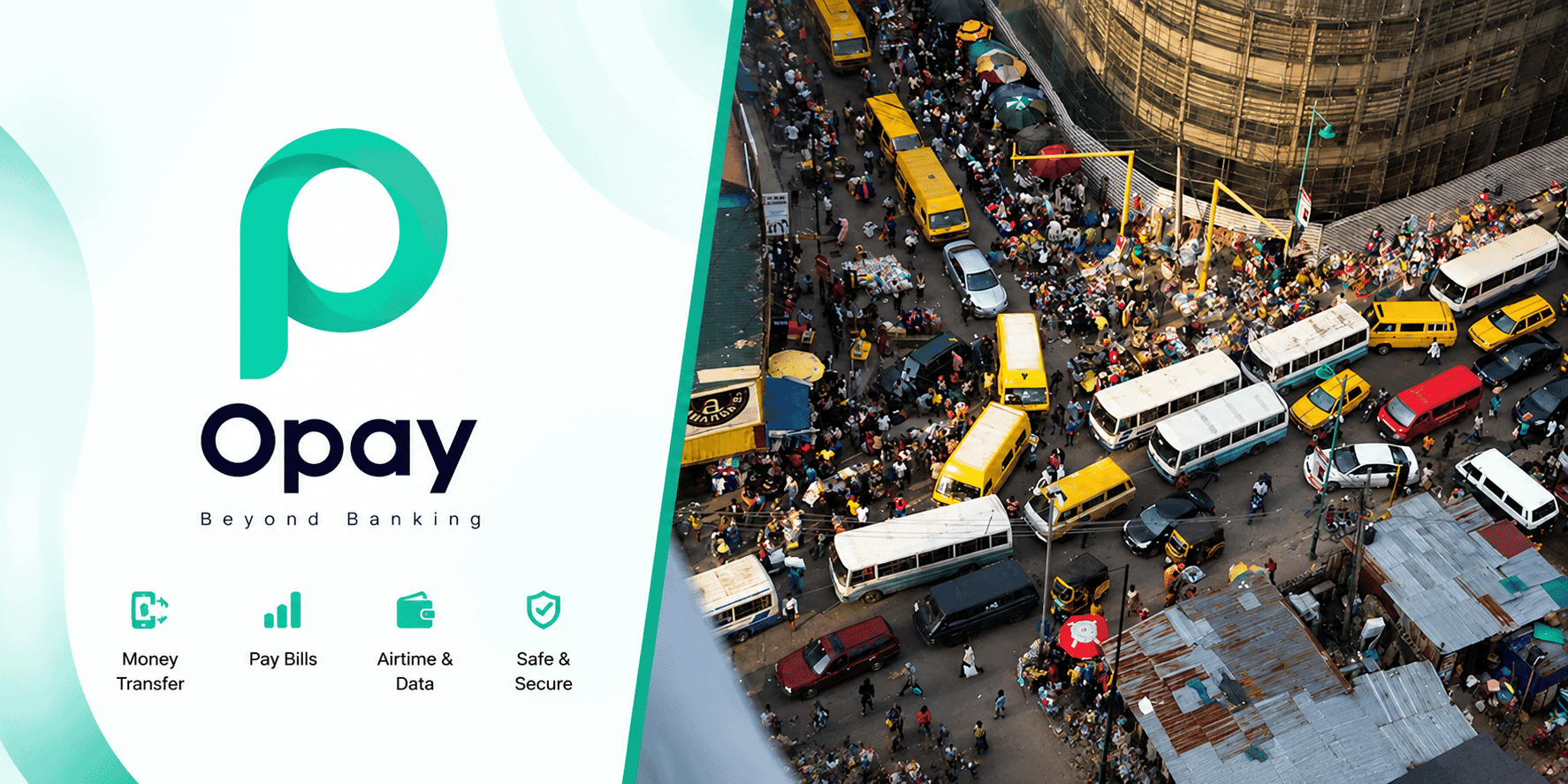
Bloomberg reported on May 1, 2026 that OPay Digital Services has hired three of the most powerful banks on the planet — Citigroup, Deutsche Bank, and JPMorgan Chase — to lead a planned initial public offering on a United States stock exchange. The SoftBank-backed company is targeting a valuation of approximately $4 billion, with the share sale potentially happening before the end of 2026.
This is not casual exploration. Bringing in three Wall Street heavyweights signals a company that is serious, prepared, and moving fast.
The numbers back that up. OPay processed roughly $12 billion in monthly transactions by mid-2025 and posted full-year 2025 revenue of $614.8 million, up 28% year-on-year. That kind of financial profile is exactly what public markets in the United States demand, and OPay is ready to deliver it.
In December 2025, OPay appointed a new global management team, including former Opera CEO Lars Boilesen as co-CEO and James Perry, a former Citigroup managing director with over 25 years of investment banking experience, as CFO. Every move has been deliberate. Every hire has pointed west — toward New York, not Lagos.
How Nigerians Built a $4 Billion Fintech Giant
OPay launched in Nigeria in 2018, founded by Chinese billionaire Yahui Zhou, the same entrepreneur behind the Opera browser. It started with okada ride-hailing, food delivery, and logistics, but when Lagos State banned commercial motorcycles in 2020, OPay pivoted hard and fast into financial services and agent banking.
OPay quadrupled its user base in 2023 alone, as millions of Nigerians turned to digital payment apps during a cash shortage triggered by the Central Bank of Nigeria's controversial banknote redesign. Every transfer fee paid, every POS transaction processed, every savings deposit made Nigerians funded OPay's rise brick by brick.
The result? More than 50 million users in Nigeria alone and roughly $12 billion in monthly transaction volume by mid-2025. OPay grew revenue by more than 60% on a constant currency basis during that period. It built one of the largest agent banking networks in the country, with over 500,000 agents serving communities across Nigeria many in areas traditional banks had long abandoned.
This was not Silicon Valley building a product for Nigerians. This was Nigerians building a product for themselves, one naira at a time, while a foreign company collected the upside.
Who Really Built This Company?
OPay was founded by Chinese billionaire James Yahui Zhou, who also founded Kunlun Tech, the company behind Opera web browser. OPay was incubated by Opera, the Norwegian browser company that is majority-owned and controlled by Chinese firm Kunlun Tech Co., Ltd. The company launched in Nigeria in 2018 and immediately set its sights on the country's massive unbanked population.
Today, OPay serves over 50 million Nigerian users through mobile money, transfers, bill payments, savings, and lending services, delivered via an agent network exceeding 500,000 locations nationwide. That network was not built by investors in Singapore or SoftBank boardrooms in Tokyo. It was built by Nigerian agents, merchants, and everyday users who chose OPay over the alternatives.
The $4 Billion IPO That Bypasses Nigeria
On May 1, 2026, Bloomberg reported that OPay has hired Citigroup, Deutsche Bank, and JPMorgan Chase to lead a planned IPO on a US stock exchange, targeting a valuation of approximately $4 billion. The company may sell shares before the end of 2026.
That valuation represents a doubling from OPay's last publicly disclosed worth of $2 billion in 2021, when SoftBank Vision Fund 2 led a $400 million Series C funding round. By the end of 2025, Opera an early investor holding a 9.5% stake valued that stake at $294.6 million in regulatory filings, implying a total OPay valuation of approximately $3.1 billion. Opera's April 2026 securities filing assigned an 85% probability to an OPay listing within two years.
Not the Nigerian Exchange Group. Not the Nigerian Stock Exchange Technology Board, which has sat empty since its launch in 2022 without a single company listing on it. When OPay finally moved toward a public listing in May 2026, it hired three of the world's most powerful investment banks to take it to Wall Street — not Lagos.
And just like that, Nigerians who spent nearly eight years paying transaction fees and powering this platform's growth will watch the wealth creation event happen thousands of miles away, in a market they cannot easily access.
The US Stock Listing Plan That Changed Everything
OPay plans to list its company on the American stock exchange. Reports frame this as the first choice for the firm’s public debut. American investors would gain clear access to shares under the current setup. Nigerian users would not enjoy the same straightforward path.
One analysis highlights the decision to list in the United States rather than on Nigerian or African exchanges. The move directs future upside toward overseas markets.
Users who spent seven to eight years feeding the platform now see limited ways to participate as shareholders. The listing choice feels abrupt to many.
And the timing amplifies the reaction because the user base remains overwhelmingly Nigerian.
Why Users Describe the Move as a Betrayal
Sources repeatedly use the word betrayal to capture the mood. OPay took advantage of Nigerians who used the app the most, several posts state directly.
The sentiment echoes across platforms: Nigerians built the brand, sustained its growth, and defended its reputation during tough times. Now they risk being excluded from ownership restructuring or share offerings.
One widely viewed video calls the action a clear case of taking advantage after years of heavy local reliance. Users feel they tested the services and delivered the volume only to watch the rewards head elsewhere.
The phrase “Nigerians are not good enough” appears in explanations of the listing priority. It stings because the numbers tell a different story of dependence.
While OPay Looks Away, Dangote Looks Straight at Nigerians
While OPay prepares to list on Wall Street, Africa's richest man is doing the opposite. Chairman of the Dangote Group, Aliko Dangote, announced that Nigerians will have the opportunity to purchase shares in the $20 billion Dangote Refinery within the next four to five months, between June and July 2026. The listing will take place on the Nigerian Exchange Limited, right here at home.
Africa's richest man is preparing to list a 10% stake in his $20 billion refinery on the NGX, and he is bringing something unprecedented to the table: investors will be able to purchase shares in naira while receiving dividends in US dollars. In a country ravaged by currency depreciation, this structure is not just clever — it is generous. It is designed so that ordinary Nigerians can build dollar-denominated wealth without needing a foreign brokerage account.
Dangote reiterated that Nigerian shareholders would have the flexibility to receive dividends either in naira or in US dollars, noting that the refinery generates foreign exchange earnings.
The contrast could not be sharper. One company built its empire on Nigerian soil, then turned its back on the Nigerian market for its biggest financial moment. The other — already a multi-billion-dollar giant chose to come home, to list at home, and to share the wealth at home.
The Wake-Up Call: Support What Supports You Back
Every time a Nigerian uses a foreign-owned fintech platform, pays transaction fees, and generates the data and revenue that inflates a company's valuation, they are making a choice. They are choosing which empire to build. And when that empire lists on a foreign stock exchange, cuts off ordinary Nigerians from ownership, and reserves the wealth for international investors, the cost of that choice becomes clear.
The answer is not to stop using digital finance tools — they are too essential to daily life. But the answer is to pay attention. To support Nigerian-owned businesses wherever possible. To invest in local companies and local listings. To show up for the Dangote refinery IPO the way OPay's own investors are showing up for its Wall Street debut.
This IPO represents a chance to own equity in the infrastructure that is fundamentally changing how Africa produces, refines, and exports energy. That opportunity sits on the Nigerian Exchange, denominated in naira, available to every Nigerian investor who chooses to participate.
Aliko Dangote has opened a door and said: come in, this is yours too. That is the kind of wealth-building behaviour that deserves Nigerian loyalty, Nigerian money, and Nigerian momentum.
Read More
![Aliko Dangote]() Aliko Dangote Reveals Plans for a 20,000MW Power Project
Aliko Dangote Reveals Plans for a 20,000MW Power Project![Cybercriminal]() Nigeria Records 281,500 Breached Accounts in Q1 2026
Nigeria Records 281,500 Breached Accounts in Q1 2026![Olayinka Ijabiyi]() FirstBank Appoints Olayinka Ijabiyi as Head of Marketing and Corporate Communications
FirstBank Appoints Olayinka Ijabiyi as Head of Marketing and Corporate Communications![Opay]() OPay Hires JPMorgan, Deutsche Bank, and Citigroup for a $4 Billion US IPO That Could Redefine African Fintech
OPay Hires JPMorgan, Deutsche Bank, and Citigroup for a $4 Billion US IPO That Could Redefine African Fintech
 Aliko Dangote Reveals Plans for a 20,000MW Power Project
 Nigeria Records 281,500 Breached Accounts in Q1 2026
 FirstBank Appoints Olayinka Ijabiyi as Head of Marketing and Corporate Communications
 OPay Hires JPMorgan, Deutsche Bank, and Citigroup for a $4 Billion US IPO That Could Redefine African Fintech