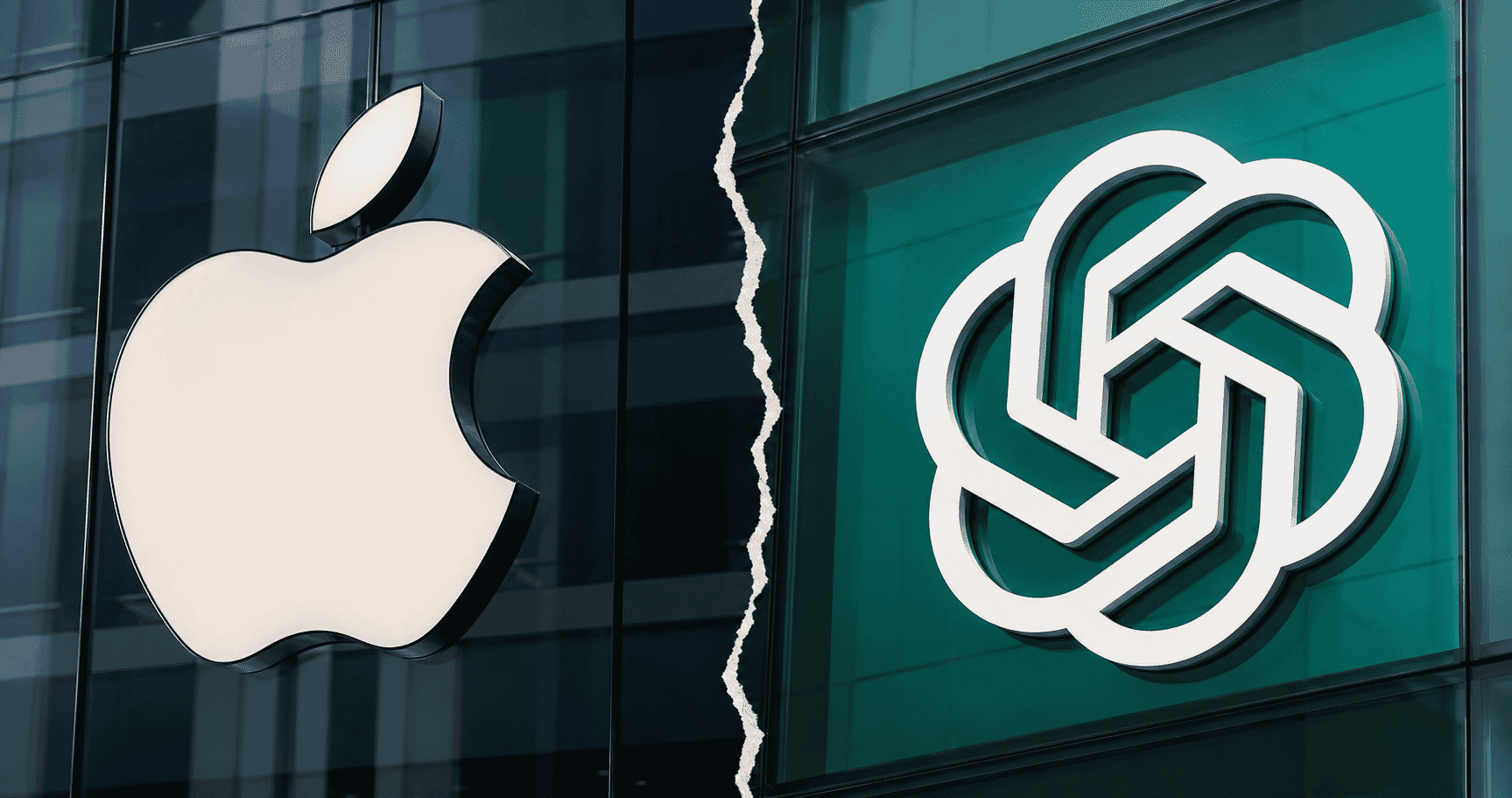
This isn't a minor spat. It's a rupture between two companies that shook hands on a landmark AI deal just two years ago.
What Apple's Lawsuit Actually Alleges
Apple's complaint reads like a corporate espionage thriller. The filing claims OpenAI ran a systematic effort to drain Apple of confidential product data.
The core accusation is direct. Apple's court filing states that OpenAI has been stealing Apple's trade secrets and confidential information at nearly every level of its organization.
Here's the specific evidence Apple laid out. Chang Liu, a former senior electrical engineer at Apple, kept his work laptop after leaving the company. He allegedly discovered a bug that let him access Apple's cloud file storage after he left, and used it to download confidential hardware files.
Liu reportedly wasn't subtle about it either. According to the filing, he celebrated the access in a message to a former colleague who was still at Apple.
Tang Tan, OpenAI's chief hardware officer and a 24-year Apple veteran, faces separate allegations. Apple claims Tan directed job candidates still employed at Apple to bring actual parts, like batteries and logic boards, to their OpenAI interviews for "show and tell" sessions.
 iPhone 18: 10 Cool Reasons It Could Be Your Dream iPhone
One candidate was reportedly stunned by the request. He said he didn't even know they could take those parts from the office.
Apple also alleges OpenAI misled a trusted manufacturing partner into demonstrating a proprietary metal-finishing technique, believing it had Apple's blessing. It didn't. A second supplier focused on battery manufacturing was reportedly approached with insider terminology to extract details on specific components.
Who Tang Tan and Chang Liu Are, and Why They Matter
The résumés involved are heavyweight. Tang Tan spent over two decades at Apple, most recently as vice president of product design for the iPhone and Apple Watch, before becoming OpenAI's chief hardware officer.
Liu spent eight years at Apple as a senior systems electrical engineer before joining OpenAI in January 2026.
Neither is a random hire. Both sit at the center of OpenAI's push into consumer hardware, a project led in spirit by Jony Ive, Apple's former chief design officer.
Ive is notably absent from the defendant list. OpenAI acquired his hardware startup, io Products, in a deal reportedly worth around $6.4 billion. io Products itself is named as a defendant in the suit, but Apple stopped short of accusing Ive personally of wrongdoing.
That's a deliberate line Apple drew. Suing the architect of the iPhone would have been a much bigger, murkier fight.
Why Now: The Timing Behind Apple's Legal Strike
Timing is everything in litigation, and this filing didn't come out of nowhere. Apple says it first flagged concerns to OpenAI back in February 2026 and got silence in return.
The pressure had been building for months before that. Bloomberg had reported that OpenAI was separately weighing its own breach-of-contract claim against Apple, over how ChatGPT was integrated into Siri.
Apple's suit also lands two months after OpenAI won a major legal battle of its own. A federal jury sided with OpenAI against Elon Musk, ruling Musk waited too long to sue the company over claims it abandoned its original nonprofit mission. Musk has said he'll appeal.
Now the tables have turned, and OpenAI is the one facing serious legal exposure. The suit also arrives as OpenAI reportedly explores a Wall Street IPO, one that would be among the largest tech listings in years.
That's a rough backdrop for a company trying to project stability to investors.
How This Compares to Other Silicon Valley Trade Secret Wars
Big Tech has seen this movie before, just with different studios. The closest historical parallel is Waymo's 2017 lawsuit against Uber, where a former Google engineer allegedly took thousands of confidential self-driving files before launching a competing startup that Uber acquired. That case settled for roughly $245 million in Uber equity.
The Apple-OpenAI case follows a similar script: senior insiders, alleged unauthorized downloads, and a rival racing to catch up in a hot new hardware category. But there's a key difference. Waymo and Uber were adversaries from day one.
Apple and OpenAI were partners. Sam Altman personally visited Apple's headquarters when the two companies announced their ChatGPT integration deal in 2024. That makes this feel less like a rivalry and more like a betrayal, at least from Apple's side of the table.
It also echoes Microsoft's recent moves. Reports this month indicate Microsoft is replacing some OpenAI-powered software with its own in-house MAI models in products like Word and Excel, a sign that even OpenAI's closest allies are hedging their bets.
What This Means for the Apple-OpenAI Partnership and Everyday Users
Here's the part that actually touches your iPhone. Apple's revamped Siri, launching this fall, is reportedly built on Google's Gemini models rather than OpenAI's technology. That's a notable shift already underway before this lawsuit even hit.
But ChatGPT is still woven into Apple Intelligence today, letting Siri hand off complex questions to OpenAI's models. Apple hasn't said whether this lawsuit changes that arrangement. Neither has OpenAI.
For end users, the immediate risk isn't a broken feature. It's a slower one: a chillier relationship between the two companies could complicate future integrations, delay updates, or push Apple to lean harder into rival AI partners like Google.
If you're an iPhone owner who relies on ChatGPT through Siri, nothing breaks today. But the long-term trajectory of that partnership just got a lot less certain.
Likely Criticisms Apple Will Face
Every high-profile lawsuit invites skepticism, and this one is no exception. Critics will likely note that Apple has a long history of aggressive litigation, from its patent wars with Samsung to disputes with app developers, and some will frame this as another example of a dominant incumbent using courts to slow down a nimble rival.
There's also the talent-poaching angle. Apple has reportedly lost over 400 former employees to OpenAI in recent years. Skeptics may argue this lawsuit is as much about stemming that brain drain as it is about protecting trade secrets.
OpenAI's defense will almost certainly lean on the idea that hiring people who worked at a competitor is standard industry practice, and that knowing how a rival builds products isn't the same as stealing their files. Expect that argument to dominate OpenAI's court filings in the months ahead.
What Happens Next
Apple is seeking damages, a court injunction, and an order forcing OpenAI to stop using any disputed material. OpenAI has denied wrongdoing, with a spokesperson stating plainly that the company has "no interest in other companies' trade secrets".
Court proceedings in Northern California typically take months, if not longer, to reach trial. Expect discovery to surface more internal communications from both companies, and expect both sides to fight hard in the press as much as in the courtroom.
For now, the partnership that once put Sam Altman in Apple's boardroom looks more fractured than ever. Whether it survives this lawsuit intact is, honestly, an open question even Apple and OpenAI themselves may not have answered yet.
Read More
 iOS 27 Beta 2 Features: Every New Change You Need to Know
 WhatsApp Users Can Now Spot a Block Using a Hidden Encryption Feature
 One UI 9: Full List of Samsung Devices Getting the Update Revealed
 WhatsApp View-Once Mode Expands to Text Messages on iOS and Android, Blocking Screenshots and Forwards