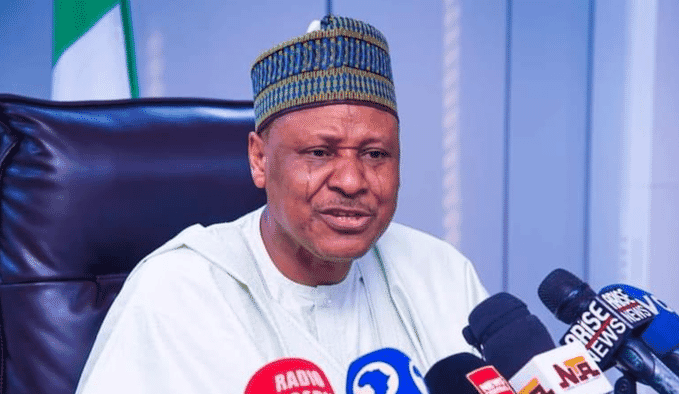
The Federal Government confirmed the DSO project is complete and will be rolled out nationwide on June 17, 2026. The announcement marks the end of a prolonged transition effort that successive administrations failed to complete.
The DSO project, managed by the National Broadcasting Commission, represents Nigeria's nationwide shift from analogue to digital terrestrial television broadcasting. The project aims to improve broadcast quality, boost the digital economy, and free up spectrum for broadband development.
Minister Mohammed Idris Announces DSO at NigComSat Facility Tour
Minister Idris made the announcement during a facility tour of the headquarters of the Nigerian Communications Satellite Limited, known as NigComSat, in Abuja, where he was received by the Managing Director and Chief Executive Officer of NigComSat, Jane Egerton-Idehen.
The minister was accompanied by the Director-General of the National Broadcasting Commission, Charles Ebuebu, during the tour of facilities at NigComSat, located at the Obasanjo Space Centre.
Speaking to journalists after the inspection, Idris left no room for ambiguity. "You recall that for many years, Nigerians have been grappling with this idea of the DSO, the digital switchover. In other words, removing our transmissions from analogue to digital. Now this has happened, and it is ready to be commissioned by the 17th of June this year," Idris said.
 OPay's $4 Billion Wall Street Dream Was Built on Nigerian Wallets — So Why Are Nigerians Not Invited?
100 Free Channels, HD Broadcasting, and Satellite Coverage Nationwide
The scale of the DSO platform distinguishes this rollout from all previous attempts. The minister confirmed the platform will deliver over 100 free television channels for Nigerians.
The platform is expected to offer around 100 channels and HD broadcasting, with government confirming the new service will be more affordable and flexible for users.
According to NigComSat CEO Jane Egerton-Idehen, the service would eventually migrate fully from standard definition to high definition, while additional upgrades are already being planned. That planned migration positions Nigeria's broadcasting infrastructure for long-term growth beyond the initial switchover.
Unlike previous pilot schemes limited to a handful of cities, the new digital switchover will leverage satellite technology and mobile applications to achieve wider coverage across Nigeria and parts of Sub-Saharan Africa.
Four Key Agencies Drove the DSO Collaboration
The nationwide rollout did not happen in isolation. Idris noted that the collaboration between NigComSat, the National Broadcasting Commission, the Ministry of Communications, and the Ministry of Information and National Orientation made the rollout possible.
Egerton-Idehen also highlighted the partnership between NigComSat, the NBC, the Ministry of Communications, and the Ministry of Information and National Orientation in driving the rollout process.
That four-agency coordination, spanning both technical and regulatory bodies, addresses a persistent weakness that stalled earlier DSO attempts, which often lacked unified government backing and infrastructure readiness at the same time.
How Digital Broadcasting Transforms Advertising and Audience Measurement
Beyond improved picture quality, the DSO introduces a structural shift in how Nigerian television advertising works. The new system will improve TV quality, advertising, and audience tracking.
The DSO would improve audience measurement for broadcasters and advertisers, enabling them to determine viewing patterns and make informed decisions.
The minister explained what this means in practical terms. "Now science is at play. If you are now viewing any particular station, you know who is viewing what and how many people are viewing," Idris said.
For advertisers operating across Nigeria and Sub-Saharan Africa, that data-driven shift is significant. It replaces estimated audience figures with verifiable viewership intelligence, a standard that Nigeria's broadcast advertising market has long lacked at scale.
DSO Drives Broadcast Competition and Fuels Local Content Growth
The DSO reshapes the competitive landscape for Nigerian broadcasters. The minister stated that the new digital system would provide free and clearer television services while creating healthy competition among broadcasters and content producers.
"Competition is going to set in. Everybody is going to compete. Content is going to grow. Viewership, hopefully, will also grow," Idris stated.
Increased competition among broadcasters would create more opportunities for local content production and advertising growth, according to Egerton-Idehen.
With over 100 channels launching simultaneously, the DSO opens new distribution pathways for independent Nigerian content producers, Nollywood studios, news organisations, and religious broadcasters that previously lacked viable broadcast access.
President Tinubu's Reform Agenda Credited for Breaking the DSO Deadlock
Nigeria's DSO journey dates back well over a decade. The country missed multiple International Telecommunication Union deadlines, including a globally mandated analogue switch-off that most African nations completed years ago. The project stalled repeatedly due to funding gaps, infrastructure shortfalls, and regulatory fragmentation.
"The promise that President Bola Tinubu made that he is going to reform all sectors. We are seeing this reform in action in the broadcast industry," Idris said.
Idris commended President Tinubu for providing the resources needed to actualise the project. "It's been such a shame in the past that Nigeria has not been able to achieve this. But now, the digital switchover is here," he said.
Egerton-Idehen also commended President Tinubu for supporting the nationwide implementation of the project.
NigComSat Satellite Infrastructure Powers the Nationwide Signal
The technical backbone of the June 17 launch rests on NigComSat's satellite infrastructure at the Obasanjo Space Centre in Abuja. Nigerian Communications Satellite Limited plans to expand services with two new satellites, extending the platform's capacity and reach well beyond the initial launch parameters.
According to officials, the platform will deliver sharper picture quality, expand access to free television, and introduce audience measurement tools that will help advertisers and broadcasters better understand viewership trends.
The satellite delivery model is strategically important. It bypasses the infrastructure gaps that defeated earlier terrestrial-only DSO deployments, reaching remote and rural communities that terrestrial signal towers consistently failed to cover in Nigeria's previous switchover pilots.
Impact on Sub-Saharan Africa: Nigeria's DSO Sets a Regional Benchmark
The ripple effect of Nigeria's DSO extends beyond its borders. The project would impact broadcasting, advertising, and television viewership in Nigeria and sub-Saharan Africa, according to the minister.
As Africa's most populous country and largest economy, Nigeria's successful completion of the analogue-to-digital transition carries weight across the continent. A credible, satellite-powered, multi-agency DSO delivery in Nigeria sets both a technical and policy benchmark for other Sub-Saharan nations still navigating their own transitions.
The commissioning on June 17 will position Nigeria alongside peer economies that completed digital broadcasting transitions years earlier, closing a long-standing gap in the country's media infrastructure development.
What Happens Next: Key Dates and Steps Before June 17
With 34 days remaining until the official commissioning, the focus now shifts to consumer readiness. Nigerians without set-top boxes or digital-ready televisions will need compatible receivers to access the new DSO signal.
The minister described the completion of the DSO project as an indication that President Bola Tinubu had fulfilled his promise on broadcast reform, suggesting the June 17 commissioning will carry significant political weight as a visible policy delivery moment for the administration.
The National Broadcasting Commission, as the project's managing agency, holds responsibility for coordinating the final technical checks, broadcaster onboarding, and public awareness campaigns before the commissioning date.
June 17, 2026 is not simply a technology launch. It is the formal close of one chapter in Nigeria's broadcasting history and the opening of another.
Read More
![Cybercriminal]() Nigeria Records 281,500 Breached Accounts in Q1 2026
Nigeria Records 281,500 Breached Accounts in Q1 2026![Olayinka Ijabiyi]() FirstBank Appoints Olayinka Ijabiyi as Head of Marketing and Corporate Communications
FirstBank Appoints Olayinka Ijabiyi as Head of Marketing and Corporate Communications![Opay]() OPay Hires JPMorgan, Deutsche Bank, and Citigroup for a $4 Billion US IPO That Could Redefine African Fintech
OPay Hires JPMorgan, Deutsche Bank, and Citigroup for a $4 Billion US IPO That Could Redefine African Fintech![CBN]() CBN Authorizes Fintech Banks to Recover Overdue Debts Across BVN-Linked Accounts from May 1, 2026
CBN Authorizes Fintech Banks to Recover Overdue Debts Across BVN-Linked Accounts from May 1, 2026
 Nigeria Records 281,500 Breached Accounts in Q1 2026
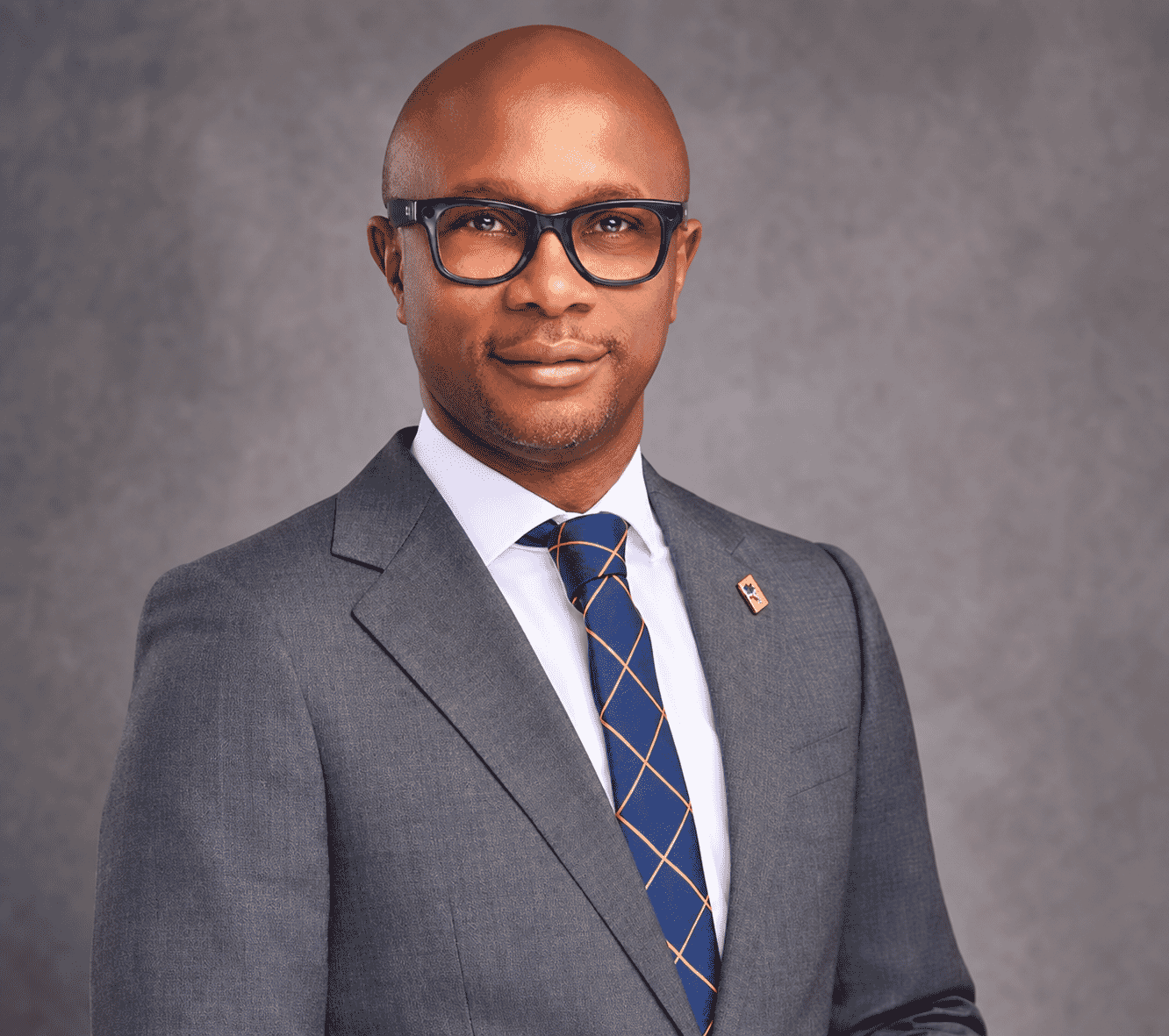 FirstBank Appoints Olayinka Ijabiyi as Head of Marketing and Corporate Communications
 OPay Hires JPMorgan, Deutsche Bank, and Citigroup for a $4 Billion US IPO That Could Redefine African Fintech
 CBN Authorizes Fintech Banks to Recover Overdue Debts Across BVN-Linked Accounts from May 1, 2026