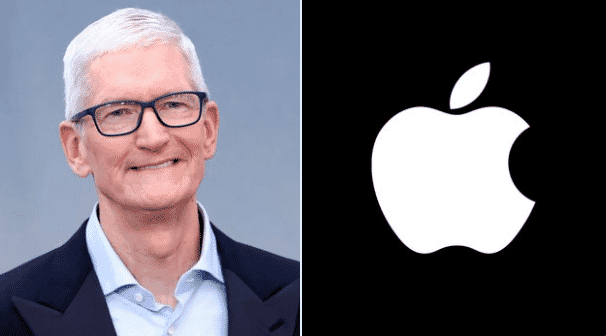
Apple dropped a bombshell announcement today that’s already rocking the tech world. Tim Cook will step down as CEO on September 1, 2026, and hand the keys to John Ternus, his trusted senior vice president of Hardware Engineering.
The move marks the end of an era after nearly 15 years at the helm, yet it feels like a carefully planned next chapter rather than a sudden exit.
You can almost feel the emotion in the air as the company shares the news straight from Cupertino.
 Apple Set to Use Samsung Camera for iPhone 18: The Game-Changer iPhone Fans Have Been Waiting For
Tim Cook Steps Down: The End of an Era That Redefined Tech
When Tim Cook took over from the late Steve Jobs in 2011, plenty of industry veterans doubted the methodical operations expert could lead a company built on vision and charisma. They were spectacularly wrong. Under Cook's stewardship, Apple shares appreciated more than 1,700%, and the company's market value surged past $4 trillion, making it the third most valuable public company in the world, behind only Nvidia and Google's parent Alphabet.
Cook himself did not hide his feelings about the role he is leaving. He described serving as Apple's CEO as "the greatest privilege of my life," expressing deep gratitude for the opportunity to work with "ingenious, innovative, creative, and deeply caring people." It is a farewell that carries genuine weight.
Still, the timing surprised even those closest to the situation. Analyst Dan Ives of Wedbush Securities told CNBC that Cook's departure is earlier than expected, noting that the general view was Cook planned to stay on for at least another year. That surprise partly explains why Apple shares dipped slightly in after-hours trading, even though the transition itself had been anticipated for some time.
"John Ternus has the mind of an engineer, the soul of an innovator, and the heart to lead with integrity and with honor. He is without question the right person to lead Apple into the future."
Tim Cook, Apple CEO, on his successor John TernusWho Is John Ternus: The New Apple CEO Taking the Stage in September
If you have been following Apple closely, Ternus is not a stranger. He joined Apple's product design team in 2001, just four years after graduating with a degree in mechanical engineering from the University of Pennsylvania, where he also competed on the varsity swim team. He has spent virtually his entire professional life at Apple, rising through the ranks steadily and quietly.
By 2013 he held the title of vice president of hardware engineering. In 2021, when his predecessor Dan Riccio stepped aside to lead the Vision Pro project, Ternus was promoted to senior vice president, making him the youngest member of Apple's executive team at that time. He has been a core architect of some of Apple's most consequential hardware over the past decade.
His fingerprints are on the iPhone 17 lineup, the MacBook Neo, AirPods advancements in hearing health, recycled aluminum compounds used across product lines, and 3D-printed titanium in the Apple Watch Ultra 3. In short, much of what you hold, wear, and plug in today exists because of Ternus.
He has also been no stranger to the spotlight. He has been widely viewed as next in line, with recent profiles in The New York Times and Bloomberg cementing his status as the heir apparent long before Monday's announcement. In his own statement, Ternus acknowledged the weight of the moment while projecting genuine optimism.
How the Transition Works: What Happens Before September 1
Apple has structured this carefully. The transition was approved unanimously by the Board of Directors and follows what the company described as a thoughtful, long-term succession planning process. This was not a snap decision made in a boardroom over a weekend.
Cook will remain in the CEO chair through the summer, working closely with Ternus to ensure a smooth handover. As executive chairman, Cook's new responsibilities will include engaging with policymakers around the world. He remains deeply embedded in Apple's strategic direction, just from a different seat.
Meanwhile, Ternus's previous role leading hardware engineering will be filled by Johny Srouji in an expanded capacity and Tom Marieb, effective immediately. The leadership structure beneath the CEO is already shifting to support the new era. Apple is clearly leaving nothing to chance.
Arthur Levinson, who served as Apple's non-executive chairman for the past 15 years, steps into the role of lead independent director, also effective September 1. Ternus will simultaneously join Apple's board of directors on that date, cementing both his operational and governance authority from day one.
The AI Challenge Waiting for Apple's New CEO
Make no mistake about it. The biggest test of John Ternus's leadership will not be designing a sleeker iPhone. It will be steering Apple through one of the most competitive and consequential periods in the history of technology: the AI race.
Apple's AI chief left the company at the end of 2025. The company has delayed a more capable AI-powered Siri multiple times. And rather than developing its own cutting-edge models, Apple recently turned to Google's Gemini to power its AI features. Investors and technologists have grown increasingly vocal about Apple's perceived lag behind rivals in generative AI.
Analysts see pushing Apple deeper into artificial intelligence as perhaps the most critical challenge for Ternus in his new role. He brings extraordinary hardware expertise. But leading an AI-first future will demand more than great product engineering. It will demand a bold strategic vision.
Ternus has already signaled his ambition. He expressed optimism about what Apple can achieve in the years ahead and spoke of being honored to carry Apple's mission forward. The question is whether his hardware-forged instincts can be channeled into the software and services battleground where Apple's next decade will be won or lost.
Cook's Legacy: A Supply Chain Wizard Who Built a $4 Trillion Empire
It is worth pausing to recognize exactly what Tim Cook built. When he joined Apple in 1998, Jobs needed someone to fix a supply chain that was, by most accounts, a disaster. Cook closed warehouses, consolidated suppliers, and turned Apple's manufacturing operation from a liability into a competitive advantage.
His operational genius is a foundational reason Apple can deliver hundreds of millions of devices globally every year.
Revenue almost quadrupled under Cook, climbing to over $400 billion in the latest fiscal year. He oversaw the Apple Watch, AirPods, and Vision Pro. He navigated trade wars, tariff threats, and a global pandemic. He also successfully managed Apple's relationship with the Trump administration, helping Apple avoid many of the steepest tariffs while committing to domestic manufacturing investments including Mac Pro assembly in Houston and iPhone glass production in Kentucky.
He leaves behind a company that is stronger, larger, and more deeply embedded in daily life than at any point in Apple's 50-year history. That is an extraordinary legacy by any standard.
What This Means for Apple Investors and Users Right Now
If you own Apple shares, the after-hours dip of less than 1% tells you the market is calm, not panicked. Apple reports earnings on April 30, which will give investors their first opportunity to hear from the new leadership team directly and to assess the outlook for the business under the incoming CEO.
For Apple customers, the short answer is: nothing changes on September 1 in terms of the products in your pocket or on your wrist. But over the medium term, the strategic bets Ternus makes on AI, hardware innovation, and services will directly shape what Apple builds for you next. His 25-year track record of delivering industry-defining hardware is genuinely encouraging.
And there is something quietly exciting about an engineer taking the top job at the world's most valuable consumer technology company. Ternus knows how these products are made, down to the material science and the millimeters. That matters.
Read More
![Whatsapp Logo]() WhatsApp Liquid Glass Rolls Out to iPhone Users – When Does Android Finally Get Its Version?
WhatsApp Liquid Glass Rolls Out to iPhone Users – When Does Android Finally Get Its Version?Microsoft Is Shutting Down the Outlook Lite App for Android – Here’s Why and What You Must Do Right Now
![Xchat]() X Is Launching XChat: The Standalone Messaging App Taking on WhatsApp
X Is Launching XChat: The Standalone Messaging App Taking on WhatsApp-
![X logo]() Voice Notes Are Back on X Chat: Everything You Need to Know
Voice Notes Are Back on X Chat: Everything You Need to Know
 WhatsApp Liquid Glass Rolls Out to iPhone Users – When Does Android Finally Get Its Version?
 X Is Launching XChat: The Standalone Messaging App Taking on WhatsApp
 Voice Notes Are Back on X Chat: Everything You Need to Know