Apple's first foldable iPhone is closer to reality than the panic headlines suggest. Yes, there were engineering hurdles. Yes, supply chain sources raised alarm bells. But according to people with direct knowledge of the situation at Bloomberg, the device is still on track to debut this September right alongside the iPhone 18 Pro lineup.
This is the most significant iPhone redesign in the product's 19-year history. Apple knows it. Internally, the device reportedly carries that exact weight. And the company has no intention of missing its window.
Here is everything you actually need to know, drawn from the most reliable sources tracking this launch.
The September 2026 iPhone Fold Launch: What the Reports Actually Say
On April 7, 2026, Nikkei Asia published a report warning that the foldable iPhone faced serious engineering challenges during test production. The story cited sources inside Apple and among component suppliers, suggesting the device could be delayed by months and potentially pushed into 2027.
The market reacted immediately. Apple shares dropped on the news.
Within hours, Bloomberg's Mark Gurman published a rebuttal. His sources told him the device is still scheduled to arrive during Apple's usual September iPhone launch window alongside the iPhone 18 Pro and Pro Max. Gurman acknowledged the complexity of the device may limit early supply, but made clear that Apple is not changing its target launch window.
Apple's foldable iPhone is on track to arrive during the company's normal iPhone launch period later this year, people with knowledge of the matter said, rebutting concerns about major manufacturing snags.
Bloomberg, April 7, 2026Gurman has an exceptionally strong track record on Apple product timelines. When he says September, the industry listens. The discrepancy between Nikkei and Bloomberg likely reflects the difference between what is happening on the factory floor during testing and what Apple's internal target remains. Engineering test phases surface problems by design. The question is whether those problems become launch-blockers, and right now, they are not.
Why There Are Delay Fears and Why They Are Not the Full Story
Foldable phones are genuinely difficult to manufacture. Every hinge cycle, every fold of the display, every millimeter of thickness is a precision engineering problem. Apple is attempting to build the thinnest foldable smartphone on the market with the least-visible crease ever achieved. That ambition creates production risk.
Nikkei's sources described the engineering verification testing phase as "more complex than expected." One source said the current solutions are "not enough to completely solve the engineering challenge" and that more time is needed. The report also flagged that component suppliers had been notified production schedules may need adjustment.
A separate leaker claimed Apple is still deciding between liquid metal and a 3D-printed titanium alloy for the hinge, with the final decision expected during the Production Validation Test phase in July or early August.
These are real concerns. But Apple's track record shows it routinely resolves test-phase issues without blowing past launch windows. The company began trial production through Foxconn, with mass production targeted for July if no critical failures emerge. That timeline is tight, but it holds for a September launch.
Trial production underway at Foxconn. Engineering verification testing in progress. Nikkei raises concerns; Bloomberg confirms September target holds.
Mass production scheduled to begin, pending resolution of hinge material decision (liquid metal vs. titanium alloy) and display lamination validation.
Apple event. iPhone Fold unveiled alongside iPhone 18 Pro and Pro Max. Phones go on sale approximately one week after announcement.
Broader availability expected as production ramps up. Initial units will be allocated carefully due to supply constraints.
iPhone Fold Design and Display Specs That Set It Apart
Apple spent years studying every foldable phone on the market and identified the same three problems every time: a visible crease, a thick folded body, and a hinge that degrades over time. The iPhone Fold is engineered to solve all three simultaneously.
When open, the 7.8-inch inner display uses a 4:3 aspect ratio, placing it closer to an iPad mini than any smartphone screen before it. Apple's software team has been building iOS 27 specifically around this experience, with iPad-style multitasking that lets users run two apps side by side. No iPhone has ever done this.
The outer display measures around 5.5 inches and handles everyday interactions when the device is closed. It uses a hole-punch camera design for selfies and quick notifications. Users get full iPhone functionality in a pocketable form.
How Apple Cracked the Foldable Crease Problem
The crease is the Achilles heel of every foldable phone on the market. Samsung is on its seventh-generation Galaxy Z Fold and the crease is still visible and tactile. Google's Pixel Fold improved on it. But none of them eliminated it.
Apple reportedly pursued crease elimination as an absolute priority, regardless of cost. The result is a fold depth of approximately 0.15mm, achieved through a combination of metal plates that distribute and control bending stress, and an advanced display lamination technique that keeps the panel tightly bonded through the fold zone.
The hinge itself is expected to use liquid metal, an amorphous metal alloy that is tougher than titanium, more resistant to deformation, and retains a premium stainless steel appearance. Analyst Ming-Chi Kuo flagged this approach in March 2025, noting it specifically improves screen flatness and minimizes crease marks over thousands of fold cycles.
The crease on the iPhone Fold has been described in reports as "nearly invisible." That claim will be tested hard by reviewers the moment units ship. But the engineering investment Apple has made suggests it is not empty marketing.
The $2,000 Price Tag and Who Will Actually Buy It
The iPhone Fold will start above $2,000 in the United States. That is confirmed by multiple sources including Bloomberg. Leaked pricing from Chinese social media put the full storage range like this: approximately $2,320 for 256GB, $2,610 for 512GB, and around $2,900 for the 1TB model.
That is expensive. But context matters. Samsung's Galaxy Z Fold 6 launched at $1,899. Apple is entering the category with a first-generation device priced at a premium over the category leader. That tells you Apple is not competing on price. It is betting on quality, ecosystem, and the weight of its brand to justify the premium.
| Feature | Apple iPhone Fold | Samsung Galaxy Z Fold 6 |
|---|---|---|
| Inner Display | ~7.8 in (4:3) Larger | 7.6 in |
| Thickness (Open) | 4.5mm Thinner | 5.6mm |
| Crease Visibility | ~0.15mm (Nearly Invisible) Better | Visible |
| Hinge Material | Liquid Metal / Titanium | Armor Aluminum |
| Starting Price | $2,000+ | $1,899 |
| Rear Cameras | 2 (Wide + Ultrawide) | 3 (Wide + Ultrawide + Tele) |
| Biometrics | Touch ID (Side Button) | Side Fingerprint Sensor |
Morgan Stanley analyst Erik Woodring argued that Apple's entry into the foldable category could double the overall market for these devices by the end of fiscal 2027. That is a bold claim, but it reflects a real dynamic. Apple's involvement legitimizes a product category in ways no other company can match.
To put it another way: roughly 40 million foldable phones have sold globally over the past five years. Apple sold 247 million iPhones in 2025 alone. Even a small slice of that audience converting to a foldable creates enormous market pressure.
What the iPhone Fold Means for Apple's Bigger Strategy
Apple does not launch products reactively. The iPhone Fold is the second stage of a deliberate three-year push to rethink what the iPhone is. In 2025, Apple introduced the iPhone Air, a radically thin standard model. This year brings the fold. And for 2027, to mark the iPhone's 20th anniversary, Bloomberg reports Apple is planning another significant redesign.
The iPhone Fold is also being treated as a platform, not just a device. iOS 27 is built around foldable-specific capabilities: split-screen multitasking, continuity features that take advantage of both displays, and layout intelligence that adapts the UI based on whether the phone is open or closed. This is Apple treating software and hardware as one thing, the same approach that made the original iPhone successful.
Hardware chief John Ternus has been closely tied to this project and is widely seen as a leading candidate to eventually succeed Tim Cook as CEO. The stakes for this launch reach beyond product sales.
Supply Constraints at Launch: Plan Accordingly
Even if everything goes to plan in July production, the iPhone Fold will be hard to get on day one. Bloomberg confirmed that the device's engineering complexity will limit initial supply. This is not unusual for Apple's first-generation flagship products. The original iPhone X faced similar constraints in 2017.
If you want one at launch, the smart move is to prepare early. Set up your Apple ID payment information. Be ready to order the moment Apple opens pre-orders, typically the Friday after the September announcement. Waiting a week could mean waiting months.
Apple has not officially confirmed any of this. But Bloomberg and MacRumors, both with exceptional track records on Apple products, paint a consistent picture. The September launch is real. The supply will be tight. And this device will define what a foldable phone can be.
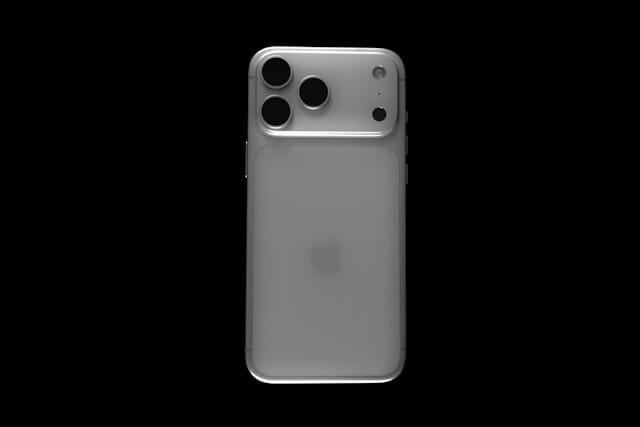 iPhone 18 Pro Leaks: What Apple Could Change Next
 Apple Releases Rare Security Update to Shield Older iPhones from DarkSword Threat
 Apple's New Siri Will Handle Multiple Requests at Once -- Here's What's Actually Changing