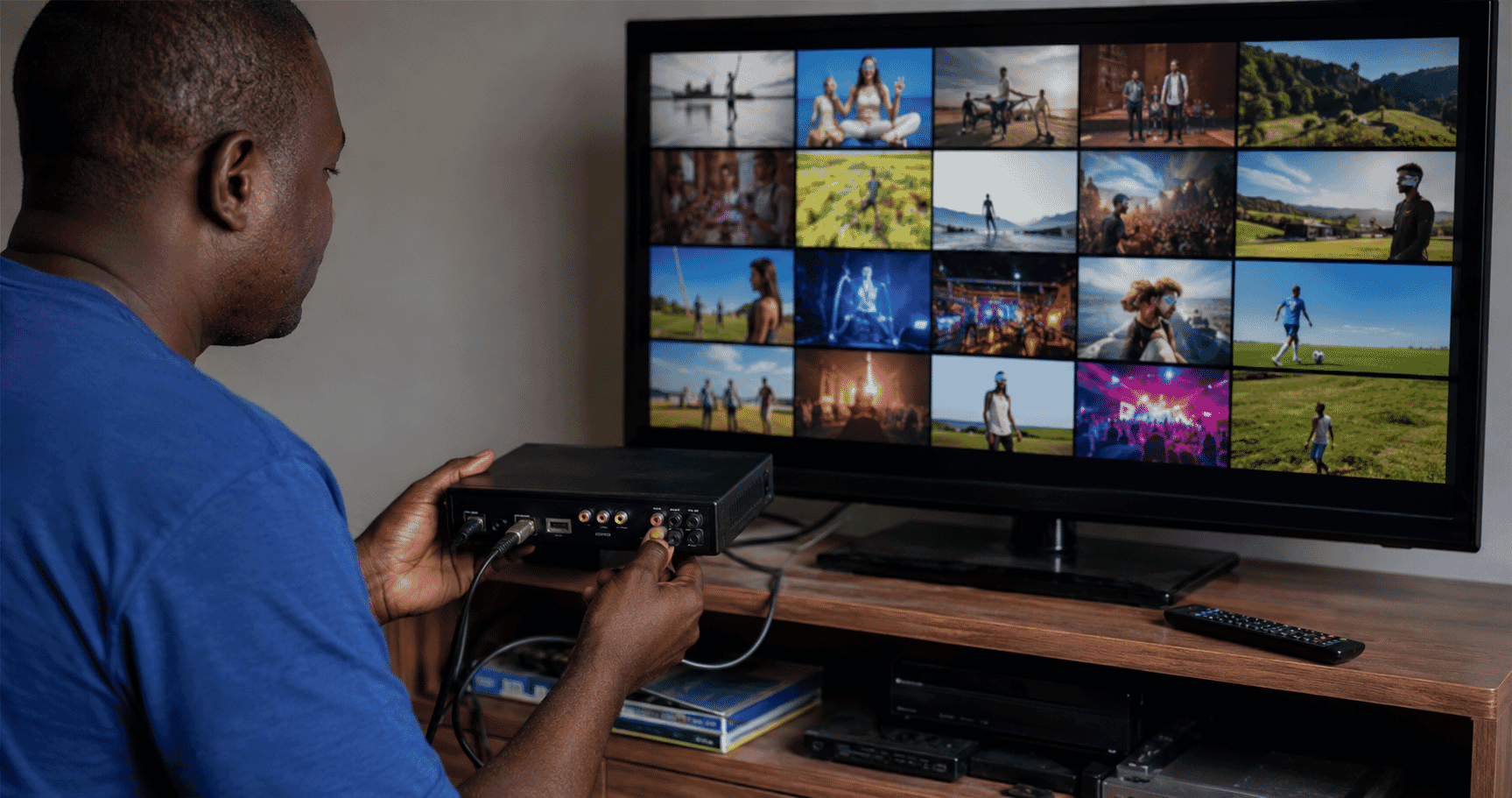
The Federal Government launched FreeTV on Wednesday, June 17, 2026, a nationwide digital television platform offering Nigerian households over 100 free channels. The announcement came via the Presidency's verified X handle, confirming the Digital Switch Over rollout under President Bola Tinubu's Renewed Hope Agenda, with no monthly subscription fees required.
The launch ends years of delay for Nigeria's digital broadcasting transition. It also signals a major shift in how millions of households will access television content nationwide.
What Is FreeTV and How Does It Work
FreeTV is Nigeria's new national digital television platform, built under the Digital Switch Over, DSO, programme. According to the Presidency's statement, the platform gives households access to over 100 national, regional and state channels covering news, sports, movies, music, children's programmes and educational content.
The lineup includes dedicated Yoruba, Hausa and Igbo language channels. This directly addresses a long-standing gap in localized programming across Nigeria's broadcast landscape.
Crucially, Nigerians will not need to buy new television sets. Existing TVs can work with compatible DVB-T2 or DVB-S2 decoders, and households that already own compatible free-to-air decoders may not need new equipment at all.
NBC Director-General Charles Ebuebu confirmed this shift directly. "Nigerians do not need to buy a new television to watch FreeTV," he said, describing the platform as a way to reach families "regardless of location or income."
Why the Government Relaunched the Digital Switchover Now
Nigeria's digital migration journey began in 2006, with an original completion target of 2015. That deadline was missed by over a decade due to funding shortages and the high cost of maintaining transmission towers nationwide.
Ebuebu disclosed that more than N60 billion was invested over 17 years, yet digital signals only reached eight states. Broadcasters were left without reliable audience data or revenue streams throughout that period.
The turning point came in August 2024, when President Tinubu approved a N10 billion fund to revive the stalled project. That funding enabled a strategic pivot in 2025 away from costly tower construction toward a satellite-first model.
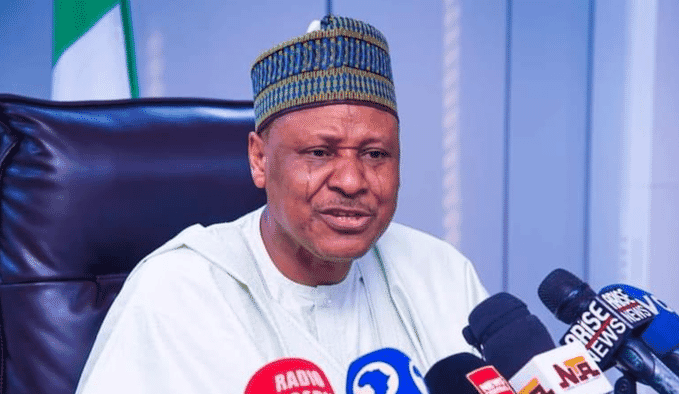
Information Minister Mohammed Idris confirmed the shift represented a deliberate change in approach. "In the past, the boxes were costly and encrypted. Now, it's free. The government has covered those expenses for Nigerians," he said during a facility tour of NIGCOMSAT in Abuja.
How NIGCOMSAT and Satellite Technology Power FreeTV
The new strategy, internally referred to as "The Big Picture," pairs the National Broadcasting Commission with Nigerian Communications Satellite Limited, NIGCOMSAT, to deliver signals via the NigComSat-1R satellite. This hybrid model combines digital terrestrial television, satellite broadcasting and internet-based platforms.
This satellite-first approach is expected to accelerate nationwide coverage by more than 65 percent compared to the tower-dependent model used previously. Unlike earlier DSO pilot phases, which were confined to a handful of cities including Jos, Abuja, Kaduna and Kwara, FreeTV is designed to reach rural communities and previously excluded regions from day one.
Idris emphasized the scale of this expansion. "Everybody can now watch whatever he wants in real time and painlessly. Free TV everywhere for everybody," he declared.
The platform launches in Standard Definition initially, with plans to upgrade to High Definition broadcast quality once the rollout stabilizes.
 CBN Orders Banks, Fintechs to Disclose Ultimate Beneficial Owners in Sweeping Payments Overhaul
What This Means for Pay-TV Competitors and Advertisers
FreeTV's free-to-air model puts direct pressure on Nigeria's existing pay-television operators, who have long held a dominant position in the market. Idris addressed this directly, noting the platform expands options without previous restrictions.
"I don't want to always use the word 'substitute,' but this offers opportunities you didn't get before. You no longer have that monopoly again," he said.
Beyond viewer access, the platform introduces real-time audience measurement tools, a capability Nigeria's broadcast industry has historically lacked. The NBC partnered with GARB Bulgaria, a company that has operated similar audience tracking systems across Europe since 2006, to deploy this technology.
Idris explained the practical impact for advertisers. "If you are viewing a station, we know who is watching what and how many people are watching. Advertisers can now take informed decisions about the kind of programming Nigerians want to watch across all demographics," he said.
Infrastructure and Local Content Investment Behind the Launch
The NBC has commissioned six regional production studios across Nigeria to support content creators outside major hubs like Lagos, Abuja and Kano. This decentralization aims to reduce overdependence on a handful of production centers for nationwide content supply.
Broadcasters that meet a 60 percent local content quota and actively promote FreeTV will benefit from 18 months of waived carriage fees, according to earlier NBC disclosures. The commission also plans to upgrade its call centre to support multiple Nigerian languages and roll out a nationwide network of accredited technicians to assist subscribers after launch.
Approximately 100 channels were confirmed available at launch, with additional broadcasters reportedly in talks to join the platform. About 10 million homes with satellite-ready TVs or compatible set-top boxes are positioned to receive the service immediately, based on NBC estimates shared ahead of launch.
The Road to Launch Day
The June 17 date itself reflects a postponement from an originally planned May 15, 2026 rollout, as confirmed by Telecompaper's reporting on the shift. Idris acknowledged the long road to this point during his NIGCOMSAT facility tour.
"You recall that for many years, Nigerians have been grappling with this idea of the DSO, the digital switchover, in other words, removing our transmissions from analogue to digital. Now this has happened, and it is ready to be commissioned by the 17th of June this year," he said.
The minister credited collaboration between NIGCOMSAT, the NBC, the Ministry of Communications and the Ministry of Information for finally delivering the platform, while crediting Tinubu's administration for providing the resources to complete it.
Read More
![NCC rate review]() NCC Begins Interconnection Rate Review That Could Push Up Call and SMS Tariffs
NCC Begins Interconnection Rate Review That Could Push Up Call and SMS Tariffs![CBN Building]() CBN Orders Banks and Fintechs to Store Payment Data Locally, Sets January 2027 Deadline
CBN Orders Banks and Fintechs to Store Payment Data Locally, Sets January 2027 Deadline![space x]() How to Buy SpaceX (SPCX) Stock From Nigeria: Best Apps and Step-by-Step Guide
How to Buy SpaceX (SPCX) Stock From Nigeria: Best Apps and Step-by-Step Guide![Digital Switch Over]() Nigeria Digital Switchover 2026: FG Launches Nationwide DSO on June 17, Ending Analogue TV Broadcasting
Nigeria Digital Switchover 2026: FG Launches Nationwide DSO on June 17, Ending Analogue TV Broadcasting
 NCC Begins Interconnection Rate Review That Could Push Up Call and SMS Tariffs
 How to Buy SpaceX (SPCX) Stock From Nigeria: Best Apps and Step-by-Step Guide
 Nigeria Digital Switchover 2026: FG Launches Nationwide DSO on June 17, Ending Analogue TV Broadcasting