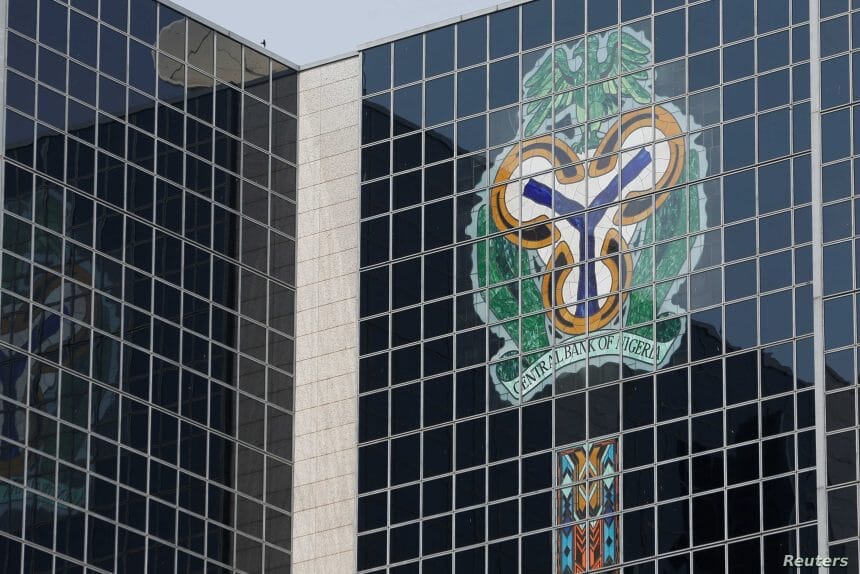
The Central Bank of Nigeria has officially activated sweeping Bank Verification Number reforms from May 1, 2026, tightening debt recovery powers across the financial system and pushing the door wider for fintech lenders to reclaim overdue loans from any BVN-linked account a borrower holds in Nigeria.
This is the boldest move the apex bank has made to Nigeria's identity-based banking framework since the BVN was first introduced in 2014. And if you have an outstanding loan anywhere in Nigeria's financial system, today is a very good day to pay attention.
 Google Shares Skyrocket to All-Time High as Meta Slides: How AI Is Splitting Big Tech in Two
What the CBN's New BVN Reforms Mean for Loan Defaulters
The Central Bank of Nigeria rolled out a package of new BVN guidelines that took effect on May 1, 2026. The changes introduce a "Fraud Watchlist" as a central pillar of the updated framework.
Under this watchlist mechanism, any BVN linked to suspicious transactions gets flagged and placed on a 24-hour review window. During that period, banks may temporarily restrict or freeze accounts connected to the flagged BVN while the account holder is contacted for verification.
This is not just about fraud. The same BVN-tracking infrastructure that flags fraudulent activity is the backbone of Nigeria's Global Standing Instruction (GSI) system, which empowers creditor banks to automatically recover overdue debts from any account a defaulting borrower holds across participating financial institutions.
Simply put, if you owe money and your lender triggers a GSI, every naira sitting in every BVN-linked account you own becomes accessible to the creditor, no matter which bank or digital wallet holds it.
How the GSI System Works and Why It Matters Right Now
The GSI framework has been in place since August 1, 2020, when the CBN introduced it to reduce Nigeria's chronic problem of non-performing loans. But here is what makes the current moment different and urgent.
The Nigeria Inter-Bank Settlement System (NIBSS) serves as the operational engine behind every GSI trigger. When a creditor bank activates a GSI, NIBSS searches its Industry Customer Accounts Database for all accounts tagged to the defaulter's BVN and initiates automatic debits across those accounts to recover the outstanding principal and accrued interest.
Importantly, the GSI covers individual savings accounts, current accounts, domiciliary accounts, investment and deposit accounts, and electronic wallets. Even joint accounts are not exempt, as long as the defaulter's BVN is linked to that account.
The creditor can only recover the principal loan amount and accrued interest. Penal charges and penalty fees are not recoverable through the GSI, and any financial institution that uses the system to collect penalties faces regulatory sanctions from the CBN.
Fintech Lenders and the Push to Join the BVN Debt Recovery Network
Here is where the story gets especially significant for Nigeria's fast-growing fintech lending sector.
For years, fintech companies and microfinance institutions have been locked out of the GSI network despite running substantial credit portfolios. Digital lenders like Carbon, FairMoney, and scores of others could not automatically recover overdue debts through the BVN system the way commercial banks could.
Nairametrics reported in February 2026 that the CBN stated the expansion of the GSI framework to fintech lenders and Microfinance Institutions was actively underway, with phased completion expected through 2026. That timeline now directly intersects with the May 1 BVN reforms.
A fintech industry operator captured the frustration of exclusion plainly: "We need GSI like yesterday. Non-performing loans are a major issue, and our contribution to the economy is massive, yet we are excluded from critical financial tools." That exclusion is now being systematically dismantled.
NIRSAL Microfinance Bank, the government-backed institution, has already been deploying the GSI tool to recover COVID-19 loans granted during the pandemic era. Many beneficiaries were shocked to find their accounts debited automatically, but NIRSAL MFB maintained those deductions were fully legitimate under signed loan agreements.
The 5 Key BVN Changes Every Nigerian Borrower Must Know from May 1
Beyond debt recovery, the CBN's May 1 reforms affect every account holder in Nigeria. Here is what changed.
First, your BVN-linked phone number can now only be changed once in your lifetime. The CBN introduced this rule to combat SIM-swap fraud, which criminals have used to hijack phone numbers and gain access to bank accounts. Customers are advised to link their BVN to a secure, long-term number already connected to their National Identification Number.
Second, the minimum age for BVN enrollment is now set at 18 years. Minors are formally excluded from the BVN system under the new rules and must operate bank accounts under the supervision of a parent or guardian.
Third, only licensed financial institutions can access or handle BVN data under the revised framework. Informal channels and third-party service providers that some Nigerians previously used to resolve BVN issues are no longer permitted. All BVN-related corrections must now go through your bank or another CBN-licensed institution.
Fourth, the Fraud Watchlist gives banks the power to pause suspicious transactions in real time before funds move. This introduces a live monitoring layer that can delay or block transfers linked to a flagged BVN until the account holder responds to the bank's verification request.
Fifth, when a mobile banking app is activated on a new device starting July 1, 2026, transactions will be capped at a maximum of N20,000 within the first 24 hours of activation. Full access is restored only after a complete re-authentication process is completed on the new device.
What the Lagos High Court Ruling Tells Us About GSI Risks
As the CBN expands the BVN-powered debt recovery network, a February 2026 Lagos High Court ruling throws a sharp spotlight on the risks that come with it.
The court ruled against Fidelity Bank in a suit filed by a student, Esther Agboola, who discovered that her account balance had been completely wiped out by an automatic loan recovery debit. Agboola maintained she had never taken a loan from the institution that triggered the GSI. Fidelity Bank told the court it had acted on a GSI trigger received from NIBSS on behalf of NIRSAL Microfinance Bank.
The court found that Fidelity Bank could not produce a GSI mandate signed by Agboola or any loan agreement linking her to the microfinance bank. The ruling against the bank underlined a critical responsibility: every participating financial institution must accurately tag customer accounts to the correct BVN in the NIBSS system.
One industry expert noted that if the bank incorrectly tagged Agboola's account to the wrong BVN, the bank itself would bear full liability for the erroneous debit. Under the CBN's GSI guidelines, a financial institution that activates a GSI in error must pay a flat fine of N500,000 and bears all liability arising from that error.
This case is a wake-up call for the entire system. As fintechs prepare to join the GSI network, the standards for accurate identity linking and verified loan mandates become even more critical.
Why This Overhaul Is a Turning Point for Nigeria's Credit Culture
Nigeria has long struggled with a weak credit repayment culture. Predatory borrowers borrowed from multiple lenders simultaneously with no intention of repaying. Digital wallets and neobanks gave them new hiding places to park funds out of reach of creditors.
The GSI system was designed to close those escape routes. And with the May 1 BVN reforms now in effect, the digital identity infrastructure supporting that system just got significantly stronger.
Tighter access controls, the fraud watchlist, lifetime limits on phone number changes, and age verification rules all work together to make the BVN a more reliable anchor for financial identity. A more reliable BVN means a more effective GSI, which means lenders can extend credit with greater confidence.
What Borrowers Must Do Before and After May 1
The reforms are already in effect as of today, May 1, 2026. So the time to act is now, not later.
Start by confirming that the phone number linked to your BVN is active, secure, and one you plan to keep long term. If you need to update it, do so through your bank immediately because you only get one lifetime change.
Check that all your bank accounts across every institution where you hold funds are properly linked to your BVN. Any account not linked to your BVN could complicate verification if a GSI is triggered or if a fraud watchlist flag lands on your profile.
If you have outstanding loans with any bank or microfinance institution, treat repayment as urgent. The expanded GSI network means creditors now have broader reach across your financial footprint. There is no longer a safe corner to park funds while avoiding a legitimate debt.
And if you receive any notification from your bank about a suspected account restriction or BVN flag, respond immediately. The 24-hour watchlist window is short, and a delayed response could disrupt access to your funds at a critical moment.
The Bottom Line
The CBN's May 1, 2026 BVN reforms represent a decisive push to close the gaps that have long weakened Nigeria's credit system. The expanding GSI network, now on course to formally include fintech lenders and microfinance institutions through 2026, signals that the days of borrowing without consequence are ending fast.
For borrowers, the message is straightforward. Your BVN connects every account you own. Every lender in the network can now follow that thread. Pay your debts, secure your identity, and act now before the system acts for you.
Read More
Flutterwave Denies $75 Million Nigerian Government Investment and Rejects Imminent IPO Claims
MTN Suspends Airtime and Data Loans Over FCCPC's New 2025 Regulation — Here Is Everything You Need to Know Right Now
![Taiwo Oyedele]() Taiwo Oyedele Finally Admits Errors in Nigeria's New Tax Laws — Promise Correction Underway
Taiwo Oyedele Finally Admits Errors in Nigeria's New Tax Laws — Promise Correction Underway![CBN]() 10 CBN BVN Rules Taking Effect May 1 That Could Lock You Out of Your Account
10 CBN BVN Rules Taking Effect May 1 That Could Lock You Out of Your Account
 Taiwo Oyedele Finally Admits Errors in Nigeria's New Tax Laws — Promise Correction Underway