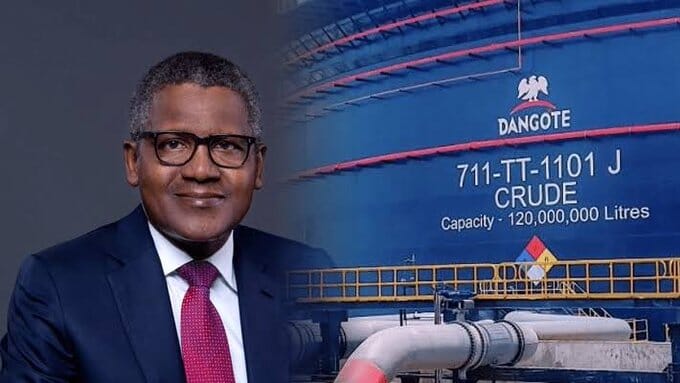
The change lands at a sensitive moment. Nigeria’s downstream market has leaned heavily on Dangote since the refinery ramped up and cut imports. Ordinary Nigerians still pay at the pump in naira, yet the wholesale dollar shift rewires the cost structure for every litre that reaches filling stations.
Why Dangote Refinery Switched to Dollar Pricing for Fuel Sales
The refinery faces a clear commercial problem. Under the naira-for-crude programme that started on 1 October 2024, NNPC Ltd was meant to supply large volumes of Nigerian crude in local currency so Dangote could sell products back in naira. That arrangement reduced FX pressure and helped stabilise prices for a while.
Reality diverged. Naira-denominated crude cargoes fell short of the refinery’s needs. Dangote has had to buy a rising share of its feedstock in dollars, either from NNPC under dollar terms or from overseas suppliers. In June 2026 the facility sourced 22 percent of its crude from outside Nigeria. Selling finished products in naira while paying for crude in dollars created a growing FX exposure. Global oil prices also climbed, lifting production costs. The company moved to eliminate the mismatch.
 Dangote Rejects NNPC Bid to Raise Stake in $20 Billion Refinery, Eyes Public Listing for Nigerians
A company spokesperson told Reuters the switch followed “difficulties securing sufficient crude under the government’s naira-for-crude programme and rising global oil prices.” All previously issued naira invoices and deal recaps became invalid. Liquefied petroleum gas remains outside the new regime.
This is not the first time currency and supply friction has forced a pricing reset. Earlier shortfalls in 2025 already tested the naira arrangement. The July 2026 decision simply makes the adjustment permanent for most products.
New Dollar Prices for Petrol, Diesel and Aviation Fuel at Dangote Refinery
The ex-depot (gantry) prices effective 13 July 2026 stand as follows:
- Premium Motor Spirit (petrol): $0.779 per litre
- Automotive Gas Oil (diesel): $1.087 per litre
- Aviation Turbine Kerosene: $0.942 per litre
- Coastal petrol deliveries: $1,044.62 per metric tonne
At the mid-market rate of roughly N1,380–N1,385 per dollar in mid-July 2026, the petrol price converts to about N1,075 per litre. That figure matches the naira price Dangote had set on 2 July after successive cuts. The switch therefore does not create an immediate jump in the base wholesale price. It does, however, lock future changes to the dollar and the naira-dollar rate.
Immediate Impact of Dangote Fuel Dollar Sales on Nigerian Marketers and Pump Prices
Marketers now need dollars to lift products from the refinery. Independent Petroleum Marketers Association of Nigeria (IPMAN) National President Alhaji Abubakar Maigandi put the problem plainly: “That domination in dollars, it will become difficult for independent petroleum marketers because for them to source dollars is a very difficult situation as we are using Naira in Nigeria.” He asked Dangote to continue allowing independents to pay in naira because their retail customers pay in naira.
Within 24 hours private depots in Lagos, Port Harcourt and Warri raised loading prices. Petrol jumped by as much as N113 per litre and diesel by N150 per litre in some locations. Operators added a currency-risk premium on top of the new dollar benchmark.
Chief Chinedu Ukadike of the National Oil and Gas Suppliers Association (NOGASA) warned that marketers would face both crude-price risk and exchange-rate risk at once. Dr Billy Harry, president of the Petroleum Products Retail Outlets Owners Association of Nigeria (PETROAN), described the arrangement as effectively turning local purchases into “importation” that forces marketers to shop for scarce dollars.
The naira came under fresh pressure. Greater wholesale demand for dollars to pay Dangote adds to existing FX demand from importers and manufacturers. Parallel-market rates already sat above N1,400 in mid-July.
What Dangote Refinery Dollar Pricing Means for Ordinary Nigerians
Retail customers still hand over naira at the pump. That fact does not shield them. Every extra naira marketers spend to buy dollars or to hedge FX risk flows into transport fares, food prices and generator fuel costs. Nigeria’s inflation remains sensitive to energy prices. A weaker naira or another global oil spike now transmits faster into pump prices because the wholesale anchor is no longer fixed in naira.
Dangote’s dominance magnifies the effect. The refinery has become the primary domestic supplier and has at times turned Nigeria into a net petrol exporter. When the largest source of fuel re-prices in dollars, the entire market re-prices with it. Earlier naira-based cuts that Dangote delivered through June and early July offered temporary relief. That cushion is now gone.
Transport unions and small businesses feel the pinch first. Bus fares and haulage rates adjust within days of any depot increase. Households that already stretch budgets for cooking gas and petrol generators face another layer of uncertainty.
Criticisms and Open Questions Surrounding the Dollar Shift
Critics focus on three points. First, the move risks further dollarisation of a strategic sector. Second, it places the FX burden squarely on private marketers who have less access to official forex windows than the refinery itself. Third, it could reverse the price-stabilisation gains that followed the end of the old subsidy regime and the start of local refining.
Broader Implications for Nigeria’s Economy and Energy Sector
The switch protects Dangote’s balance sheet and its ability to service dollar-denominated loans and import essential chemicals and catalysts. A financially stable mega-refinery is in the national interest. Yet the same move reintroduces the very FX volatility the naira-for-crude programme was designed to reduce.
Wider effects cascade quickly. Higher or more volatile fuel prices feed into food inflation, manufacturing costs and the cost of living. They also test the credibility of Nigeria’s energy-transition and industrialisation narrative. If the largest industrial project in Africa must price its output in dollars for local sales, other manufacturers will ask why they should not do the same.
On the positive side, the refinery’s existence has already cut petrol import volumes dramatically and generated export earnings. Sustaining that progress requires reliable crude supply on terms that match the currency of product sales. Policymakers now face a choice: deepen the naira-for-crude framework with enforceable volumes, or accept a hybrid system in which domestic fuel is effectively dollar-linked.
Will the Naira-for-Crude Deal Survive?
The next few weeks will reveal whether the government treats this as a temporary commercial adjustment or a structural break. Talks between NNPC, Dangote and the Ministry of Petroleum Resources on crude allocation volumes are the logical next step. Marketers have already begun lobbying for an exemption or dual-currency option for independents.
For Nigerians the practical test is simpler. Watch pump prices over the next fortnight and the parallel-market dollar rate. If both rise in tandem with any further naira weakness, the full cost of the dollar switch will become visible at the filling station.
Dangote Refinery’s decision is commercially rational. It also transfers exchange-rate risk from the country’s largest industrial asset to every transporter, trader and household that uses fuel. That transfer is the real story, and it will shape Nigeria’s energy costs for months to come.
Read More
-
![Dangote Refinery]() SEC Bans Dangote Refinery IPO Marketing, Orders Refunds Within 24 Hours
SEC Bans Dangote Refinery IPO Marketing, Orders Refunds Within 24 Hours -
![Naira Trading Exchange]() Naira to Dollar Exchange Rate for July 16, 2026 Climbs Slightly as Official Market Holds Firm
Naira to Dollar Exchange Rate for July 16, 2026 Climbs Slightly as Official Market Holds Firm -
![Naira to Dollar exchange rate]() Dollar to Naira Exchange Rate Slips This Week as Black Market Rallies and the Gap Narrows
Dollar to Naira Exchange Rate Slips This Week as Black Market Rallies and the Gap Narrows -
![ngx]() Top 10 Best Performing Nigerian Stocks in July 2026 as NGX Rally Creates New Winners
Top 10 Best Performing Nigerian Stocks in July 2026 as NGX Rally Creates New Winners
 SEC Bans Dangote Refinery IPO Marketing, Orders Refunds Within 24 Hours
 Naira to Dollar Exchange Rate for July 16, 2026 Climbs Slightly as Official Market Holds Firm
 Dollar to Naira Exchange Rate Slips This Week as Black Market Rallies and the Gap Narrows
 Top 10 Best Performing Nigerian Stocks in July 2026 as NGX Rally Creates New Winners