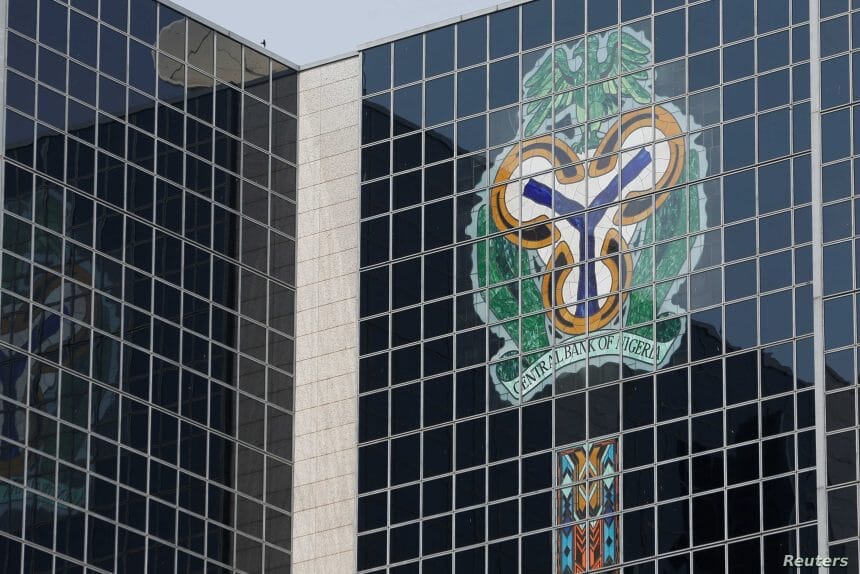
What The New CBN Guidelines Actually Say
The rules are strict, and they apply immediately. CBN confirmed the guidelines take effect right away and cover every licensed BDC, every authorised dealer bank, and every FX transaction between them conducted through the Nigerian Foreign Exchange Market, or NFEM.
Eligibility now hinges on paperwork. Only BDCs holding valid, active licences from the CBN can buy FX under this framework, and any operator under sanction, suspension, or restriction stays locked out until the CBN lifts the penalty.
Banks can no longer play favorites either. CBN stressed that every licensed BDC is free to buy foreign exchange from any authorised dealer bank it chooses, and banks must not impose exclusivity deals or charge referral fees. That single line matters more than it looks. It kills the informal gatekeeping that some bankers reportedly used to steer BDCs toward preferred partners.
Why CBN Built The FXBT Tracker
Here's the "why," and it goes back five years. In July 2021, the CBN halted forex sales to BDCs entirely, accusing operators of facilitating illicit financial flows and money laundering. That ban gutted the retail FX market and pushed ordinary Nigerians toward the black market.
The CBN tried partial fixes for years. Sales briefly resumed in February 2024 after regulators revoked more than 4,173 BDC licences, then the arrangement was discontinued again. By February 2026, the CBN approved limited participation, capping BDC access at $150,000 weekly. Operators kept complaining that access still felt too constrained.
The FXBT is the CBN's answer to a trust problem, not just a technology upgrade. The system gives the apex bank real-time visibility into dollar purchases by BDCs, letting it monitor compliance, catch market abuse, and improve transparency in the retail FX segment. In plain terms, the central bank no longer wants to find out about abuse after the fact. It wants to watch the transaction happen.
"The Guidance announces the implementation of the electronic portal to facilitate the interaction between BDCs and the NFEM and outlines, among others," the CBN said in the circular. That single sentence signals a shift from paper-based, after-the-event reporting to live, transaction-level supervision.
How The FX BDC Purchase Tracker Works
The mechanics are straightforward, and they move fast. A BDC wanting to purchase FX must submit a purchase request electronically through the tracker portal to its chosen bank. Banks must then acknowledge receipt within two business hours and confirm approval or rejection through the same portal immediately after.
Reporting doesn't stop at approval. Every licensed BDC must register on the platform and submit transaction details either in real time or on the same day the transaction occurs, so the CBN can spot violations, flag suspicious activity, and track compliance as it happens.
This also closes an old loophole around double-dipping. The tracker is expected to help the regulator catch operators who exceed their weekly $150,000 purchase cap, pull multiple allocations from different banks at once, or divert FX outside approved channels. Under the previous, fragmented system, a BDC could theoretically approach three different banks in the same week and nobody would connect the dots. The FXBT removes that blind spot.
Compliance Now Sits With The Banks First
Banks aren't just middlemen anymore. They're the first line of defense. CBN directed authorised dealer banks to complete full Know-Your-Customer and customer due diligence checks before executing any FX transaction with a BDC, and banks must obtain and retain each BDC's licence certificate, tax identification number, CAC incorporation documents, beneficial ownership information, and contact details of principal officers.
Banks that skip this step carry the risk. The CBN warned banks not to sell foreign exchange to any BDC that fails to meet the required compliance standards. That effectively turns commercial banks into the CBN's frontline auditors, reducing how much the regulator has to chase problems after the money has already moved.
No More Hoarding: The 24-Hour Sell-Back Rule
Speculation gets harder under the new regime. BDCs will no longer be allowed to hold onto unutilised FX purchased from the NFEM. Any unused balance must be sold back into the market within 24 hours after the utilisation period expires, and failure to comply risks forfeiture of the funds plus suspension from the NFEM.
Money also has to land in the right place. FX purchased under this framework must be credited only into the BDC's registered settlement account with a licensed financial institution, and disbursing it into any other account counts as a violation that must be reported immediately. Third-party transactions are banned outright.
Comparing This To Past CBN FX Reforms
This isn't the CBN's first attempt to police the BDC market, and it likely won't be the last. The 2021 approach was blunt: cut BDCs off entirely. This approach is surgical: let them operate, but watch every move digitally.
It also builds on groundwork laid over the past 18 months. The push for BDC inclusion intensified after the June 2023 unification of Nigeria's FX market, which merged multiple windows into a single system. In December 2025, the CBN issued final licences to 82 BDC operators under its 2024 Regulatory and Supervisory Guidelines, shrinking the space for street trading and tightening the supply chain. The FXBT is the digital enforcement layer that makes those earlier reforms actually verifiable in real time, rather than just policy on paper.
What This Means For The Naira And Everyday Nigerians
Liquidity is the whole point. CBN said the initiative should improve transparency, strengthen compliance, increase liquidity in the retail forex market, and ensure proper participation by market operators. If BDCs genuinely stick to the rules, more verified dollars should flow into the legal retail channel instead of the parallel market.
That matters for anyone converting salaries, school fees, or medical bills into dollars. A tighter, more trusted BDC channel could narrow the gap between the official and street rates, the same gap that has repeatedly punished ordinary Nigerians whenever CBN oversight weakens. Whether this tracker actually narrows that spread in practice remains unconfirmed, since it's only days old.
Open Questions
Several things aren't yet clear, and honest reporting says so plainly. It's unconfirmed whether the FXBT portal is already live and fully operational for all 82-plus licensed BDCs, or whether onboarding will roll out in phases. It's also unconfirmed how the CBN will handle disputes when a bank rejects a purchase request without clear justification.
Expect pushback from BDC operators on the two-business-hour acknowledgment window, since that's tight for smaller banks with thin FX desks. Expect the industry association, ABCON, to reiterate its long-standing complaint that the $150,000 weekly cap is too low to meaningfully compete with the parallel market.
Analysts will also watch whether banks quietly find new ways to favor certain BDCs despite the anti-exclusivity clause, since enforcement of soft favoritism is notoriously hard to prove.
Read More
-
Naira to Dollar Exchange Rate Today Jumps as Black Market Gap Widens
-
![Naira to Dollar exchange rate]() Dollar to Naira Exchange Rate Slips This Week as Black Market Rallies and the Gap Narrows
Dollar to Naira Exchange Rate Slips This Week as Black Market Rallies and the Gap Narrows -
![ngx]() Top 10 Best Performing Nigerian Stocks in July 2026 as NGX Rally Creates New Winners
Top 10 Best Performing Nigerian Stocks in July 2026 as NGX Rally Creates New Winners -
![NGX Trading Building]() Nigerian Stocks Overtake South Korea's Kospi to Become the World's Best-Performing Market
Nigerian Stocks Overtake South Korea's Kospi to Become the World's Best-Performing Market
 Dollar to Naira Exchange Rate Slips This Week as Black Market Rallies and the Gap Narrows
 Top 10 Best Performing Nigerian Stocks in July 2026 as NGX Rally Creates New Winners
 Nigerian Stocks Overtake South Korea's Kospi to Become the World's Best-Performing Market