WhatsApp users worldwide discovered this week that the app's automatic encryption verification tool, rolled out in 2023, doubles as a discreet way to detect a block. The finding, surfaced by WABetaInfo, gives the platform's two billion users a new, quieter method than the old guessing games.
What The New Detection Method Actually Shows
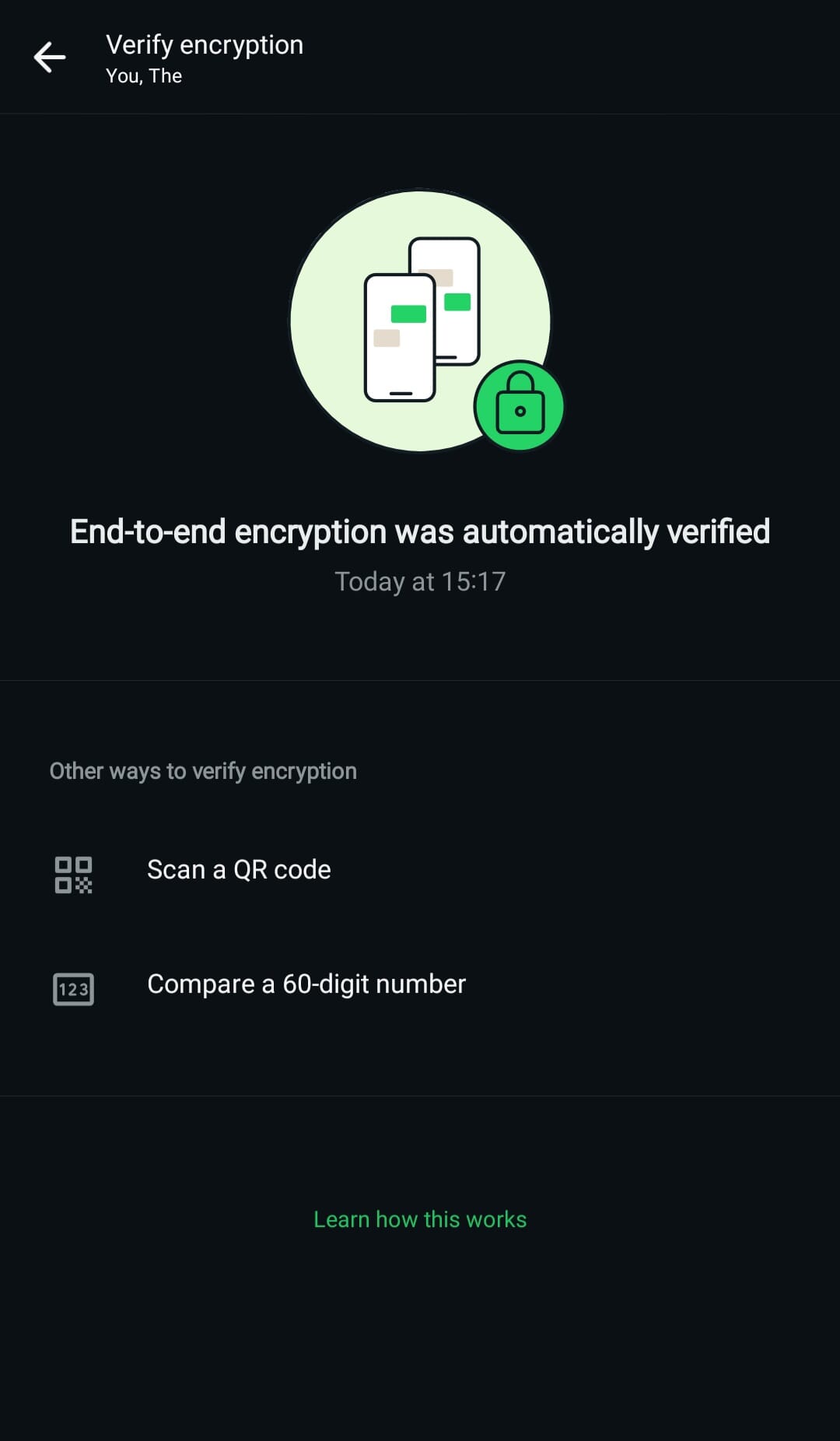
The trick centers on WhatsApp's automatic encryption verification screen. WhatsApp introduced a feature to verify encryption automatically in 2023, letting users open the encryption screen to check if their messages and calls are properly encrypted.
That feature was built for security, not for snooping. But it has a side effect nobody advertised.
When someone blocks you, the automatic verification feature stops working for that specific chat, since every chat has its own encryption keys that WhatsApp updates in specific situations like reinstalling the app or switching phones. The failure is consistent and repeatable.
 One UI 9: Full List of Samsung Devices Getting the Update Revealed
How To Run The Check Yourself
The process takes seconds. Open the chat in question, tap the contact's name to reach the contact info screen, then look for "Encryption."
If everything is fine between you and the other person, WhatsApp completes the verification without any error. If WhatsApp cannot verify end-to-end encryption automatically and instead asks for manual verification, something is actually wrong, often pointing to a block rather than a security issue.
Crucially, this method is more discreet than sending a message, since the other person never knows you checked. No risky test text. No awkward follow-up call.
Why The Old Signs Were Never Enough
For years, blocked users relied on a patchwork of clues. There's no official feature to confirm a WhatsApp block with 100% certainty, but a combination of signs, especially the delete-and-re-add method, has been the closest workaround.
Those classic signs remain shaky on their own. Messages sent to a contact who has blocked you will only show one gray check mark instead of two, calls won't go through, and group admins can't add the blocked contact to a group.
The problem: a missing profile photo or status isn't definitive proof on its own, since the contact might have removed their picture intentionally, restricted visibility to "Nobody" or "My Contacts only," or simply stopped posting. Each signal alone is circumstantial.
The Group-Add Test Still Holds Weight
Among the older methods, one has stood out as nearly conclusive. Since WhatsApp does not send official block notifications, the most definitive way to confirm a block is receiving a permission error when attempting to add the contact to a group.
That's because secondary signs such as single delivery ticks, missing profile pictures, and hidden last-seen statuses are inconclusive, as they can also result from poor network connections or modified privacy settings. The group test sidesteps that ambiguity almost entirely.
What This Means For Encryption Trust
This is the deeper story buried under the "how-to" angle: WhatsApp's encryption architecture was never designed as a relationship-status detector. It was built to let users confirm, without exchanging a 60-digit code by hand, that their conversation is genuinely end-to-end encrypted.
The fact that a block disrupts this verification is a byproduct of how WhatsApp manages per-chat encryption keys, not an intentional disclosure mechanism. WhatsApp has not confirmed the method officially, and the company has never confirmed that users can rely on this method to detect a block, though people can test it themselves on a contact they know has blocked them.
That silence matters. It means the trick could vanish in a future update if WhatsApp decides the encryption screen is leaking unintended information. It remains unclear whether WhatsApp will refine the automatic verification experience specifically to prevent this trick from working going forward.
A Pattern, Not A Single Proof
No single signal, including the encryption trick, should be treated as absolute. Investigators of digital behavior generally recommend layering indicators rather than trusting one.
Recognizing the signs of being blocked on WhatsApp requires understanding the platform's privacy features, and users should always confirm through multiple signals before assuming the worst. The same logic applies to status visibility.
Even when Status updates disappear, the person may have changed privacy settings to limit who sees their updates rather than blocking outright, so a stronger conclusion requires the change to appear alongside other signs.
The Etiquette Question Behind The Tech
Beyond the mechanics, there's a behavioral layer worth flagging. The WhatsApp block feature exists to protect people's privacy, safety and peace of mind, and even when the outcome feels confusing or frustrating, respecting that boundary matters.
That tension, curiosity colliding with someone else's right to disengage, is what gives this story its staying power beyond a simple feature explainer. Blocking is often a response to conflict, discomfort, or a desire for personal space, and the more constructive response is reflection rather than workaround-hunting.
Third-Party Tools Remain A Red Flag
The renewed interest in block detection has also revived a familiar warning. Due to WhatsApp's privacy policy, no third-party online tool or app can definitively tell you if you've been blocked, and many such tools are scams or simply don't work.
Security-conscious users should treat any app promising guaranteed block detection with skepticism. The encryption-screen method works because it uses WhatsApp's own infrastructure, not because a third party cracked the platform's privacy model.
The Bottom Line For 2026
WhatsApp still has no official "you've been blocked" notification, and nothing in this week's reporting suggests that's changing. What has changed is the sophistication of unofficial detection, moving from circumstantial profile-photo guesswork toward a method rooted in the app's own encryption architecture.
For now, the encryption trick offers the most discreet read available. But until WhatsApp comments directly, it remains an inferred signal, not a confirmed feature, and users should weigh it alongside delivery ticks, call behavior, and the group-add test before drawing conclusions.
Read More
-
![whatsapp text view once]() WhatsApp View-Once Mode Expands to Text Messages on iOS and Android, Blocking Screenshots and Forwards
WhatsApp View-Once Mode Expands to Text Messages on iOS and Android, Blocking Screenshots and Forwards -
![iPhone 18 Pro Max]() iPhone 18 Pro Max Confirmed Leaks Reveal Features No iPhone Has Ever Had
iPhone 18 Pro Max Confirmed Leaks Reveal Features No iPhone Has Ever Had ![iOS 26.5 update]() Apple Latest update: iOS 26.5 Brings Five New Features to Your iPhone Device
Apple Latest update: iOS 26.5 Brings Five New Features to Your iPhone Device![Apple logo]() Apple Is Set to Transform Apple Intelligence From Single Assistance Into a Multi-Model Platform in iOS 27
Apple Is Set to Transform Apple Intelligence From Single Assistance Into a Multi-Model Platform in iOS 27
 WhatsApp View-Once Mode Expands to Text Messages on iOS and Android, Blocking Screenshots and Forwards
 iPhone 18 Pro Max Confirmed Leaks Reveal Features No iPhone Has Ever Had
 Apple Latest update: iOS 26.5 Brings Five New Features to Your iPhone Device
 Apple Is Set to Transform Apple Intelligence From Single Assistance Into a Multi-Model Platform in iOS 27