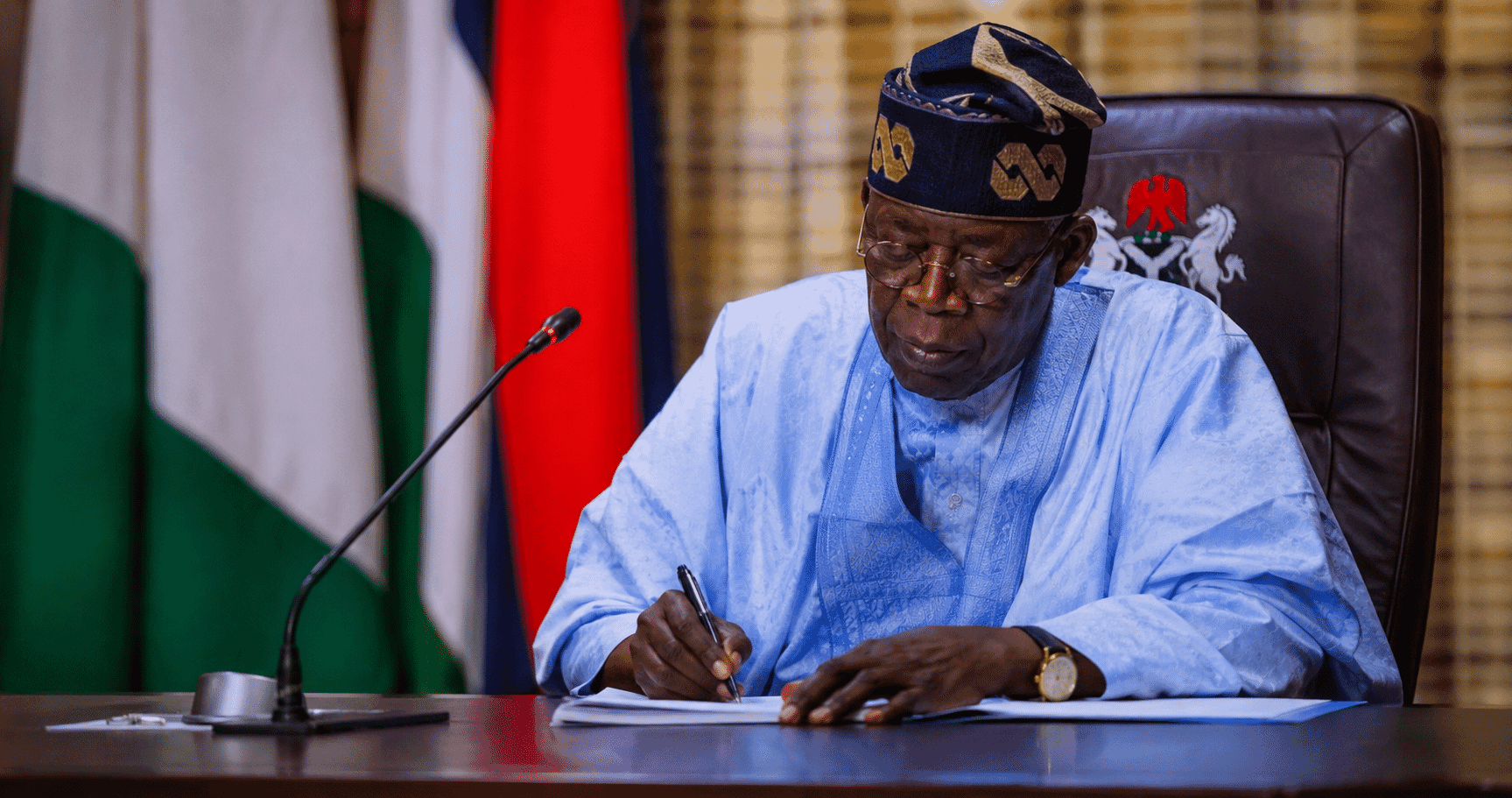
President Bola Tinubu transmitted the Constitution of the Federal Republic of Nigeria (Alteration) State Police Bill, 2026, to the Senate on Tuesday, June 23, 2026, in Abuja. Senate President Godswill Akpabio read the letter, dated June 15, 2026, on the floor during plenary. The Senate has scheduled Wednesday to consider and potentially pass the bill, marking Nigeria's most significant policing overhaul in decades.
What The Bill Actually Proposes
The legislation seeks to amend the 1999 Constitution to create what officials describe as a dual policing structure. Under this framework, state-run police forces would operate alongside the existing Nigeria Police Force rather than replace it.
The proposal carries the formal title "The Constitution of the Federal Republic of Nigeria (Alteration) State Police Bill, 2026." Tinubu's letter framed the measure in direct terms. "This bill seeks to amend the Constitution of the Federal Republic of Nigeria, 1999, to create a constitutional pathway for the establishment of State Police services in Nigeria," the president wrote.
He added that the bill builds on work already completed by the House of Representatives and the Senate, while incorporating additional safeguards meant to make the dual policing structure workable.
Why Tinubu Is Pushing Now
This transmission did not emerge from nowhere. Tinubu had urged the National Assembly back in February to amend the Constitution to accommodate state police, calling the reform necessary given persistent attacks by terrorists, bandits, kidnappers and other criminal groups.
The administration has tied the proposal to claimed security gains. Tinubu stated that security operations over the past year eliminated more than 13,000 terrorists, with terrorism-related fatalities declining significantly compared to prior years.
Yet the president did not present a sanitized picture. He acknowledged that the continued captivity of schoolchildren abducted in Oyo and Borno states remains a stark reminder of the security concerns still confronting the nation. That admission, paired with a request for sweeping constitutional change, signals a government conceding that federal-only policing has hit its limits.
 Tax Acts 2025: Federal Government Releases Final Transition Guidelines for Nigeria's New Tax Regime
The Legislative Path So Far
This bill did not arrive as a standalone idea. The House of Representatives had already passed its own version of the constitutional amendment after lawmakers voted overwhelmingly in favor, with 289 members supporting it and just one voting against.
The Senate separately advanced the proposal after the bill scaled second reading and was referred for further consideration as part of the broader constitutional amendment process. Tinubu's executive transmission effectively merges the presidency's priorities with legislative work already underway, rather than starting a fresh track.
Once Akpabio finished reading the letter, he referred the bill to the Senate Committee on the Review of the Constitution for further legislative action. Separately, the proposal was sent to the Senate Ad Hoc Committee on Constitution Review, chaired by Deputy Senate President Barau Jibrin, which is expected to present its report for consideration and voting.
A Two-Year Process Reaches Its Moment
Akpabio did not treat Tuesday's reading as routine business. He credited the committee's diligence directly. "You have spent about two years on this because it is an epoch-making bill that can address the security challenges confronting our country," Akpabio told senators.
In a separate report of the same plenary, Akpabio went further, calling the measure a landmark initiative capable of enhancing security and promoting greater community participation in law enforcement, noting that residents are often best positioned to identify suspicious activities and criminal elements within their communities.
He also addressed the elephant in the room for many state governors who might resist ceding policing autonomy or fear future misuse of a state force against political rivals. "Even current governors who will one day leave office should not be afraid of the state police structure they helped create. That is why there will be many safeguards built into the system," he said.
Why The Threshold Matters More Than The Vote Count
A constitutional alteration in Nigeria is not won with a simple majority. Senate Leader Opeyemi Bamidele reminded colleagues of that arithmetic directly. "As we all know, based on the Constitution and the rules of the Senate, we require a minimum of two-thirds of senators to vote on constitutional alteration matters," Bamidele said.
This two-thirds rule explains why Akpabio pressed lawmakers to show up rather than skip the session. "If you are not here tomorrow, your constituents will know that you were absent. It is not enough to seek tickets and win elections. We must come to the chamber and contribute to the nation's progress," he warned.
Bamidele framed the issue as transcending party lines, telling the chamber that the issue of state police cuts across all political parties. That framing matters because constitutional amendments require broad coalition support that ordinary legislation does not.
The Long Road After The Senate Vote
Passing the Senate on Wednesday, if it happens, would not complete the process. If passed by the National Assembly, the bill will still require approval by at least two-thirds of the 36 State Houses of Assembly before it can become part of the Constitution.
Akpabio indicated state governments are already prepared to move quickly on their end. He disclosed that state governments had promised to consider the proposed amendment once it is transmitted to them. According to the Senate President, state governments have indicated their readiness to act promptly on the legislation once the constitutional amendment process is completed.
This is the structural reality many initial reports glossed over. A Senate vote, even with two-thirds support, is one hurdle among several. Thirty-six separate state assemblies, each with their own political dynamics, governors, and local pressures, must independently ratify the change. Nigeria's history with constitutional amendments shows this stage can stall for years even after federal lawmakers agree.
A Plenary Interrupted By Mourning
The Senate's momentum hit an immediate procedural pause. The Senate postponed further deliberation on the state police bill until Wednesday following the announcement of the death of Yaya Tongo, who represented the Gombe/Kwami/Funakaye Federal Constituency of Gombe State in the House of Representatives. Senators observed a minute's silence in honour of the deceased lawmaker.
This detail, easily lost amid the security headline, illustrates how Nigeria's legislative calendar moves on dual tracks: solemn institutional ritual alongside urgent policy business. Lawmakers had cut short their recess specifically to consider this bill, underscoring how the death notice intersected with an already compressed timeline.
Countries That Already Operate State Police Systems
Nigeria's proposed dual policing structure would not be unprecedented globally. Several federal democracies already run state-level police forces alongside national agencies, and their experiences offer useful comparison points.
The United States operates one of the most decentralized policing systems in the world. Each of the 50 states maintains its own state police or highway patrol, layered on top of thousands of county sheriff departments and municipal police forces, with federal agencies like the FBI handling cross-state and national matters.
India runs a similar federal structure. Policing falls primarily under state governments, with each of the 28 states and union territories operating its own police force under the State Police Act, while central agencies such as the Central Bureau of Investigation handle specific national-level cases.
Germany splits law enforcement along its 16 federal states, known as Länder. Each state controls its own police force and budget, while the federal government maintains separate agencies like the Bundespolizei for border security and the Bundeskriminalamt for serious cross-border crime.
Canada allows provinces to run their own police services. Ontario and Quebec, for example, maintain provincial police forces, while the Royal Canadian Mounted Police serves as the national agency and also contracts policing services to provinces and territories that choose not to run their own.
Australia assigns policing primarily to its six states and two territories. Each state, including New South Wales and Victoria, operates an independent police force, while the Australian Federal Police handles national security, cross-border crime, and federal law enforcement.
Brazil divides policing between state-run Polícia Militar, which handles patrol and order maintenance, and Polícia Civil, which conducts investigations, with the Polícia Federal stepping in for crimes that cross state lines or threaten national interests.
Mexico also follows a layered model, with each of its 31 states and federal entities maintaining its own police force alongside municipal police and the federal Guardia Nacional, though coordination between the layers has been a persistent challenge there.
Benefits Of State Police In Nigeria's Context
Supporters of the bill point to several concrete advantages that a decentralized policing model could deliver, drawing both from the Nigerian debate and from how similar systems function elsewhere.
Faster response times: Local officers stationed within a state are positioned closer to emerging threats than a centralized federal force managing the entire country. Supporters of state police argue that a decentralised system would allow security agencies to respond faster to local threats because state authorities and community-level officers would have better knowledge of their environments.
Better community intelligence: Officers recruited from within a state often understand local terrain, language, and social dynamics better than officers posted from outside the region. Akpabio made this point directly to the Senate. He noted that residents are often best positioned to identify suspicious activities and criminal elements within their communities, adding that state police would improve grassroots intelligence gathering.
Greater community participation in security: Akpabio described the broader value of involving local residents in law enforcement rather than relying solely on a distant central authority. He called it a landmark initiative capable of enhancing security and promoting greater community participation in law enforcement.
Reduced strain on federal forces: Nigeria's single national police force currently covers a country of more than 200 million people across vastly different terrains, from dense urban centers to remote forest reserves. A state-level layer would distribute that operational burden, freeing federal officers to focus on cross-border crime, terrorism networks, and matters that genuinely require national coordination.
Accountability closer to the people: State governors and state assemblies, who answer directly to local voters, would share oversight responsibility for a state force. In theory, this creates a shorter accountability chain than a federal structure managed entirely from Abuja, though this benefit depends heavily on the safeguards lawmakers build into the final law.
Tackling root causes of insecurity: Local police forces are often better placed to engage with grassroots issues tied to crime. As one community leader noted, addressing unemployment, poverty, social exclusion, and the proliferation of criminal networks requires officers embedded in the communities affected, not just a centralized response from afar.
Political momentum and consensus building: The scale of support already shown in the legislative process suggests broad buy-in for these benefits. During the voting exercise in the House, 289 lawmakers reportedly supported the bill, while one member voted against it, reflecting near-unanimous agreement that decentralization offers real upside despite the risks.
The Underlying Policy Argument
Supporters frame decentralized policing as a response-speed problem more than a manpower problem. Backers argue that a decentralised system would allow security agencies to respond faster to local threats because state authorities and community-level officers would have better knowledge of their environments.
This argument has circulated for years among governors and security analysts, but it gained institutional traction only after sustained violence in Nigeria's north-central and north-west regions made federal policing capacity look stretched thin relative to the country's geography and population.
What Comes Next
The Senate is expected to reconvene Wednesday to vote on the bill following the Constitution Review Committee's report. Whether the chamber reaches the two-thirds threshold Bamidele described will determine if the measure proceeds to state assemblies at all. Given the dual hurdles still ahead, Wednesday's vote should be read as a major procedural milestone, not the law's final word.
Read More
![CBN Building]() CBN Orders Banks, Fintechs to Disclose Ultimate Beneficial Owners in Sweeping Payments Overhaul
CBN Orders Banks, Fintechs to Disclose Ultimate Beneficial Owners in Sweeping Payments Overhaul![CBN Building]() CBN Orders Banks and Fintechs to Store Payment Data Locally, Sets January 2027 Deadline
CBN Orders Banks and Fintechs to Store Payment Data Locally, Sets January 2027 Deadline![space x]() How to Buy SpaceX (SPCX) Stock From Nigeria: Best Apps and Step-by-Step Guide
How to Buy SpaceX (SPCX) Stock From Nigeria: Best Apps and Step-by-Step Guide![Elon Musk]() Elon Musk Becomes World's First Trillionaire as SpaceX Shares Surge 23% on Nasdaq
Elon Musk Becomes World's First Trillionaire as SpaceX Shares Surge 23% on Nasdaq
 CBN Orders Banks, Fintechs to Disclose Ultimate Beneficial Owners in Sweeping Payments Overhaul
 How to Buy SpaceX (SPCX) Stock From Nigeria: Best Apps and Step-by-Step Guide
 Elon Musk Becomes World's First Trillionaire as SpaceX Shares Surge 23% on Nasdaq