Why 2026 Feels Different From Previous "Recovery" Years
Headline inflation eased to 15.91 percent in June 2026, down slightly from 15.93 percent in May, marking the first monthly decline in three months, according to the Central Bank of Nigeria's assessment following its 306th Monetary Policy Committee meeting.
The MPC held its benchmark rate at 26.5 percent for a second straight meeting, a pause that followed a 50-basis-point cut in February 2026, from 27 percent to 26.5 percent.
Governor Olayemi Cardoso framed the decision plainly. The committee decided to "retain the monetary policy rate at 26.5 per cent," he said after the meeting, citing global uncertainty tied to renewed Middle East tensions as a reason for caution rather than an aggressive cut.
That caution matters for investors. A high policy rate keeps naira-denominated yields attractive to foreign portfolio investors, which helps stabilise the currency, but it also keeps borrowing expensive for local businesses trying to expand. Both forces are shaping which sectors actually attract capital in 2026.
On growth, forecasts cluster in a tight band. The CBN projects 4.49 percent growth for 2026, while Muda Yusuf, chief executive officer of the Centre for the Promotion of Private Enterprise, has projected GDP growth of between 4.0 and 4.5 percent, citing moderating inflation.
Bismarck Rewane, managing director of Financial Derivatives Company, puts the figure closer to 4.1 percent, driven by expanding business activity, infrastructure improvements and stronger private-sector credit. Separately, PwC Nigeria's Economic Outlook 2026 projects real GDP growth of about 4.3 percent, and cautions that growth is likely to stay concentrated in services and selected capital-intensive sectors, which raises the stakes of picking the right sector rather than just "Nigeria" as a market.
None of these numbers are identical, and that gap between 4.0 and 4.5 percent is worth sitting with. It tells you Nigeria's recovery is real but not yet consensus-strong, and that sector selection will matter more than broad market exposure in 2026.
 FG Sets Up Committee to Rewrite Nigeria's VAT Rules in Six Weeks
1. Agriculture and Agro-Processing: The ₦104.6 Trillion Sector Nobody Talks About Enough
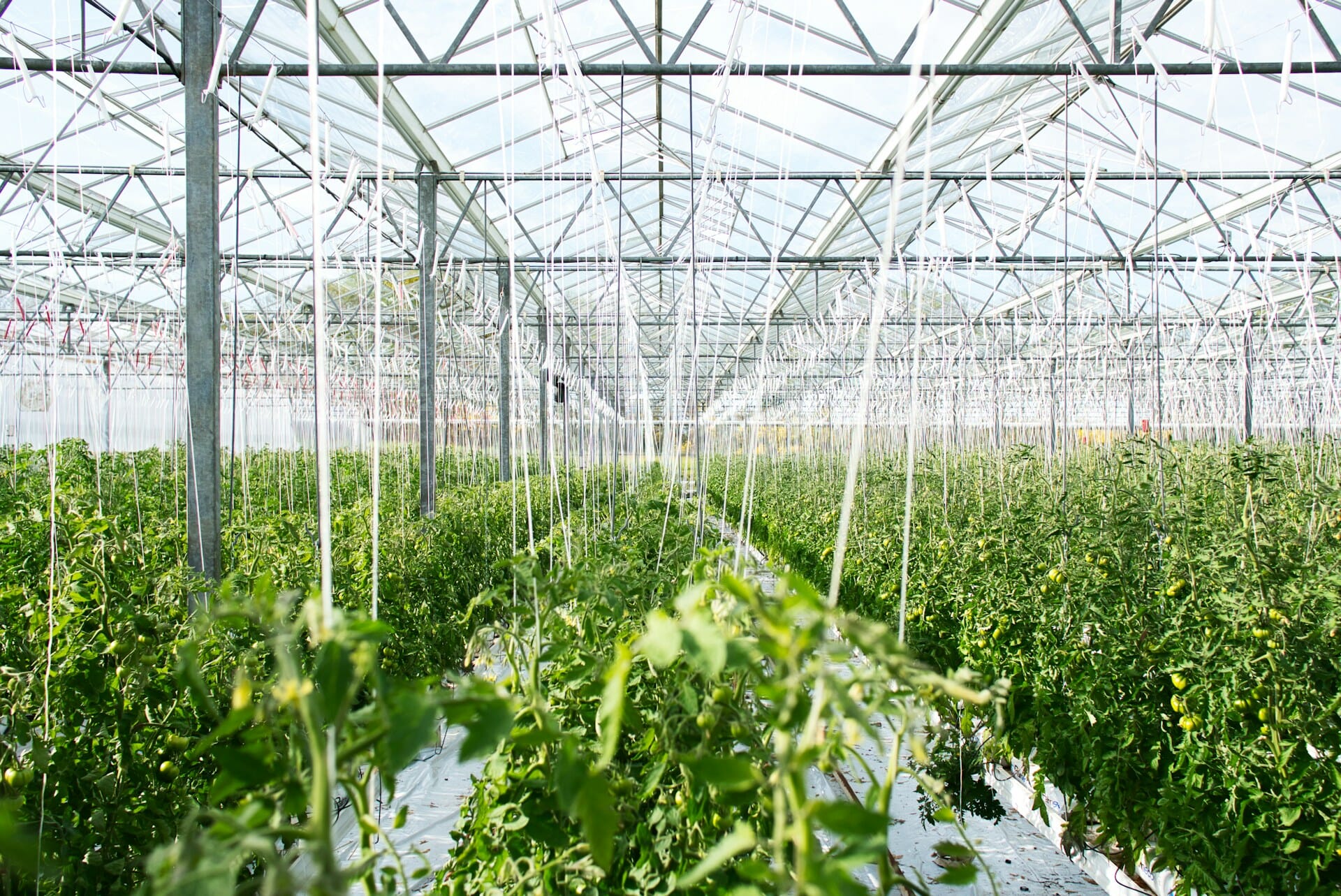
Agriculture is projected to generate the highest earnings of any sector in Nigeria in 2026, an estimated ₦104.6 trillion, according to Rewane's sector-by-sector projections presented at the Parthian Economic Discourse 2025 in Lagos.
The shift worth noting is what kind of agriculture is attracting capital. It is not primarily farming anymore, it is processing. Investors are chasing the value-added stage, where raw produce becomes packaged food, industrial inputs or export-ready goods, because that is where margins and foreign exchange earnings sit.
The clearest proof point is the African Development Bank's $538 million approval in 2024 for the first phase of Nigeria's Special Agro-Industrial Processing Zones programme, which is building processing hubs close to farming communities instead of shipping raw crops to distant factories.
On the private side, Flour Mills of Nigeria has been expanding food manufacturing capacity, while Johnvents Group has scaled up cocoa processing to sell higher-value semi-finished cocoa products abroad rather than raw beans.
Why this matters beyond the balance sheet: agro-processing jobs tend to be labour-intensive and rural, which means this sector is one of the few that can create employment outside Lagos and Abuja.
It also chips away at Nigeria's food import bill directly, a politically sensitive number given persistent food inflation, which spiked to 3.75 percent on a monthly basis in June 2026, up from 2.98 percent in May.
2. Oil, Gas and Power: Old Money Meets a New Investment Case
Oil and gas remains Nigeria's single largest destination for investment capital, and the scale of recent commitments shows international confidence returning after years of underinvestment.
In July 2026, ExxonMobil and its partners secured regulatory approval for a $1 billion investment in the Usan deepwater oilfield. That follows the $5 billion Bonga North deepwater development and the $550 million Ubeta gas project, a joint TotalEnergies and NNPC Limited investment approved to supply feedstock to Nigeria LNG. Combined, new upstream commitments have pushed past $10 billion, a figure that signals fiscal reforms under the Petroleum Industry Act are finally translating into capital deployment rather than just policy intent.
Power is the sector's less glamorous but arguably more consequential cousin. The World Bank approved $750 million in 2024 under the Distributed Access through Renewable Energy Scale-up programme, aimed at bringing electricity to more than 17 million Nigerians through mini-grids and standalone solar. Alongside it, the €2.3 billion Presidential Power Initiative, implemented with Siemens Energy, continues upgrading transmission infrastructure.
Rewane has been blunt about why this matters more than any other single reform. Speaking at a 2026 economic summit, he said economic productivity in Nigeria "will be driven by power, agriculture and manufacturing, and most importantly, fintech and telecommunications."
His point is structural: without reliable electricity, every other sector on this list pays a hidden tax in diesel costs and downtime, which is why private renewable players like Arnergy, Husk Power Systems and Starsight Energy are scaling commercial solar contracts for businesses that have simply given up waiting on the grid.
3. Fintech and Digital Infrastructure: Nigeria's Comeback Story of 2026
Nigerian startups raised $214 million in equity financing in the first half of 2026, and $254 million across equity and debt combined, according to the Africa: The Big Deal report.
That put Nigeria ahead of Egypt's $183 million in equity funding for the same period, and made Nigeria Africa's top destination for startup equity capital, a title it lost during the funding slump of 2025 when the country raised just $343 million for the entire year.
The headline deal was Flutterwave's Series E round, reportedly around $100 million, secured as a strategic investment from Ripple that pushed the fintech's valuation to $3.2 billion.
Fintech alone accounted for 41 percent of the $1.37 billion raised across the whole continent in the first half of the year, per the same report, more than any other sector including climate tech.
Digital infrastructure is the quieter half of this story. Following its acquisition of MainOne, Equinix invested about $140 million to develop the LG2 data centre in Lagos, expanding the country's cloud and data storage capacity.
Nigeria has also benefited from global submarine cable projects, including Google's Equiano cable and the Meta-backed 2Africa cable, though country-specific investment figures for those projects have not been publicly disclosed.
Why it matters to ordinary users
Fintech growth is not just an investor story. It is the reason more Nigerians can now access mutual funds, treasury bills and dollar-denominated assets with small starting sums through apps rather than needing the large minimum deposits traditional banks require. That accessibility shift is arguably a bigger deal for financial inclusion than the headline funding numbers suggest.
The catchDespite the H1 rebound, Nigerian startup funding is still concentrated in a handful of large rounds. Nairametrics reported that Nigerian startups raised $78.6 million across just 15 disclosed deals in Q1 2026, a 28 percent year-on-year decline. A recovery driven by two or three mega-deals is a different, more fragile thing than a broad-based funding boom, and it is not yet clear which one 2026 will turn out to be.
4. Manufacturing and Industrial Processing: Living in Dangote's Shadow
The Dangote Petroleum Refinery, which cost more than $20 billion to build and stands as the largest single-train refinery in Africa, has already cut Nigeria's reliance on imported fuel while opening new export routes.
In 2025, Dangote Industries began commercial output at its $2 billion polypropylene plant, feeding local plastics, textiles and packaging industries that previously depended entirely on imports. Early in 2026, the company signed a $400 million equipment agreement with China's XCMG to expand the refinery from 650,000 to 1.4 million barrels per day.
Rewane projects manufacturing earnings could reach ₦38.25 trillion in 2026, supported by lower inflation and increased refining capacity, though he has also flagged the sector's persistent Achilles' heel: poor power supply, weak infrastructure, high costs and limited access to finance could still hold growth back.
That is the honest tension in this sector. Manufacturing capacity is expanding at a scale Nigeria has rarely seen, but it is expanding around one dominant conglomerate rather than across a broad base of mid-sized industrial firms.
Investors betting on "manufacturing" in 2026 are, whether they realise it or not, largely making a concentrated bet on Dangote's execution and on smaller players positioned in its supply chain, such as BUA Group, which has been expanding food manufacturing capacity of its own.
5. Real Estate and Construction: The Quiet ₦72 Trillion Sector
Real estate rarely makes headlines the way fintech or oil does, but by Rewane's projections it is set to generate ₦72.41 trillion in 2026, the second-highest of any sector he tracks, trailing only agriculture.
The driver is structural, not speculative: Nigeria's urban population keeps growing faster than housing supply, particularly in Lagos, Abuja and Port Harcourt. That imbalance supports steady demand for both residential and commercial construction, plus the cement, steel and logistics businesses that feed it, which is part of why Dangote Cement remains one of Rewane's standout corporate earners for 2026.
Government-bond issuance and public infrastructure spending are also expected to support investment activity more broadly in 2026, according to Rewane's outlook, as consumption recovers gradually from years of inflation-eroded purchasing power.
What Could Still Go Wrong
Every one of these five sectors carries a shared vulnerability: Nigeria's 2027 general election cycle. Analysts at Odujinrin & Adefulu note that with 2026 positioned as the year leading into general elections, macroeconomic policy and investment decisions across key sectors are likely to be shaped by anticipated political transitions, a dynamic that historically injects uncertainty into Nigerian capital markets in pre-election years.
Currency risk has not disappeared either. Nigeria's benchmark rate of 26.5 percent sits well above regional peers, with Kenya's Central Bank Rate at 8.75 percent, South Africa's repo rate at 7 percent, and Egypt's overnight rates at 19 to 20 percent, a gap that reflects the scale of Nigeria's recent inflation and exchange-rate pressures rather than a policy choice made in isolation.
Global oil price volatility, tied to renewed Middle East tensions, remains the wildcard that could reprice both the oil and gas sector and the naira's stability simultaneously, since Nigeria's foreign exchange earnings still lean heavily on crude exports despite diversification efforts.
Finally, it is worth stating that a full-year 2026 GDP figures will not be confirmed by the National Bureau of Statistics until early 2027. Treat every 2026 projection in this article, including Rewane's sector earnings figures, as informed forecasts rather than settled outcomes.
Read More
-
First HoldCo Becomes Nigeria's Most Valuable Bank Stock, Overtaking Zenith and GTCO
-
FG Launches Consumer Credit Scheme to Help Nigerians Buy Affordable Laptops and Phones
-
![CBN]() CBN Keeps Interest Rate at 26.5% as MPC Holds Firm Against Inflation Pressures
CBN Keeps Interest Rate at 26.5% as MPC Holds Firm Against Inflation Pressures -
![SEC]() SEC Launches Nationwide Campaign to Help Nigerians Recover Unclaimed Dividends
SEC Launches Nationwide Campaign to Help Nigerians Recover Unclaimed Dividends
 CBN Keeps Interest Rate at 26.5% as MPC Holds Firm Against Inflation Pressures
 SEC Launches Nationwide Campaign to Help Nigerians Recover Unclaimed Dividends