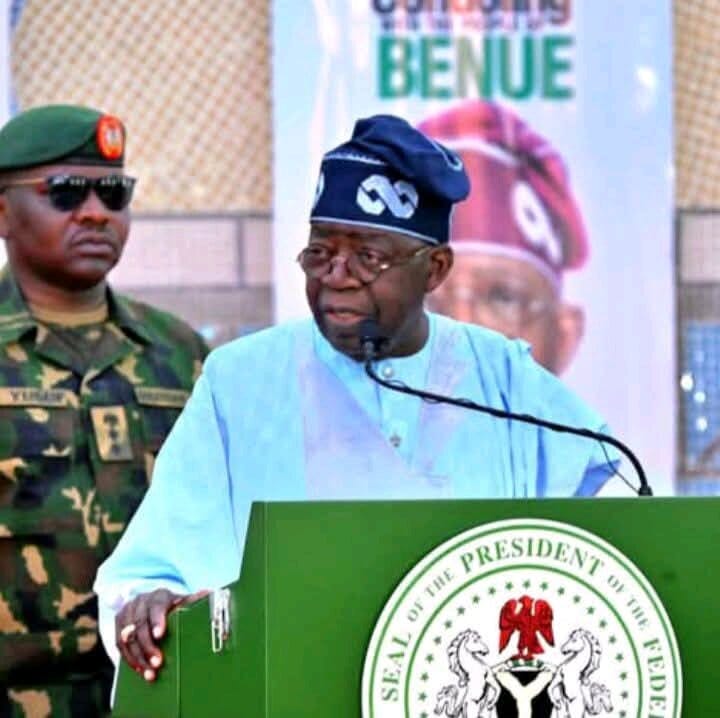
Nigeria is watching. On Monday, April 21, 2026, the Federal Government made its most decisive legal move yet by filing a sweeping 13-count charge of treason, terrorism, and money laundering before the Federal High Court in Abuja against six individuals accused of plotting to violently overthrow the government of President Bola Ahmed Tinubu.
The charge, filed by the Office of the Attorney-General of the Federation and signed by the Director of Public Prosecutions, Rotimi Oyedepo (SAN), accuses the defendants of conspiring in 2025 to wage war against the Nigerian state. According to the charge sheet, they sought to "levy war against the state to overawe the President of the Federal Republic of Nigeria," an offence punishable under Section 37(2) of the Criminal Code.
Who the defendants are
The federal government named six defendants currently in custody, plus a seventh who remains at large. This is not a group of junior discontents. It includes senior military figures and a politically exposed individual at the highest levels of Nigeria's establishment.
- Maj. Gen. Mohammed Ibrahim Gana (Rtd) - Retired Major General, Nigerian Army
- Capt. Erasmus Ochegobia Victor (Rtd) - Retired Naval Captain
- Inspector Ahmed Ibrahim - Serving Nigeria Police Officer
- Zekeri Umoru - Civilian defendant
- Bukar Kashim Goni - Civilian defendant
- Abdulkadir Sani - Civilian defendant
- Timipre Sylva - Former Minister of State for Petroleum — at large
The Associated Press confirmed that all six in-custody defendants were charged before the court, while Sylva remains a fugitive accused of helping conceal the plot. The presence of a former minister in the charge sheet elevates this case from a military discipline matter to a potential political conspiracy of national consequence.
The 13-count charge explained
The prosecution does not just allege a coup. It layers multiple serious offences, each carrying substantial penalties under Nigerian law. The 13 counts cover four broad categories.
1-2 Treason and misprision of treason under the Criminal Code Cap C38, for conspiring to wage war against the state and for knowing a treasonable act was planned but failing to report it to the President or a peace officer.
3 Failing to prevent treason, for not using reasonable efforts to stop the commission of the planned offence involving Colonel Mohammed Alhassan Ma'aji and others.
4-7 Terrorism offences under the Terrorism (Prevention and Prohibition) Act, 2022, including conspiracy to commit terrorism, attending terrorist meetings to further a destabilising political ideology, rendering support to terrorism, and suppressing intelligence.
8-13 Money laundering linked to terrorism financing under the Money Laundering (Prevention and Prohibition) Act, 2022, targeting the specific defendants who allegedly handled suspect funds.
Daily Post published the full charge sheet, confirming that Count 1 specifically names all seven defendants, including Sylva, as parties to the conspiracy to wage war against the state. The decision to include Sylva even while he remains a fugitive signals the government's intention to prosecute to the fullest regardless of who has evaded arrest.
The money trail the prosecution is following
Follow the money. That appears to be a central strategy of the prosecution's case, and the figures involved are significant. The charge alleges a financial network tied directly to terrorism financing.
Bukar Kashim Goni allegedly retained N50 million believed to be proceeds of terrorism financing, while Abdulkadir Sani allegedly held N2 million from a similar source. Zekeri Umoru reportedly accepted N10 million in cash outside formal banking channels and retained an additional N8.8 million suspected to be tied to terrorism financing. Inspector Ahmed Ibrahim allegedly possessed N1 million from the same scheme.
What makes this especially significant is that all financial counts fall under the Money Laundering (Prevention and Prohibition) Act, 2022. This means the prosecution is building a case that goes beyond political ideology. It argues that there was a structured funding operation designed to sustain and advance a conspiracy to destabilise the Nigerian state.
How this plot came to light: the full timeline
October 1, 2025
FG cancels the ceremonial parade for Nigeria's 65th Independence Anniversary, sparking public speculation about internal security concerns.October 2025
Reports link the parade cancellation to an alleged coup plot. The Defence Headquarters firmly denies any connection.October 31, 2025
TheCable reports that 16 military officers were arrested in early October over the alleged coup attempt, while two others remain on the run.January 2026
The Defence Headquarters officially confirms a plan to overthrow President Tinubu existed and that military personnel implicated would face judicial panels.April 2026
Families of detained military officers protest at the National Assembly, demanding open civilian court trials for their relatives.April 21, 2026
FG files the 13-count charge at the Federal High Court in Abuja. Arraignment set for April 22 before Justice Joyce Abdulmalik.
What happens next in court
The defendants are scheduled to appear before Justice Joyce Abdulmalik of the Federal High Court in Abuja on Wednesday, April 22, 2026, for their formal arraignment. This is the moment the charges move from a document into live proceedings, and it will be a closely watched courtroom session.
The inclusion of a former minister and two retired senior military officers means this trial will likely attract intense scrutiny from civil society, legal observers, and the international community. Families of the military suspects have already pushed for open civilian court proceedings, and Channels Television confirmed that protest activity demanding transparency has already taken place at the National Assembly gates.
The case will also test whether Nigeria's civilian courts can handle treason prosecutions effectively. Historically, military-related offences in Nigeria have been adjudicated through military tribunals. Bringing this case to the Federal High Court signals the Tinubu administration's preference for civil judicial process over internal military proceedings, a choice that carries both legal and political implications.
Why this case matters beyond Nigeria
Think about the bigger picture. West Africa has seen a wave of military takeovers in recent years, with successful coups in Mali, Burkina Faso, Niger, and Guinea reshaping the region's political landscape. Nigeria, as Africa's most populous nation and largest economy, represents a critical anchor of democratic governance in the region.
The charge sheet describes what prosecutors call a coordinated network involving security personnel, civilians, and a politically exposed individual, allegedly connected to activities threatening national security. This framing suggests the government views the alleged plot not as an isolated incident but as part of a structured effort that required legal accountability at the highest level.
A successful, transparent prosecution could reinforce Nigeria's democratic institutions and deter future attempts. A faltering or politicised process, however, risks doing the opposite. That is why Wednesday's arraignment is not just a courtroom date. It is a moment that will define the Tinubu administration's commitment to due process and the rule of law under pressure.
Read More
Nigeria's 2026 Fiscal Policy: FG Slashes Import Duties on Vehicles, Rice, and Sugar
![Vehicles]() FG Passes Green Tax Targeting Vehicles With Big Engines: What It Means for Nigerians
FG Passes Green Tax Targeting Vehicles With Big Engines: What It Means for Nigerians![Import Ban]() FG Bans Import on 17 Items: New Fiscal Policy Hits Hard and Starts Now
FG Bans Import on 17 Items: New Fiscal Policy Hits Hard and Starts Now![CBN]() 10 CBN BVN Rules Taking Effect May 1 That Could Lock You Out of Your Account
10 CBN BVN Rules Taking Effect May 1 That Could Lock You Out of Your Account
 FG Passes Green Tax Targeting Vehicles With Big Engines: What It Means for Nigerians
 FG Bans Import on 17 Items: New Fiscal Policy Hits Hard and Starts Now
 10 CBN BVN Rules Taking Effect May 1 That Could Lock You Out of Your Account