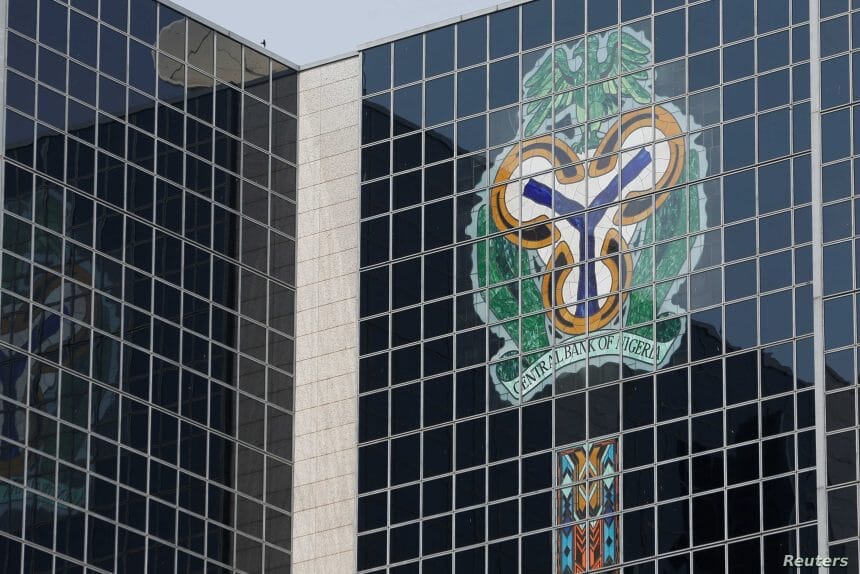
The Central Bank of Nigeria (CBN) seized control of Union Bank in January 2024. The CBN cited a forensic audit that uncovered alleged financial mismanagement, a controversial $300 million unhedged loan, capital shortfalls exceeding N224 billion, and severe governance failures linked to the bank's former owners, Titan Trust Bank. A Federal High Court later ruled the takeover unlawful. The CBN appealed. Union Bank still operates under CBN management as of April 2026.
What Triggered the CBN Takeover of Union Bank
Financial abuses and mismanagement running into many trillions of naira led to the sack of former directors and owners of Union Bank of Nigeria and the appointment of a new board by the CBN.
This did not happen overnight. It was the result of years of alleged corporate misconduct, questionable transactions, and a troubled merger that regulators say put the entire bank at risk.
The CBN moved in January 2024. It dissolved the board. It installed new management. And it launched a forensic audit that would eventually expose just how deep the problems ran.
The Titan Trust Bank Merger and How It All Started
The roots of this crisis go back to 2021. The merger concluded a complex journey that began in 2021 with a Share Sale Agreement. In 2022, Titan Trust Bank acquired an 89.4% stake in Union Bank, triggering a Mandatory Takeover Offer for an additional 6.59% of Union Bank's shares. This acquisition led to Union Bank's delisting from the Nigerian Exchange in 2023 after 52 years.
But the transaction was not clean. A leaked CBN Special Investigation Report alleged that proxies linked to former CBN Governor Godwin Emefiele were involved in setting up Titan Trust Bank and orchestrating the acquisition of Union Bank.
That allegation alone was explosive. It drew the apex bank's attention directly to both institutions.
What the Forensic Audit Found Inside Union Bank
According to the report, the former owners and directors were engaging in financial reporting manipulation, fraudulent misappropriation of foreign loans, unethical financial engineering, and inappropriate withdrawal of depositors' funds.
These were not minor bookkeeping errors. These were serious allegations that struck at the core of the bank's solvency.
The report also questioned certain restructuring arrangements described as "unorthodox financial engineering," which it said may have had significant financial implications for the bank.
The CBN did not release the full report publicly. But investigators reviewing excerpts said the findings were serious enough to justify immediate regulatory intervention.
The $300 Million Afreximbank Loan That Raised Red Flags
The report indicated that Titan Trust Bank, the investment vehicle of the former owners and directors which was merged with Union Bank, had an unhedged loan of $300 million obtained from Africa Export Import Bank (Afreximbank).
An unhedged dollar loan of that size inside a bank with weakening capital is a serious systemic risk. If the naira depreciates sharply, the bank's obligations balloon in local currency terms. That creates a direct threat to depositors and financial stability.
This single line item gave the CBN strong grounds to act.
The Capital Shortfall That Made Intervention Inevitable
The CBN insisted that Union Bank was in severe financial distress, with a negative capital adequacy ratio, a capital shortfall exceeding N224 billion, and high levels of non-performing assets.
A negative capital adequacy ratio means a bank cannot absorb losses. It is one of the clearest signals of a bank in distress. For a regulator, allowing such an institution to continue operating without intervention would be reckless.
At the time, the apex bank cited provisions of BOFIA, referencing the bank's non-compliance with licensing conditions, threats to its financial stability, failure to adhere to regulatory directives, and its undercapitalisation as justification for the intervention.
The CBN felt it had no choice.
How the CBN Executed the Takeover
On January 2024, the CBN moved swiftly. The CBN dissolved the boards of both banks, citing regulatory non-compliance and governance failures. Yetunde Oni was subsequently appointed as the new Managing Director and Chief Executive Officer of Union Bank, tasked with steering the institution through regulatory reforms and recapitalisation efforts.
The intervention was not limited to Union Bank. The dispute stemmed from the CBN's January 2024 intervention, when it dissolved the boards and management of Union Bank, Keystone Bank, and Polaris Bank over alleged regulatory breaches and corporate governance failures.
It was a coordinated sector-wide action. The CBN was sending a message.
Union Bank Under New Management: Signs of Recovery
Despite the legal drama, the bank has shown measurable signs of stabilisation.
The resultant corrective measures have seen Union Bank bouncing back, regaining more market share and redeeming maturing obligations. By the third quarter of 2025, the bank was already on its path to recovery following actions by the new management, with many analysts expecting it to be able to meet the N200 billion new capital requirement to retain its standalone national banking licence.
That is a significant turnaround for a bank that was described as being in severe financial distress just months earlier. The new management, it seems, got to work.
The Court Ruling That Shocked Nigeria's Banking Sector
The Federal High Court in Lagos ruled that the Central Bank of Nigeria acted outside its statutory authority in dissolving the board and management of Union Bank of Nigeria Plc, declaring the January 2024 intervention unlawful. The judge held that CBN's actions were ultra vires and not in compliance with the provisions of the Banks and Other Financial Institutions Act 2020.
The suit was filed by Titan Trust Bank Limited, Luxis International DMCC, and Magna International DMCC, who claimed to be the rightful owners of Union Bank.
The court also ruled that the actions of the CBN-appointed board and management were subject to judicial review, describing them as agents of the apex bank whose decisions could not stand independently of the principal's authority.
The court went further on the question of fair hearing. The court held that the applicants' fundamental rights were breached, noting that they were sanctioned without being given an opportunity to respond to allegations of regulatory infractions arising from a purported special examination of the bank.
The judge noted that the applicants' shareholding was reduced from 100 per cent to 40 per cent and that they were barred from participating in the recapitalisation without any legal basis, describing the actions as evidence of bad faith.
CBN Fires Back: The Appeal
In its notice of appeal dated 26 March, the CBN argued that the lower court erred in law by holding that it acted outside its statutory powers when it dissolved the board of Union Bank. It maintained that it is the primary regulator of Nigeria's financial system and is empowered under the CBN Act and BOFIA 2020 to supervise and intervene in financial institutions.
It contended that its actions were carried out in good faith and within its statutory mandate, and that Section 51 of BOFIA protects it from liability for actions taken in the course of exercising its regulatory powers.
The legal battle is now before the appellate court, and its outcome will have major implications for how far the CBN can go in future banking interventions.
Where Things Stand Right Now
In a formal statement on the judgment delivered on March 25, 2026, the CBN stated that while it was obtaining and carefully reviewing the Certified True Copy of the judgment, the status of Union Bank has not changed, implying that the lender remains under CBN-intervention management.
The CBN also assured that "all banks remain fully operational, ensuring continued access to banking services for customers."
So as things stand: Union Bank is open for business, under CBN management, and at the centre of a landmark legal dispute that will shape Nigerian banking regulation for years.
Why This Matters Beyond Union Bank
The move was part of a broader pattern of regulatory interventions by the CBN in Nigeria's banking sector. In 2021, the regulator removed the board of First Bank of Nigeria Holdings Plc over governance concerns, while a similar action was taken against Skye Bank Plc in 2016 due to prudential breaches, with the bank's licence later revoked and its operations transferred to Polaris Bank.
Each time, the CBN argued it was protecting depositors and the financial system. Each time, the affected parties argued the regulator overstepped.
The Union Bank case is now the most contested of them all. If the CBN loses the appeal, it could fundamentally limit its power to intervene in future bank crises. If it wins, it sends a clear signal that its authority to act is near absolute.
Every depositor, investor, and bank executive in Nigeria is watching.
Read More
![CBN]() CBN's New BVN Rules 2026: What Every Nigerian Must Know
CBN's New BVN Rules 2026: What Every Nigerian Must Know![CBN]() CBN Now Lets You Temporarily Switch Off Instant Transfers on Your Bank Account
CBN Now Lets You Temporarily Switch Off Instant Transfers on Your Bank Account![Power Transmission Towers]() GENCOs Challenge Tinubu Government: Show the Full Breakdown of N3.3 Trillion Power Debt
GENCOs Challenge Tinubu Government: Show the Full Breakdown of N3.3 Trillion Power DebtNYSC Opens 3-Day Supplementary Registration Window for Prospective Corps Members
 GENCOs Challenge Tinubu Government: Show the Full Breakdown of N3.3 Trillion Power Debt