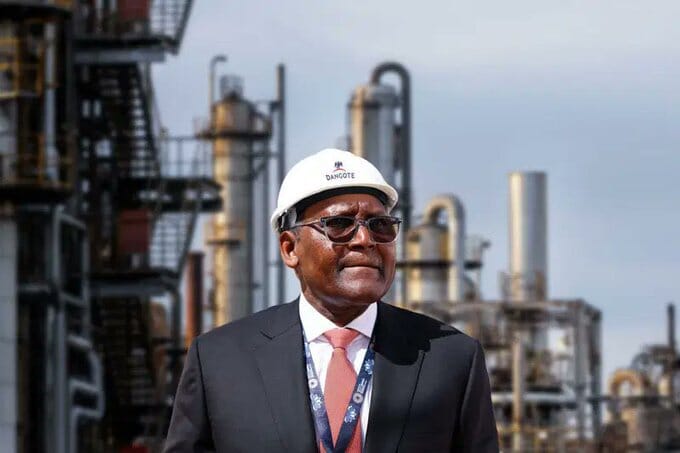
Aliko Dangote, Africa's richest businessman, has revealed plans to build a 20,000-megawatt power generation project, making a direct assault on one of the continent's most stubborn and costly problems. The announcement, made during a high-level conversation with International Finance Corporation Managing Director Makhtar Diop at IFC headquarters in Washington, signals the next chapter in Dangote's bet that private capital, not governments, will light up Africa.
A 20,000MW Pledge That Changes the Scale of the Conversation
Here is the number that stops you cold: Nigeria, a nation of more than 200 million people, currently averages between 3,331 and 6,000 megawatts of actual electricity supply on any given day. What Dangote is proposing would, by itself, more than triple that figure in one private-sector stroke.
Speaking at the IFC event, Dangote framed the move as both a business decision and a moral imperative. "We are now going into power, 20,000 megawatts," he said. "We are building the biggest deep-sea port, and we are doing LNG. Why? Because we are looking at the needs of Africa and making them a reality."
This is not a vague aspiration buried in a boardroom slide. It sits alongside concrete, already-moving projects, including LNG infrastructure and what Dangote describes as the biggest deep-sea port on the continent. The power plan is the crown jewel of a broader post-refinery push.
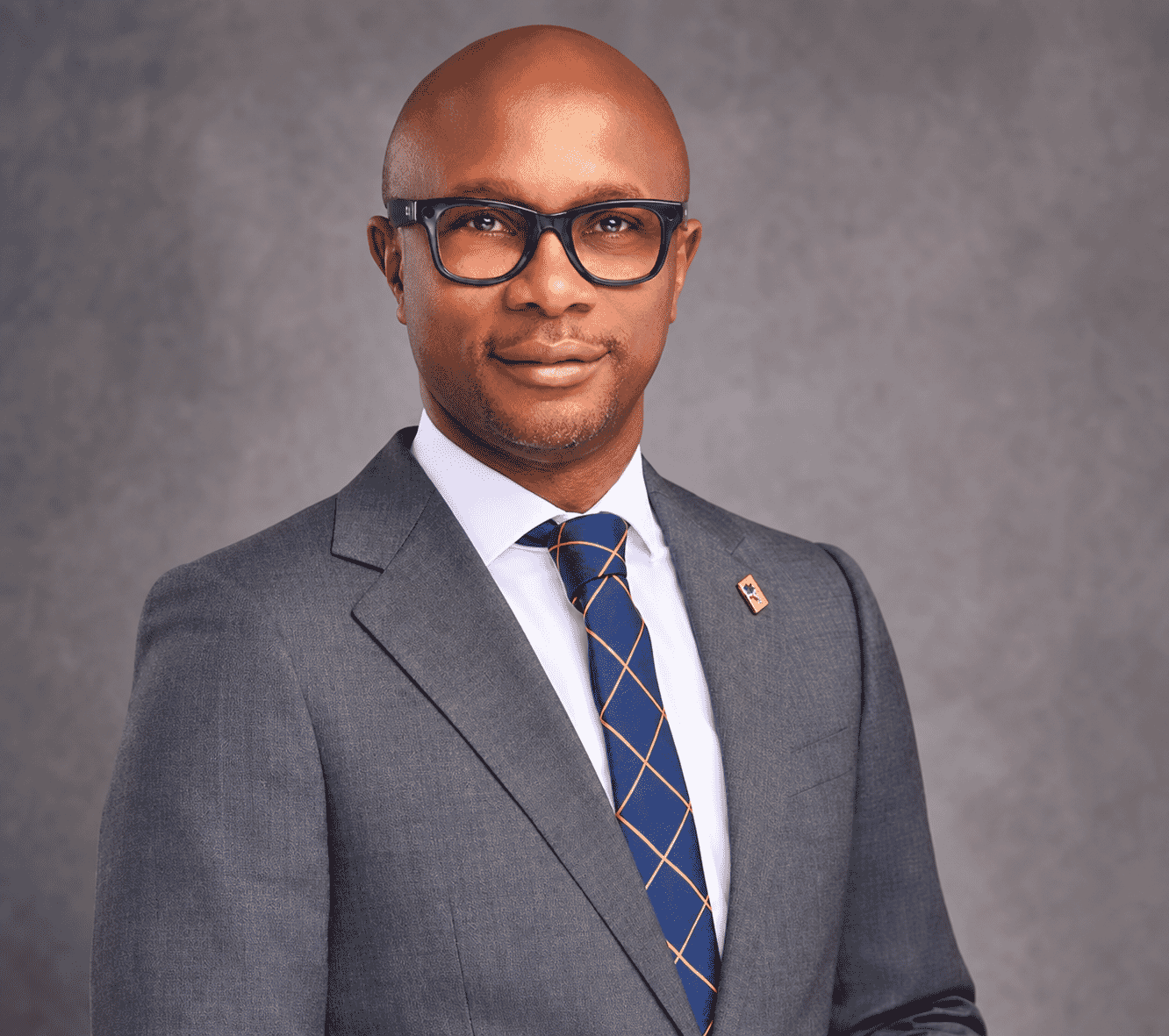 FirstBank Appoints Olayinka Ijabiyi as Head of Marketing and Corporate Communications
Why Nigeria's Power Crisis Makes This Announcement So Urgent
To understand why this matters, you need to feel the scale of the problem. World Bank data cited by BusinessDay estimates that erratic electricity costs the Nigerian economy roughly $29 billion every year, a figure equivalent to about 10 percent of its gross domestic product.
The government has repeatedly failed to close this gap. Nigeria's Power Minister has missed three separate deadlines to stabilise the grid even at 6,000 megawatts since taking office in August 2023. A brief record of 6,003 megawatts was touched in March 2025, but the achievement was short-lived. For most Nigerians, a diesel generator is still the only reliable electricity source they have.
The human cost is enormous. Factories cap production. Hospitals run on expensive backup power. Small businesses watch profit margins evaporate paying for fuel. Dangote is stepping into that vacuum with a number that, for the first time in Nigerian history, would genuinely move the needle.
"Without power, Africa cannot unlock its manufacturing potential. Reliable electricity remains central to industrialisation." - Aliko Dangote, speaking at IFC headquarters, Washington D.C. (Source: MMS Plus)
The Refinery Playbook: Why Dangote Has Earned the Right to Dream Big
Skeptics exist. They always do. But Dangote has already silenced the loudest doubters once before, and that track record gives the power announcement serious weight.
His $20 billion Lagos refinery was once dismissed as impossible. Even Dangote admitted the odds looked brutal at the start. "At the time when I started this refinery, I have never ever seen crude oil in my life," he said. People openly predicted it would fail. It did not.
According to Billionaires Africa, the refinery was tested at 661,000 barrels per day during commissioning, exceeding its 650,000-barrel nameplate capacity. It has now run stably at 650,000 barrels per day for two consecutive months, with every department operational. That is a world-class single-train refinery performing at full capacity.
That success matters strategically. Dangote told Diop that the refinery's cash flows have freed up assets and significantly strengthened the group's ability to raise capital. "Our cash flow now is very, very strong," he said. In plain terms, the refinery is now funding the next wave of ambition.
Vertical Integration: Dangote's Master Strategy to Outflank the System
Here is what makes this more than a press release. Nigeria's power sector is locked in a punishing liquidity trap. At least 70 percent of the country's existing thermal plants are starved of gas because distribution companies cannot collect revenue, leading to billions in unpaid debt to gas suppliers and generation firms.
Dangote's play cuts around that trap. He has framed the power project alongside his own LNG infrastructure and a planned deep-sea port with an 80-metre draft, meaning he can supply his own fuel, ship his own products, and serve as his own largest customer, all within the same corporate structure.
Add the group's fertiliser operations targeting 12 million tonnes of urea production, and you see the full picture. As Africa.com reported, Dangote is positioning his empire to bridge the infrastructure gap that has long throttled the continent's manufacturing capacity. This is vertical integration on a continental scale.
Opening Africa to African Investors: The IPO Dimension
The power announcement was not the only headline from the IFC conversation. Dangote also outlined a plan to list the refinery and other group assets across African stock markets, opening them up to ordinary African investors.
Arise News reported that the company intends to pay dividends in hard currency, so that investors across the continent benefit directly from operations and capital stays within Africa rather than flowing out. Dangote said he expects the group's full portfolio of current and planned investments to eventually generate $100 billion in annual revenue, with EBITDA of $30 billion to $35 billion.
In one of his most personal disclosures, Dangote said that Dangote Industries, the parent holding company, has never paid him or any other shareholder a single dividend since the business began. "I've never taken dividend, not one dime out of the company since when we started," he said. "Everything has been reinvested back into the business." The planned listing, he indicated, is the moment that practice ends.
Breaking Down the Barriers That Have Held Africa Back
Dangote did not stop at electricity. He used the IFC platform to catalogue the structural problems he believes are throttling African growth, and he named them with the authority of someone who has spent decades navigating them personally.
He told Diop that as Africa's richest man, he still needs 38 separate visas to move around his own continent. Goods take weeks to clear borders between Lagos and Cotonou, Benin. It costs more to ship a container from Lagos to Accra than it does from Spain to Lagos.
These are not abstract complaints. They are the daily friction costs that make African industrial scale brutally difficult to achieve. Dangote said his African Renaissance initiative was created specifically to bring together like-minded investors to tackle these structural barriers and push for policy reforms across the continent.
His message is simple and direct: private sector investment must lead Africa's transformation, but governments must remove the obstacles in its path.
What Happens Next: The Real Question Is Execution
Bold visions require hard implementation. Nigeria's power sector has broken promises before, and the regulatory environment, particularly around cost-reflective tariffs and gas supply contracts, remains genuinely difficult.
BusinessDay's analysis notes that Dangote may need to leverage his own gas assets and LNG capabilities to bypass the chronic supply-chain volatility that has paralysed government-backed generators. Even with those advantages, building 20,000 megawatts of new capacity represents a project management and financing challenge of almost unimaginable scale for a single private actor.
But here is what the refinery story teaches us: Dangote has now proven he can execute projects that Africa's skeptics said were impossible. He built a refinery from scratch without prior experience in crude oil. He ran it above nameplate capacity within two months of stable operation. He financed it through a global debt crisis and came out the other side with strong cash flows.
The 20,000MW announcement deserves to be taken seriously precisely because the man making it has already done the impossible once. Africa, and the world, will be watching to see if he can do it again.
Read More
![Opay]() OPay Hires JPMorgan, Deutsche Bank, and Citigroup for a $4 Billion US IPO That Could Redefine African Fintech
OPay Hires JPMorgan, Deutsche Bank, and Citigroup for a $4 Billion US IPO That Could Redefine African Fintech![CBN]() CBN Authorizes Fintech Banks to Recover Overdue Debts Across BVN-Linked Accounts from May 1, 2026
CBN Authorizes Fintech Banks to Recover Overdue Debts Across BVN-Linked Accounts from May 1, 2026![Google Logo]() Google Shares Skyrocket to All-Time High as Meta Slides: How AI Is Splitting Big Tech in Two
Google Shares Skyrocket to All-Time High as Meta Slides: How AI Is Splitting Big Tech in TwoFlutterwave Denies $75 Million Nigerian Government Investment and Rejects Imminent IPO Claims
 OPay Hires JPMorgan, Deutsche Bank, and Citigroup for a $4 Billion US IPO That Could Redefine African Fintech
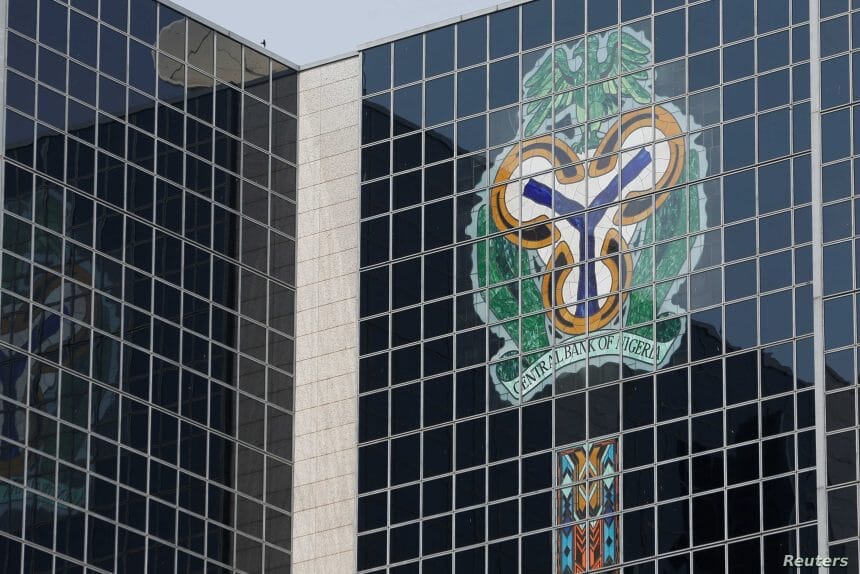 CBN Authorizes Fintech Banks to Recover Overdue Debts Across BVN-Linked Accounts from May 1, 2026
 Google Shares Skyrocket to All-Time High as Meta Slides: How AI Is Splitting Big Tech in Two