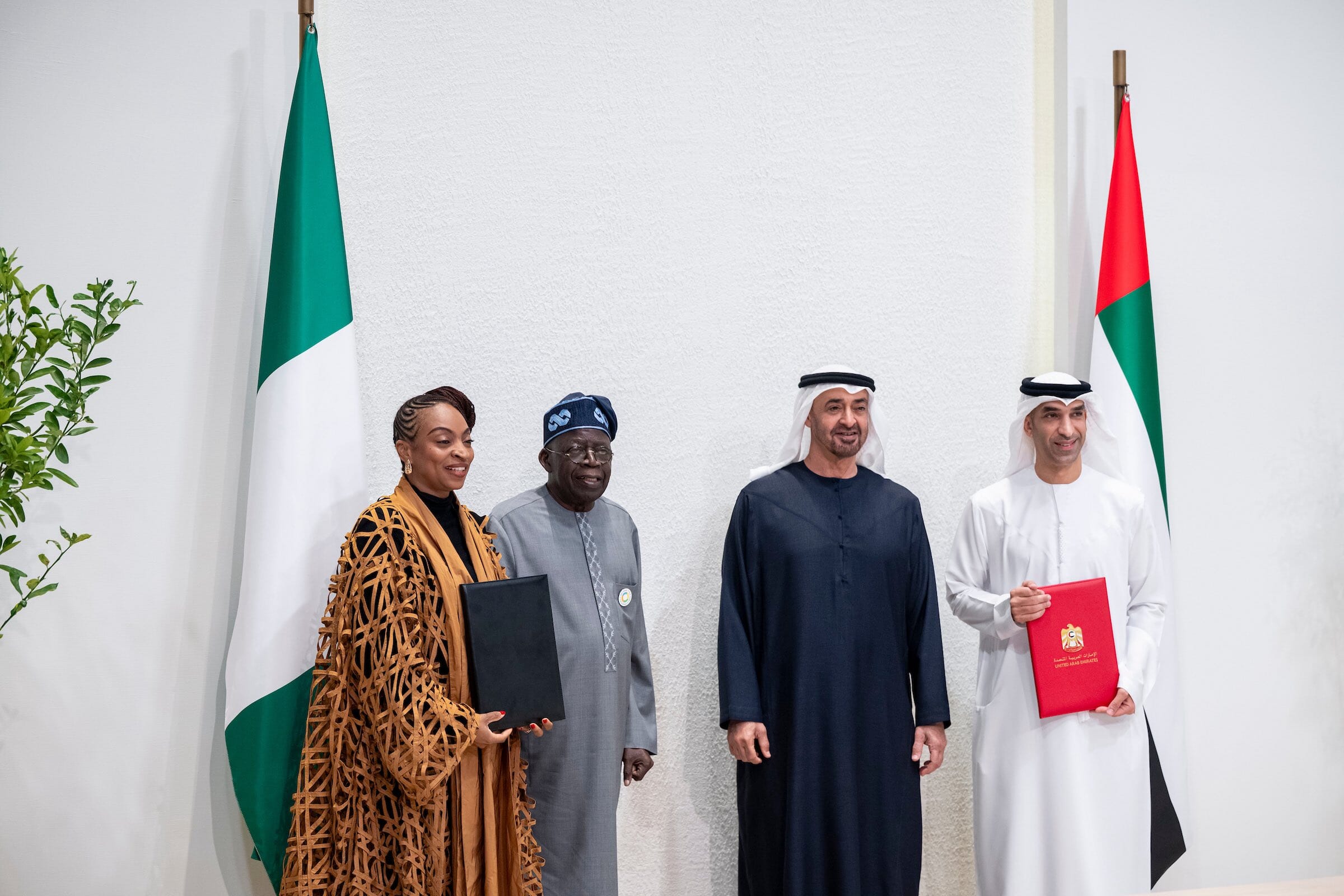
Nigeria and the United Arab Emirates have signed a groundbreaking Comprehensive Economic Partnership Agreement on January 13, 2026. This deal eliminates tariffs on thousands of products, fostering deeper economic ties. Witnessed by President Bola Tinubu and UAE President Sheikh Mohamed bin Zayed Al Nahyan, the agreement marks a pivotal moment for Africa's largest economy and a global trade hub.
The CEPA covers trade in goods, services, and investments. It aims to boost non-oil exports, attract foreign direct investment, and create jobs across sectors. With bilateral non-oil trade reaching $3.1 billion in the first nine months of 2025, this pact builds on rapid growth.

Nigeria UAE Tariff Free Trade Agreement Overview
Under the agreement, the UAE will scrap tariffs on 7,315 Nigerian products. This includes immediate duty-free access for agricultural items like fish, seafood, oil seeds, cereals, and cotton. Industrial goods such as pharmaceuticals and chemicals also benefit right away.
Over three to five years, tariffs on Nigerian machinery, vehicles, electrical equipment, apparel, and furniture will phase out. This staggered approach allows businesses to adapt while expanding market access.
Nigeria, in return, will eliminate tariffs on 6,243 UAE products. Immediate removal covers 3,949 items, or 63.3 percent, mainly industrial inputs and capital goods. The remaining 2,294 will phase out over five years, with 123 products excluded to protect local industries.
Benefits of Nigeria UAE CEPA for Goods and Services
The deal opens the UAE as a gateway for Nigerian exports to the Middle East and beyond. Nigerian exporters gain competitive edges in a dynamic market, potentially increasing revenues and diversifying economies away from oil.
In services, the CEPA grants access to 108 sectors, including business, communication, transport, finance, construction, health, and tourism. This expands opportunities for Nigerian professionals and firms. UAE investments in Nigerian technology, agriculture, precious metals, and energy are expected to surge.
For consumers, lower tariffs mean affordable imports, stimulating growth. The agreement includes rules of origin to ensure benefits go to genuine producers, maintaining fairness.
Economic Impact of Tariff Free Trade Between Nigeria and UAE
Experts predict the pact will transform Nigeria's trade landscape. By removing barriers, it could add billions to bilateral trade volumes. Job creation in export-oriented sectors like agriculture and manufacturing is a key outcome.
Nigeria's Renewed Hope Agenda aligns with this deal, promoting diversification. UAE's expertise in logistics and finance complements Nigeria's resources, fostering mutual growth.
Challenges like compliance with standards remain, but the agreement includes support for capacity building. Overall, it signals confidence to global investors.
How Nigeria UAE Trade Agreement Enhances Investments
Beyond trade, the CEPA facilitates investment flows. It reduces barriers, encouraging UAE funds into Nigerian infrastructure and innovation. Joint ventures in energy and tech are likely to emerge.
Nigeria maintains its import prohibition list, safeguarding sensitive areas. This balanced approach ensures sustainable development.
Businesses should prepare by understanding rules and exploring partnerships. The deal positions Nigeria as a key player in global trade networks.
Future Prospects of Nigeria UAE CEPA 2026
Looking ahead, the agreement could inspire similar pacts with other nations. It aligns with Africa's Continental Free Trade Area goals. Monitoring implementation will be crucial for realizing full benefits.
Nigerian Minister Jumoke Oduwole emphasized its real-world impact for exporters and workers. UAE Minister Thani bin Ahmed Al Zeyoudi highlighted shared prosperity.
This CEPA is more than a deal; it's a catalyst for economic transformation. As trade barriers fall, opportunities rise for both nations.
Read More