A bombshell warning from a former electoral commissioner reveals that Nigeria's Electoral Act 2026 contains provisions that could let politicians print and submit their own ballot papers, shattering INEC's control over one of democracy's most fundamental safeguards.
Here is what every Nigerian needs to understand right now. A law signed just weeks ago by President Bola Tinubu could quietly dismantle the very foundation of free and fair elections before a single vote is cast in 2027.
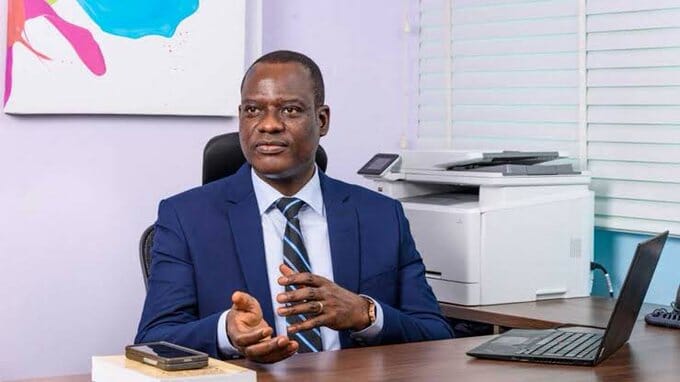
Former Resident Electoral Commissioner Mike Igini appeared on Arise TV's The Morning Show and dropped a warning that has sent shockwaves through Nigeria's political and civil society circles.
Igini, who spent years inside the Independent National Electoral Commission (INEC), says he has now identified three specific provisions in the Electoral Act 2026 that could fundamentally undermine the credibility of Nigeria's next general election.
Section 63: The Ballot Paper Loophole That Changes Everything
Let's go straight to the heart of the matter. Section 63 of the Electoral Act 2026 grants presiding officers the discretion to accept ballot papers that do not carry INEC's official marks or security features, as long as the officer is personally "satisfied" with their authenticity.
"The Presiding Officer has now been given a discretion to accept ballot papers, notwithstanding the absence of the official mark, and to count that ballot paper. What that means is that before this election, politicians who have access to the security features of INEC ballot are going to produce their ballot papers. They are going to print their own ballot paper to be accepted. This is dangerous." - Mike Igini, Former INEC Resident Electoral Commissioner, speaking on Arise TV, April 22, 2026
Think about what that means in practice. A politician with insider knowledge of INEC's security specifications could replicate official ballot papers before polling day, deliver them to cooperative presiding officers, and those votes would count. The law, as written, gives presiding officers the legal cover to allow it.
Sahara Reporters confirmed that former Vice President Atiku Abubakar has also sounded the alarm, calling the provision a "grave and dangerous ambiguity" and urging the National Assembly to act urgently. Through his aide Phrank Shaibu, Atiku described the flaw as "a direct threat to electoral integrity" that introduces subjectivity into a process that should be strictly procedural.
A Dangerous Clause Removed Once, Now Quietly Restored
What makes this even more alarming is its history. This is not a new idea that slipped through undetected. Igini noted that the "satisfied" language previously existed in the 2010 Electoral Act and was removed following years of criticism and documented abuse. The fact that it has now been reintroduced raises serious questions about intent.
International IDEA's analysis of Nigeria's electoral reform process confirms that the Supreme Court had already addressed Section 63(2) in past rulings, establishing that where a returning officer is satisfied that a ballot paper came from a book furnished to the presiding officer, the absence of a signature is not automatically disqualifying. The 2026 Act appears to take that judicial reasoning and embed it directly into statute, now extending it to security marks as well.
Key provisions under scrutiny in the Electoral Act 2026
- Section 63: Allows presiding officers to accept ballot papers without INEC official marks if "satisfied" with authenticity
- Section 138: Limits petition grounds, shielding actions that violate INEC directives but not the Act itself
- Section 137: Removes requirement to join presiding and returning officers as respondents in election petitions
Global electoral governance experts have long warned against exactly this kind of provision. The ACE Electoral Knowledge Network states unambiguously that allowing candidates or parties to print and distribute their own ballot papers "can only be seen as a way to promote electoral propaganda" and presents three major risks: enabling electoral fraud, delaying vote counting, and inflating the cost of elections. Those are precisely the risks Igini is warning about in the Nigerian context.
Two More Provisions That Seal Off Accountability
Section 63 is dangerous on its own. But combined with two more provisions Igini flagged, it forms what legal experts would call a three-part shield for electoral misconduct.
First, there is Section 138. Igini argues this section signals that violations of INEC's own regulations and guidelines, as opposed to the Electoral Act text itself, cannot serve as grounds for an election petition. Since INEC issues most of its operational rules through guidelines rather than the Act, this effectively renders a huge swath of misconduct legally unchallengeable in court.
Then comes Section 137. Igini explains that this provision removes the legal requirement to name presiding officers and returning officers as respondents in election petitions involving their conduct. In plain terms, the individual officials who may accept counterfeit ballots or fail to follow INEC rules could walk away without ever facing a tribunal.
A March 2026 legal analysis published on Mondaq independently corroborates this accountability gap, noting that the Act "provides no verification mechanism" for subjective determinations by presiding officers and leaves "inconsistent and unreviewable application" of key provisions across more than 176,000 polling units.
What the Electoral Act 2026 Gets Right and Where It Falls Short
To be fair, the Electoral Act 2026 is not without genuine progress. When President Tinubu signed it on February 18, 2026, the ceremony was framed as a landmark moment for Nigerian democracy. The law gives statutory recognition to the Bimodal Voter Accreditation System (BVAS) and the INEC Results Viewing Portal (IReV), making electronic results legally admissible in tribunals for the first time.
TheCable's analysis of the Act's key provisions highlights significant reforms including the abolition of delegate primaries in favor of direct primaries, tough new penalties for vote-buying including a 10-year ban from elections, and tighter rules on party membership registers that aim to reduce last-minute party-switching.
But here is the problem. Even the strongest technological safeguards collapse if someone physically floods polling units with counterfeit ballot papers that presiding officers are legally empowered to accept. BVAS can verify who is accredited. IReV can transmit results. Neither system catches a fraudulent ballot paper that a compliant officer waves through under Section 63.
The 2027 Stakes Are Too High to Ignore This Warning
Nigeria heads into the 2027 general election with more eyes on its electoral process than ever before. The 2023 cycle left deep scars: widespread allegations of result manipulation, technological failures, and a Supreme Court decision that ultimately upheld a contested presidential outcome. The Electoral Act 2026 was supposed to fix those cracks.
Instead, critics argue it has introduced new ones. The combination of a ballot paper validity loophole, diminished petition grounds, and protected electoral officers creates conditions where electoral fraud could be executed, challenged, and yet remain unremedied within the law's own framework.
The Mondaq legal review puts it bluntly: without binding INEC operational guidelines that close these statutory gaps, the ambiguities will be resolved inconsistently across polling units, and the resulting fragmentation will generate a volume of post-election litigation that extends uncertainty well beyond election day.
Atiku has called on lawmakers to immediately amend the Electoral Act, replacing any discretionary powers in ballot validation with "clear, uniform standards." Igini, for his part, is urging Nigerians to read the provisions themselves and apply public pressure before 2027 makes these loopholes a lived reality.
The National Assembly has time to act. But that window is closing faster than most people realize.
Read More
![Import Ban]() FG Bans Import on 17 Items: New Fiscal Policy Hits Hard and Starts Now
FG Bans Import on 17 Items: New Fiscal Policy Hits Hard and Starts NowFlutterwave Denies $75 Million Nigerian Government Investment and Rejects Imminent IPO Claims
MTN Suspends Airtime and Data Loans Over FCCPC's New 2025 Regulation — Here Is Everything You Need to Know Right Now
![Taiwo Oyedele]() Taiwo Oyedele Finally Admits Errors in Nigeria's New Tax Laws — Promise Correction Underway
Taiwo Oyedele Finally Admits Errors in Nigeria's New Tax Laws — Promise Correction Underway
 FG Bans Import on 17 Items: New Fiscal Policy Hits Hard and Starts Now
 Taiwo Oyedele Finally Admits Errors in Nigeria's New Tax Laws — Promise Correction Underway