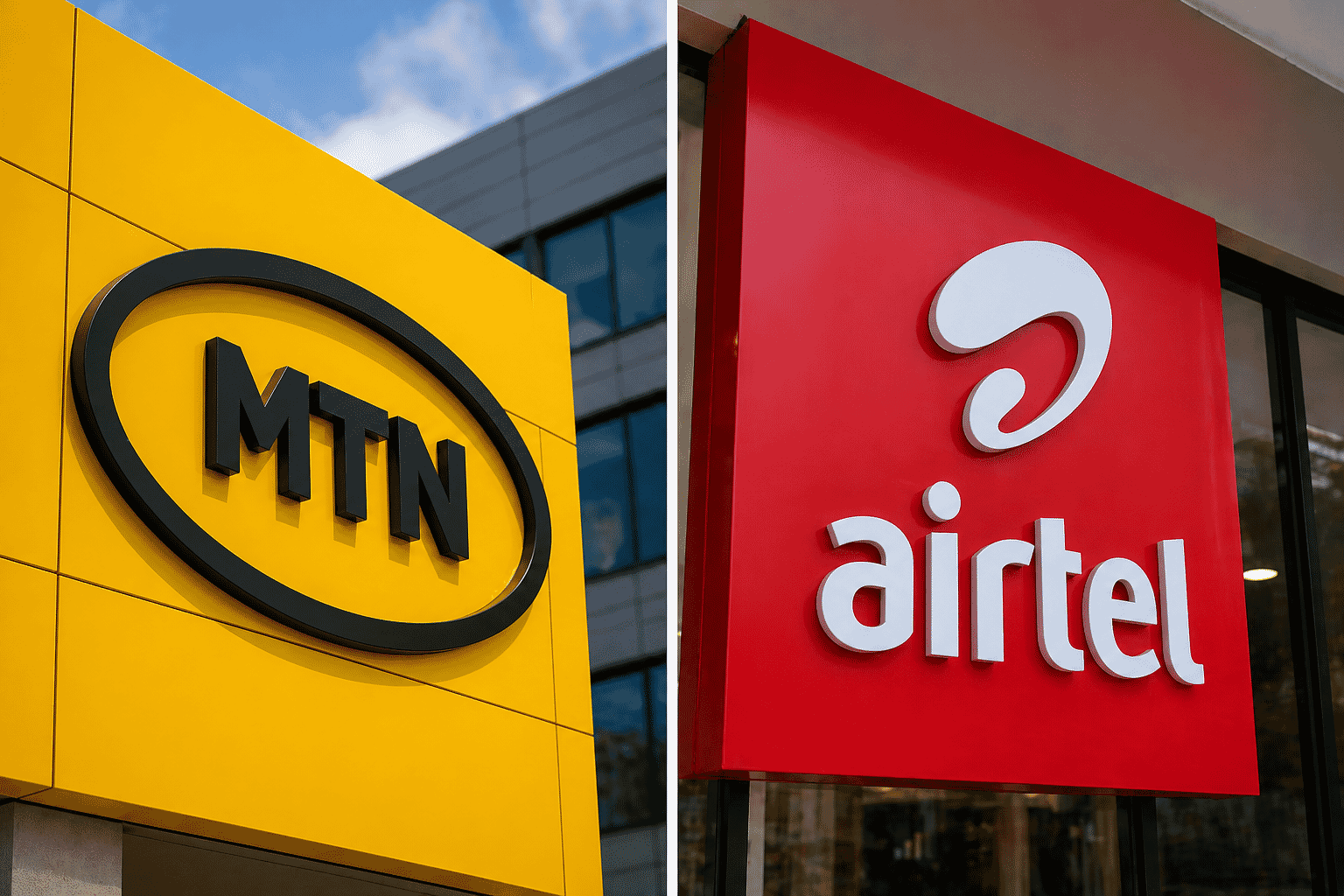
Two landmark Federal High Court rulings in Lagos and Abuja have halted the regulatory crackdown that wiped out Nigeria's most essential informal credit lifeline, ordering MTN and Airtel to restore airtime and data borrowing services immediately.
Federal High Courts in Lagos and Abuja have ordered MTN Nigeria and Airtel Networks Limited to immediately restore airtime and data credit lending services, reversing a mid-April suspension that left millions of prepaid subscribers unable to borrow emergency airtime. The twin rulings directly challenge the legal authority of the Federal Competition and Consumer Protection Commission's 2025 digital lending regulations and pave the way for Nigeria's "Borrow-Me" services to come back online nationwide.
Why MTN and Airtel Suspended Airtime Lending in the First Place
To understand why these court orders matter so much, you need to go back to July 2025. That is when the Federal Competition and Consumer Protection Commission expanded its regulatory reach and classified airtime and data credit services as formal digital loan products under its new Digital, Electronic, Online or Non-Traditional Consumer Lending Regulations, known as the DEON Regulations.
The commission extended compliance deadlines twice. But when enforcement finally commenced in April 2026, both MTN Nigeria and Airtel Networks Limited opted to suspend their airtime lending services entirely, citing compliance uncertainty and the risk of regulatory sanctions. The shutdown arrived with no prior notice to subscribers.
Millions of prepaid customers woke up one day to find that USSD codes like MTN's *606# and Airtel's *500# simply stopped working. Traders making emergency calls, dispatch riders coordinating deliveries, and low-income earners trying to stay connected all hit the same wall: "Service Unavailable."
The Lagos Ruling: FCCPC Blocked from Enforcing DEON Regulations
The first major legal intervention came on April 15, 2026, in Lagos. Justice Ambrose Lewis-Allagoa of the Federal High Court granted an interim injunction restraining the FCCPC from enforcing key provisions of the DEON Consumer Lending Regulations against members of the Wireless Application Service Providers Association of Nigeria, known as WASPAN.
Specifically, the Lagos court barred the commission from implementing those provisions, imposing sanctions, or taking any steps that could disrupt the operations of telecom service providers operating under the existing regulatory framework. In other words, the legal basis that pushed MTN and Airtel to suspend services in the first place was now officially in question.
WASPAN has since urged the commission to comply fully with the court orders, halt public commentary that could prejudice ongoing proceedings, and engage urgently with the Nigerian Communications Commission and other stakeholders to resolve the dispute.
"The Abuja court ruled that suspending these services was an unlawful interference with valid NCC licences, and that telecom operators cannot set aside agreed contractual notice periods and dispute resolution mechanisms simply to comply with new regulatory directives." - Federal High Court, Abuja, April 24, 2026
The Abuja Ruling: MTN and Airtel Barred from Cutting Off Lending Infrastructure
Nine days later, on April 24, 2026, the Federal High Court in Abuja delivered a second and equally decisive ruling. In Suit No. FHC/ABJ/CS/779/2026, the court granted an interim injunction in favour of Nairtime Holdings Limited and Nairtime Nigeria Limited, two of the technology companies that actually run the backend infrastructure powering airtime lending platforms.
The Abuja court restrained MTN Nigeria Communications Plc and Airtel Networks Limited from suspending, restricting, discontinuing, or otherwise interfering with Nairtime's access to their platforms, channels, short codes, SMS systems, USSD services, billing infrastructure, and all other telecommunications-enabled services during the subsistence of Nairtime's valid licence issued by the Nigerian Communications Commission.
The court went further. It ruled that telecom operators must respect contractual dispute-resolution processes and notice periods, even when responding to newly introduced regulatory directives. That is a significant legal point: compliance with new rules cannot override existing contractual obligations without following the agreed procedures.
Timeline of events
Jul 2025
FCCPC introduces DEON Consumer Lending Regulations, extending oversight to airtime and data credit services.Apr 2026
Compliance deadlines expire after two extensions. MTN and Airtel suspend XtraTime and data credit services citing regulatory risk.Apr 15, 2026
Federal High Court Lagos restrains FCCPC from enforcing DEON Regulations against WASPAN members.Apr 24, 2026
Federal High Court Abuja bars MTN and Airtel from restricting Nairtime's access to telecom infrastructure.Apr 28, 2026
Federal High Court Lagos (Justice Ibrahim Musa) directs MTN and Airtel to immediately restore borrowing services, ruling abrupt withdrawal is unfair to consumers.Now
Both matters adjourned for interlocutory hearings. Industry awaits full compliance from MTN and Airtel.
The Jurisdictional Clash at the Heart of This Dispute
Here is where things get really important. The core legal argument raised by industry stakeholders is not just about one set of regulations. It is about which regulator has the right to oversee these services at all.
The FCCPC argues that airtime and data credit services are financial loan products and therefore fall under its consumer protection mandate. Industry players, led by WASPAN, counter that because these services are delivered entirely over telecom infrastructure licensed by the Nigerian Communications Commission, the NCC's jurisdiction under the Nigerian Communications Act 2003 should take precedence.
The courts have, at least for now, sided with that interpretation. Both rulings effectively hold that the FCCPC's enforcement actions lack sufficient legal grounding to override existing NCC-licensed operations. The commission, for its part, has maintained that it never actually banned airtime credit and that the suspension was a commercial decision made unilaterally by the telecom operators.
What This Means for Millions of Nigerian Subscribers Right Now
Put simply: "Borrow-Me" is coming back. With multiple court orders now in force, MTN and Airtel face clear legal obligations to restore their airtime lending infrastructure, including USSD short codes, SMS platforms, and billing systems.
As of the time of publication, both MTN and Airtel have yet to issue official statements confirming exactly when full restoration will take effect. The industry is watching closely.
Beyond individual convenience, the stakes are far higher than most people realise. Industry analysts estimate that airtime lending transactions in Nigeria are worth between N500 billion and N1.2 trillion annually. These services act as a critical micro-credit system for Nigeria's informal economy, which accounts for over 80 percent of national employment. For dispatch riders, market traders, artisans, and petty business owners, the ability to borrow 100 naira worth of airtime at midnight is not a luxury. It is an economic lifeline.
"This is a welcome development. Many of us depend on borrowed airtime, especially during emergencies. The suspension affected communication badly." - Chinedu Okeke, telecom subscriber, Lagos
What Happens Next as Courts Prepare for Interlocutory Hearings
Both the Lagos and Abuja cases now move to interlocutory hearings, where the courts will decide whether to extend the interim injunctions into full-scale restraining orders for the duration of the substantive suits. These hearings will be critical in determining how permanently the courts constrain the FCCPC's ability to enforce the DEON Regulations.
WASPAN has called on all parties to engage urgently in coordinated consultations involving the NCC, the FCCPC, and relevant industry stakeholders. The association wants a long-term regulatory framework that protects consumers without suffocating a service that millions of Nigerians depend on daily.
Meanwhile, the FCCPC approved five new third-party providers, including Total TIM and Cloud Interactive, to deliver airtime lending services under the new regulatory framework. Whether those alternatives gain traction now that the original services are set to return remains to be seen.
One thing is certain: the courts have drawn a clear line. Regulatory reform cannot come at the cost of abruptly disconnecting the country's most vulnerable economic actors from essential digital services. The legal battle ahead will shape how Nigeria governs the intersection of telecoms, fintech, and consumer credit for years to come.
Read More
![Tinubu & Meta CEO]() Tinubu's Govt Secretly Drops $32.8 Million Fine Against Meta for Data Privacy Breach, Sparking Outrage
Tinubu's Govt Secretly Drops $32.8 Million Fine Against Meta for Data Privacy Breach, Sparking OutrageSolomon Akiyesi Death: Nollywood Actor Complained of Chest Pain, Died in His Sleep Hours Later
Approves Allowance Increase for Civil Servants, Unveils ₦10bn Housing Loan and Full Retirement Package
Exposed: New Electoral Act Provisions Allow Candidates Print Their Own Ballot Papers Ahead of 2027 Elections
 Tinubu's Govt Secretly Drops $32.8 Million Fine Against Meta for Data Privacy Breach, Sparking Outrage