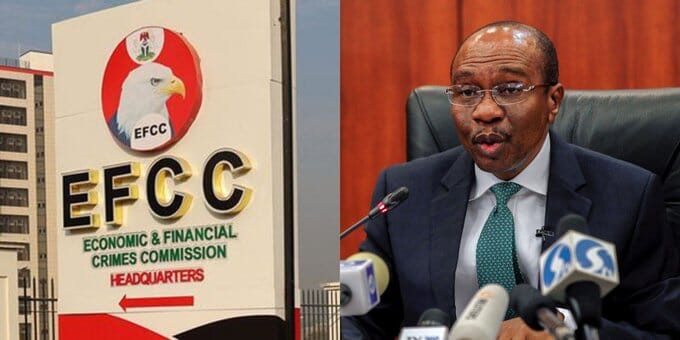
In a stunning turn of events at the Lagos State High Court, defense lawyer Nnamdi Offial dropped a bombshell. He accused the Economic and Financial Crimes Commission (EFCC) of pressuring his client, Henry Omoile, to implicate former Central Bank of Nigeria (CBN) Governor Godwin Emefiele. This allegation surfaced during a trial-within-trial on January 15, 2026.
Mr. Nnamdi Offial, representing the second defendant Henry Omoile, made the explosive claims on Thursday, January 16, 2026, at the Lagos State High Court in Ikeja. The lawyer testified during a trial-within-trial ordered by Justice Rahman Oshodi to determine whether statements obtained from Omoile were given voluntarily.
Background of the Godwin Emefiele Fraud Trial and EFCC Charges
Godwin Emefiele served as CBN Governor from 2014 to 2023. He now faces 19 counts of corruption, including accepting gratifications and fraudulent property receipt. Henry Omoile, his co-defendant, faces three counts related to accepting gifts as an agent.
The charges stem from alleged $4.5 billion fraud and N2.8 million misuse. Both men pleaded not guilty at their arraignment. The trial focuses on whether Omoile's EFCC statement was voluntary.
This mini-trial aims to verify if coercion tainted the evidence. Emefiele's case has drawn scrutiny since his 2023 arrest, amid broader anti-graft efforts under President Bola Tinubu.
Defense Lawyer's Testimony: Allegations of EFCC Pressure to Implicate Emefiele
Nnamdi Offial took the stand as a defense witness. He detailed events from February 2024 interrogations. On February 26, EFCC questioned Omoile in a rigid format.
Questions came verbally first. Omoile could only write answers if they satisfied investigators. Offial objected multiple times, saying answers were rejected if they didn't incriminate Emefiele.
The session ended with Omoile's detention. Investigators deemed his responses unsatisfactory.
The next day, February 27, Offial arrived to find Omoile interrogated without him. An officer named David confronted him and ordered him out.
Offial protested to the team leader. He waited hours before seeing Omoile again at 8 p.m. Omoile reportedly told Offial about the pressure. The EFCC head allegedly promised bail and no prosecution for implicating Emefiele.
This tactic, Offial claimed, aimed to build a case against the ex-governor. Omoile resisted, leading to 21 days in custody. Offial filed a fundamental rights suit. Justice Muslim Hassan granted bail, but Omoile stayed remanded at Ikoyi pending perfection.
Who is Henry Omoile?
Henry Omoile is the second defendant in the trial and has been identified as a close associate of the former CBN Governor. According to prosecution witnesses, Omoile allegedly received cash on behalf of Emefiele from various individuals.
One prosecution witness previously testified that he routinely collected dollars in cash from individuals and handed them to Omoile on the orders of Emefiele. This forms part of the evidence the EFCC is seeking to present against both defendants.
Cross-Examination: Key Admissions in the EFCC Pressure Claims Against Emefiele
Prosecutor Rotimi Oyedepo, SAN, grilled Offial. Offial admitted Omoile was cautioned in his presence. Omoile signed the caution, aware statements could be used in court.
Offial confirmed his participation in the process. He knew the implications. Crucially, Offial admitted no petition against EFCC for misconduct.
The fundamental rights court didn't indict EFCC. No finding of wrongdoing. Offial conceded no harassment occurred in his presence. This weakened his claims. These admissions suggest allegations based on hearsay from Omoile.
The prosecution highlighted inconsistencies. They argued no evidence of coercion.
Implications of EFCC Allegations in the Emefiele Case for Nigerian Anti-Corruption Efforts
This revelation raises questions about EFCC tactics. If true, it could undermine the case. Critics say it shows political motivations in probes. Emefiele's tenure overlapped with major economic policies.
The trial exposes justice system challenges. Prolonged detentions and access to counsel are key issues. Public trust in anti-graft agencies hangs in balance. Similar past claims have led to reforms.
What Happens Next in the Godwin Emefiele Trial and EFCC Investigation
Justice Oshodi adjourned to January 16, 2026. More witnesses may testify. If the statement is ruled involuntary, it could be excluded. This might weaken the prosecution's case against Emefiele.
Observers watch for EFCC response. No official statement yet.
What Happens Next in the Trial?
The trial-within-trial is a critical procedural step that will determine whether the statements obtained from Omoile can be admitted as evidence in the main trial. Justice Oshodi must now evaluate the conflicting testimonies and determine if the statements were made voluntarily.
If the judge rules that the statements were not given voluntarily, they will be excluded from evidence, potentially weakening the prosecution's case. However, if the statements are deemed admissible, they could provide crucial testimony linking Emefiele to the alleged financial crimes.
The case has been adjourned to allow both parties to present further arguments and evidence. Legal experts note that trial-within-trial proceedings are standard practice when the voluntariness of a statement is challenged.
Read More
- 7.5% VAT on Mobile Transfers and USSD Transactions Explained Simply
- Paystack Acquires Ladder Microfinance Bank to Enter Nigeria’s Banking Sector
- Nigeria and UAE Sign Historic Tariff Free Trade Agreement Covering Goods and Services
- Here Are 21 Banks That Have Met the New CBN Recapitalization Requirement