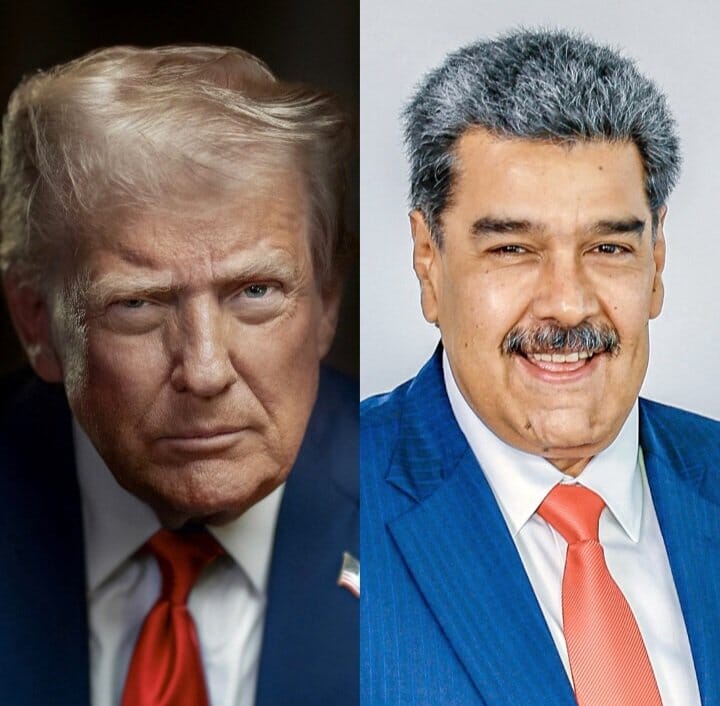
In a stunning early morning operation on January 3, 2026, United States forces captured Venezuelan President Nicolás Maduro. The move marked a dramatic escalation in US-Venezuela relations.
President Donald Trump announced the capture on his Truth Social platform. He stated that Maduro and his wife were seized and flown out of the country.
The operation involved large-scale military strikes across Venezuela. Explosions rocked the capital Caracas and other regions. This event echoes historical US interventions, such as the 1990 capture of Panamanian leader Manuel Noriega. It occurred exactly 36 years later on the same date.
How Did US Forces Capture President Maduro?
The operation began in the early hours of Saturday, around 2 a.m. local time. Residents reported loud explosions and low-flying aircraft. Strikes targeted key military sites. These included Fuerte Tiuna, the main military base in Caracas, and La Carlota airbase.
Other locations hit were El Volcán signal antenna and La Guaira port. Black smoke and fires were visible at several sites. A power outage struck southern Caracas near a major military base. The blasts lasted about 90 minutes.
Amid the chaos, US special forces executed the capture. Maduro's whereabouts became unknown to Venezuelan officials shortly after.
Trump posted the announcement at dawn US time. He promised a press conference at 11 a.m. ET from Mar-a-Lago.
Role of US Special Forces in Maduro Capture
The US Army's Delta Force led the ground operation. This elite unit specializes in high-risk arrests and counterterrorism.
A US official confirmed special forces troops captured Maduro. They worked in coordination with US law enforcement agencies. The team infiltrated Maduro's location under cover of the airstrikes. The strikes distracted Venezuelan defenses and secured the area.
Maduro had reportedly tightened security in recent months. He changed sleeping locations frequently to avoid raids. Despite these precautions, the operation succeeded without American casualties. Maduro and his wife were extracted swiftly.
They were flown out of Venezuela immediately. Their destination remains undisclosed, but likely a US facility for processing.
Why Did Trump Order Maduro's Capture?
Maduro faces serious charges in US courts. In 2020, during Trump's first presidential term, federal prosecutors indicted him for narco-terrorism, conspiracy to import cocaine, and related offenses.
The Trump administration designated Maduro as the leader of Cartel de los Soles, a criminal organization accused of drug trafficking. The US government offered a $50 million reward for information leading to his arrest, one of the highest bounties ever issued.
Trump repeatedly accused Maduro of leading a trafficking organization aimed at destabilizing America by flooding the country with drugs. The administration claimed Venezuela operated as a "narco-state" under Maduro's leadership.
Trump's Leadership in Maduro Capture Operation
President Trump authorized the strikes days earlier. Discussions occurred around Christmas, but weather delayed the mission. Trump described the action as a response to Maduro's alleged narco-state activities. He accused Maduro of rigging the 2024 Venezuelan election.
In his Truth Social post, Trump called it a "brilliant operation." He highlighted the involvement of US law enforcement. Secretary of State Marco Rubio supported the move. He stated Maduro would face criminal charges in the US.
Rubio emphasized that no further military action in Venezuela is planned. The focus shifts to Maduro's prosecution. Trump doubled the bounty on Maduro to $50 million in 2025. This followed a 2020 indictment for narco-terrorism.
Venezuela Government Response to Maduro Capture
Venezuelan Vice President Delcy Rodriguez stated the government does not know the whereabouts of Maduro or First Lady Cilia Flores. She demanded immediate "proof of life" from the Trump administration.
Venezuela declared a national state of emergency following the attacks. The government described the operation as "military aggression" and accused Washington of attempting to seize Venezuela's oil and mineral resources.
Defense Minister Vladimir Padrino Lopez called for massive deployment of military forces throughout the country. The Venezuelan government pledged that US efforts to control their resources "will not succeed."
#International Responses to US Maduro Capture
Cuba's President Miguel Díaz-Canel condemned the strikes as state terrorism. He called for global outcry.
Colombia's President Gustavo Petro deployed border forces. He prepared for potential refugee influx.
Argentina's President Javier Milei celebrated the move. He declared "Liberty advances" on social media.
Spain's Prime Minister Pedro Sánchez urged de-escalation. He stressed respect for international law.
Trinidad and Tobago denied involvement. Prime Minister Kamla Persad-Bissessar affirmed peaceful relations.
The Venezuelan government requested a UN Security Council meeting. They labeled it a serious military aggression.
What Happens Next for Nicolas Maduro?
Maduro now faces trial in US federal court on multiple serious charges. The Southern District of New York holds his indictment on narco-terrorism and cocaine trafficking conspiracy charges from 2020.
Trump is scheduled to hold a press conference at Mar-a-Lago at 11 AM ET Saturday to provide additional details about the operation. The administration described it as a "brilliant operation" involving careful planning and coordination with US law enforcement.
The State Department warned US citizens in Venezuela to shelter in place. The embassy in Bogota, Colombia issued notices about explosions in and around Caracas.
Analysis: Comparing Maduro Capture to Historical Operations
Security analysts compared the operation to the 1990 capture of Panamanian leader Manuel Noriega, also orchestrated by the United States.
Phil Gunson, a Crisis Group analyst in Caracas, noted that while the capture may not be legal under international law, it reflects US determination to address what it views as criminal leadership.
The operation represents one of the most significant US military actions in Latin America in decades. Its success could reshape regional dynamics and US foreign policy approaches to governments Washington considers illegitimate.
Read More
- Discover the Top 10 Happiest Countries in 2026 According to the World Happiness Report
- Third World Countries in 2025: Complete Updated List and What the Term Really Means Today
- Raccoon Gets Drunk After Breaking Into Liquor Store and Drinking Bottles – Full Story & Viral Video
- Top 5 African Countries with the Strongest Aircraft Fleets in 2026