
President Bola Tinubu has issued a stern warning to Nigeria's 36 state governors, threatening to invoke an executive order if they continue defying the Supreme Court ruling on local government financial autonomy.
The ultimatum came during the 15th National Executive Committee meeting of the All Progressives Congress held at the State House Conference Centre in Abuja on Friday, December 19, 2025.
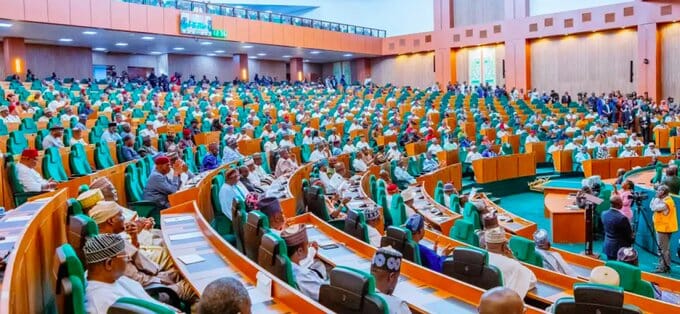
The President's warning addresses the persistent violation of the July 11, 2024 Supreme Court judgment that mandated direct allocation of funds to local governments from the Federation Account Allocation Committee.
What Did President Tinubu Say About Executive Order Enforcement?
Speaking directly to governors and party stakeholders, President Tinubu stated that the Supreme Court has directed them to give local governments their money directly. He emphasized his authority to enforce compliance through an executive order.
The President warned that he had exercised restraint in dealing with governors on the matter but would not hesitate to take decisive action. His statement made it clear that continued non-compliance would trigger federal intervention.
Tinubu also cautioned that governors would see deductions from the source at every FAAC meeting if implementation does not begin immediately.
Understanding the Supreme Court Ruling on Local Government Autonomy
The landmark Supreme Court judgment of July 11, 2024, was delivered unanimously by a seven-member panel. The ruling declared it unconstitutional for state governments to retain or manage funds allocated to local councils.
The court ordered direct payment of allocations from the Federation Account to local governments as provided under Section 162 subsections 5 to 8 of the 1999 Constitution.
Despite this clear directive, many state governments have continued operating joint accounts with local governments, effectively controlling funds meant for grassroots development.
Why Are Governors Resisting Local Government Financial Autonomy?
State governors have historically controlled local government funds through state-local government joint accounts. This practice has allowed them to determine how and when local councils receive their allocations.
The Supreme Court deemed this practice unlawful and ordered an end to it. However, compliance has been slow across many states since the judgment was delivered.
The resistance stems from governors' reluctance to relinquish control over these substantial financial resources. Local government allocations represent a significant portion of funds distributed from the Federation Account.
What Does the Executive Order Mean for FAAC Allocations?
If President Tinubu issues the threatened executive order, it would fundamentally change how local government funds are distributed in Nigeria.
Currently, allocations go through state governments before reaching local councils. The executive order would mandate the Federation Account Allocation Committee to bypass state governments entirely.
Direct allocations would ensure that funds reach local governments without state government interference, as stipulated in the Constitution.
This change would empower local governments to execute their constitutional responsibilities without depending on state governors' approval.
Previous Warnings to State Governors on Supreme Court Compliance
This is not the first time President Tinubu has warned governors about the issue, as he delivered a similar message at the APC's 14th National Caucus meeting on Thursday.
At that earlier meeting, he emphasized that local government autonomy cannot be achieved without adequate funding.
The repeated warnings suggest growing frustration at the federal level with the pace of implementation across states.
Constitutional Provisions for Direct Local Government Funding
The Nigerian Constitution provides clear guidelines for local government funding. Section 162 establishes the Federation Account and specifies how revenues should be distributed among the three tiers of government.
Specifically, subsections 5 to 8 of Section 162 mandate direct payment to local governments from the Federation Account.
The Supreme Court ruling simply reinforced these existing constitutional provisions that have been systematically violated through joint account arrangements.
What Happens Next with the Supreme Court Order Implementation?
The coming weeks will reveal whether governors heed President Tinubu's warning or if he proceeds with the executive order.
The President indicated that deductions would begin from the source at subsequent FAAC meetings if states fail to comply.
State governments may challenge any executive order in court, potentially creating another legal battle. However, the Supreme Court has already settled the constitutional question in favor of local government autonomy.
Reactions to Tinubu's Warning About Executive Order
The President's strong stance has generated mixed reactions across Nigeria's political landscape. Some Nigerians welcome the move as necessary to strengthen grassroots governance.
Critics worry about implementation challenges and potential for mismanagement at the local government level. Questions remain about accountability mechanisms and quality of project delivery.
Political analysts suggest that effective local government administration requires not just financial autonomy but also robust oversight structures to prevent corruption.
Read More
- Airtel Africa Partners with SpaceX to Bring Starlink Satellite Connectivity to 14 African Countries
- Dangote Accuses NMDPRA CEO of Corruption in Explosive Claims
- FG Launches Pioneering Online Platform for Gas Trading and Exchange
- Federal Government of Nigeria to Ban Cash Payments for All Federal Revenue Collections Starting 2026