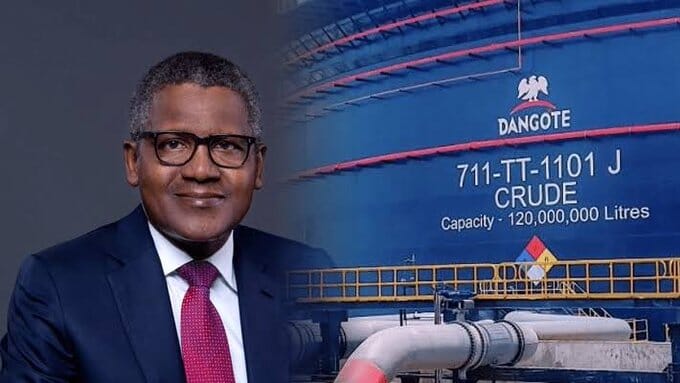
Aliko Dangote, Africa's richest man, has issued a stark warning through his refinery. Without robust local refining, petrol prices could skyrocket to N1,400 per litre. This revelation comes amid ongoing debates about fuel imports and subsidies.
The Dangote Petroleum Refinery, a $20 billion powerhouse, is at the center of this discussion. It counters rumors of operational shutdowns while highlighting the perils of import dependency. Daily production stands at 40-50 million litres of petrol, underscoring its role in stabilizing supplies.

Dangote's statement emphasizes the post-subsidy era's harsh realities. With subsidies removed, imported fuel costs could balloon unchecked. Local refining offers a buffer against global price volatility and foreign exchange pressures.
Dangote Refinery released a statement on January 6, 2026. It dismissed claims of halting operations for maintenance. Instead, it affirmed steady production of premium motor spirit.
The refinery warned that without domestic capacity, prices might reach N1,400 per litre. This projection accounts for import costs in a subsidy-free market. It highlights the urgency for self-sufficiency in refining.
Aliko Dangote has long advocated for local production. His refinery, Africa's largest, processes 650,000 barrels daily. It aims to end Nigeria's paradoxical reliance on imported fuel despite being an oil producer.
Impact of No Local Refining on Fuel Costs
Without local refining, Nigeria imports most petrol. This exposes consumers to international crude prices and shipping fees. Currency fluctuations add to the burden, pushing retail prices higher.
Experts agree with Dangote's assessment. In 2025, petrol averaged N800-N900 per litre post-subsidy. Doubling to N1,400 would strain households and businesses alike.
Transportation costs would rise, inflating goods prices. Inflation could spike, eroding purchasing power. Small enterprises, reliant on generators, face closure risks.
Local refining cuts these vulnerabilities. It saves foreign exchange and creates jobs. Dangote's facility employs thousands, boosting local economies.
Current Petrol Prices in Nigeria
As of January 2026, petrol prices vary by region. In Abuja, NNPC sells at N815 per litre. Lagos sees averages around N739 at select stations.
Dangote urged reporting stations selling above authorized rates. This promotes transparency in distribution. Independent marketers sometimes charge more due to logistics.
Price disparities highlight import inefficiencies. Coastal areas pay less than inland regions. Uniform local supply could standardize costs nationwide.
Why Nigeria Must Support Local Refining Capacity
Dependence on imported fuel exposes Nigeria to international price volatility, foreign exchange pressures, and supply chain disruptions. When global oil prices spike or shipping costs increase, Nigerian consumers bear the immediate burden through higher pump prices.
Local refining insulates the economy from these external shocks. Crude oil sourced domestically and refined within Nigeria eliminates shipping costs, reduces forex demand, and allows for more predictable pricing based on actual production costs rather than international market speculation.
The environmental benefits also deserve consideration. Locally refined fuel meets Euro-V quality standards, improving engine performance and longevity while reducing harmful emissions. Nigerian vehicles operate more efficiently on domestically produced petrol compared to some imported alternatives.
Supporting local refining strengthens Nigeria's industrial base and technological capabilities. The expertise developed through operating world-class refining facilities transfers to other sectors, building human capital that drives broader economic development.