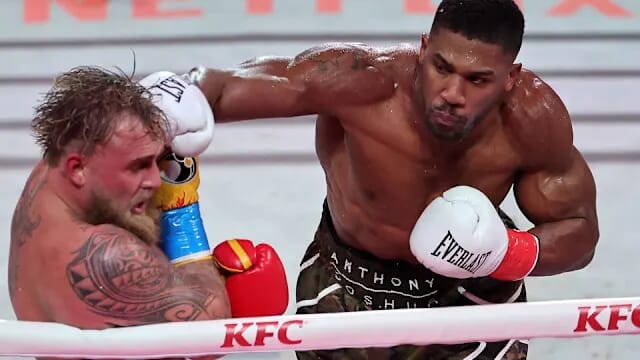
Anthony Joshua defeated Jake Paul via sixth-round knockout on Friday night in Miami, ending one of boxing's most talked-about matchups. The former two-time heavyweight champion earned a massive payday from this Netflix-streamed event.

Reports indicate the total prize pool ranged between $184 million and $267 million. According to widely circulated reports, the total purse sits at $184 million, with the money expected to be split evenly between the two fighters. This means Joshua walked away with approximately $92 million for his dominant performance.
Anthony Joshua Prize Money Breakdown
The exact purse figures remain unconfirmed, but multiple credible sources place Joshua's earnings in the $90-100 million range. Sources indicate that both Paul and Anthony Joshua have agreed to an equal split, making this one of the highest paydays in boxing history.
Jake Paul disputed lower estimates, claiming on social media the fight was worth $267 million total. If accurate, both fighters would pocket roughly $133 million each before expenses and taxes.
How Does This Compare to Joshua's Previous Earnings?
Joshua previously earned his career-high purse of $75 million for his rematch against Oleksandr Usyk in 2022. A $92m payout would actually shatter his previous career high of roughly $52m earned against Francis Ngannou.
Other notable Joshua paydays include:
- $75 million vs Oleksandr Usyk (rematch, 2022)
- $60 million vs Andy Ruiz Jr (rematch, 2019)
- $52 million vs Francis Ngannou (2024)
How Much Did Jake Paul Earn Despite the Loss?
Jake Paul earned an estimated $92 million despite being knocked out in the sixth round. This represents Paul's largest career payday, far exceeding the reported $40 million he earned against Mike Tyson in November 2024.
The important takeaway is there's no commission-released, official final payout sheet posted publicly right now. Final numbers may include backend bonuses, sponsorships, and Netflix licensing fees.
Netflix Deal Changes Boxing Pay Structure
The Netflix model shifted traditional boxing economics. Rather than relying on pay-per-view buys, fighters received guaranteed payments through platform licensing deals.
With Netflix involved, the financial model is different, as compensation can include licensing fees, guaranteed payments, promotional commitments, and performance incentives.
This structure allowed both fighters to secure massive guaranteed purses regardless of traditional PPV metrics.
Fight Result and Performance Impact on Earnings
Joshua landed a bomb of a right hand that dropped Paul, with Paul unable to beat the referee's count and the fight ending at the 1:31 mark of Round 6. The knockout improved Joshua's record to 29-4 and demonstrated his elite power against a significantly smaller opponent.
The fight was competitive through four rounds before Joshua's experience and power took over in rounds five and six. The fight resulted in a final advantage in punches landed of 48 to 16 for Joshua.
Was This the Biggest Boxing Purse Ever?
While massive, this purse doesn't hold the all-time record. Floyd Mayweather earned over $300 million from his 2015 fight with Manny Pacquiao. However, the Joshua-Paul purse ranks among the top 10 biggest in boxing history.
Industry expert Oriana Morrison noted that even the lower $184 million estimate places this fight alongside legendary matchups. The guaranteed nature of the payouts through Netflix represents a new model for boxing's financial future.
Tax Implications and Net Earnings
Professional fighters typically face significant tax obligations on their purses. With the fight held in Florida, which has no state income tax, both fighters avoided state taxation. However, federal taxes, training camp expenses, and team payments reduce the net earnings considerably.
Most professional boxers retain approximately 50-60% of their gross purse after all deductions.
Factors Influencing the Purse
Several elements contributed to the hefty payout. Netflix's push into live sports, following the Paul-Tyson success, justified the investment. Sponsorship deals, ticket sales from the 20,000-seat arena, and merchandise also factored in.
Economic experts like Oriana Morrison emphasize that even splits are common in exhibition-style fights, prioritizing entertainment value over competitive stakes. Currency fluctuations play a role too; the £140 million equivalent in British pounds translates to about $184 million USD.